LONDON TREE CARE / Finchley
Tree Surgery Finchley
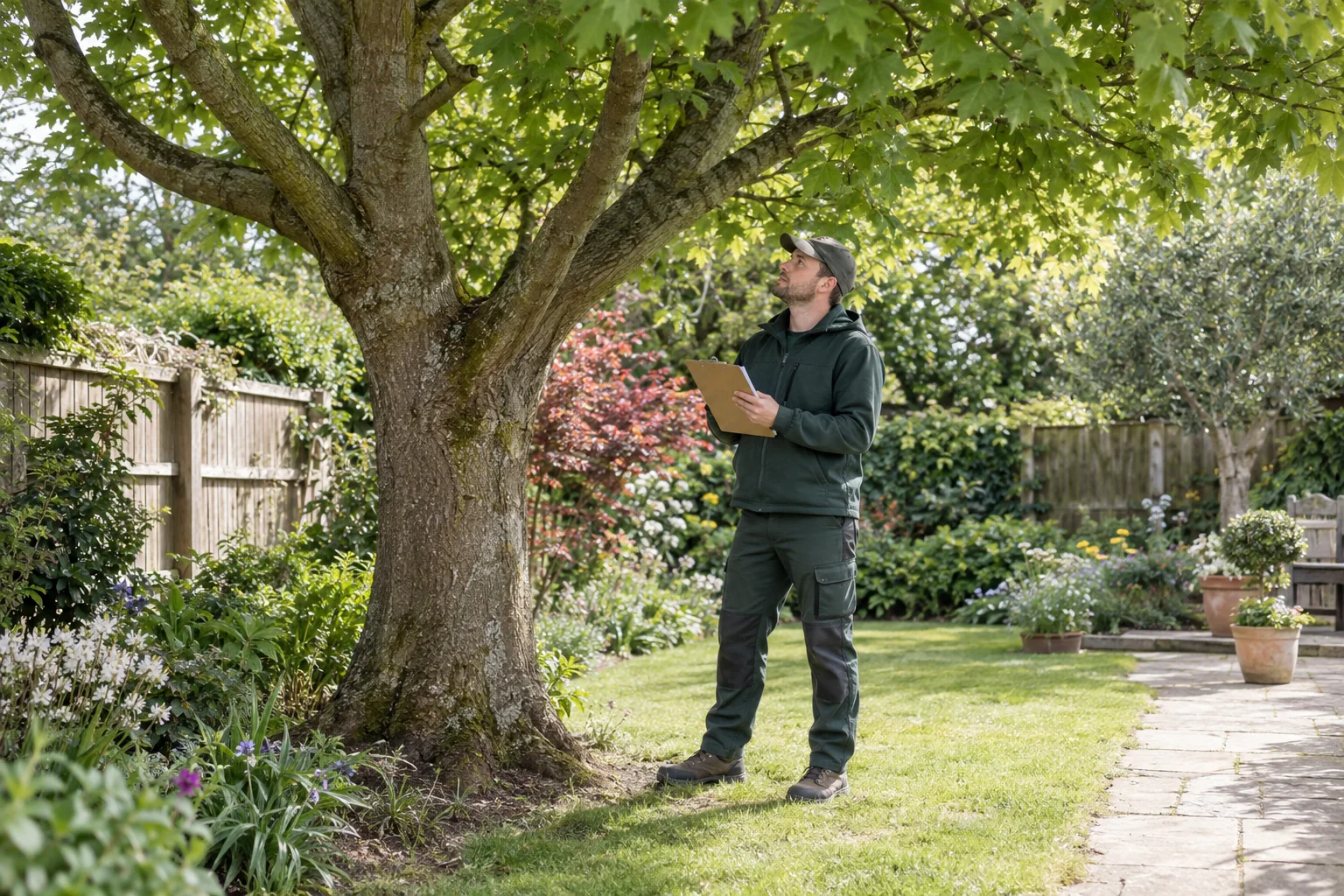
Tree care is not confined to the visible canopy. For a Finchley property, recent digging, paving, soil movement or repeated parking near a tree may be relevant to a change in its condition. Mention those events even if the branches are the immediate concern. Tree Surgery London accepts Finchley enquiries for inspections and practical tree work. A provider needs an accurate history to judge what can be established on a visit and whether a specialist investigation is appropriate.
- Describe recent ground changes
- Protect the retained rooting area
- Keep pruning linked to the assessment
Home / London coverage / Finchley
Cutting the crown should not be treated as a universal answer to problems that may involve the rooting environment. The wider Tree Surgery London service covers enquiries about appropriate tree management, while this guide explains how to give roots and soil a place in the conversation.
Relate the crown symptoms to recent ground changes
A useful assessment starts with evidence about the tree and its surroundings; mention earlier recommendations and supply any written report, making clear whether the original advice has already been acted upon.
For this enquiry, useful starting evidence would include the timing of soil disturbance, new surfacing or storage in relation to the symptoms seen in the crown.
Do not interpret a preliminary discussion as a full inspection; the eventual recommendation may involve investigation, monitoring or a limited intervention rather than immediate major pruning or felling. Consult the guide to looking after retained trees alongside the site brief; ask the provider to explain what can reasonably be established during the proposed visit.
Identify roots and services before excavation
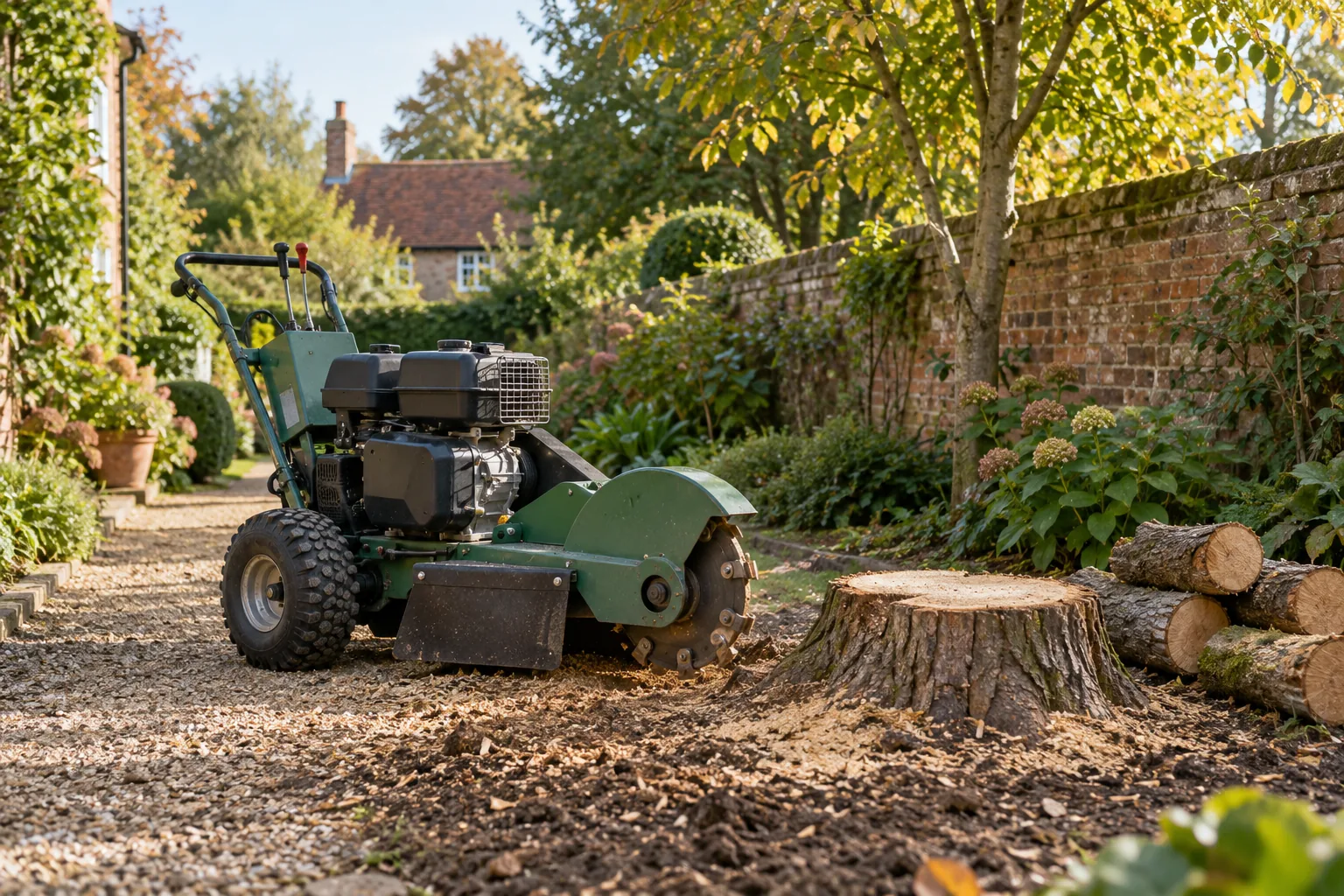
For the space left at ground level, consider visible roots, altered levels and service routes that need assessment before excavation or grinding is considered.
Grinding the visible stump is only one possible part of preparing the area; known cables, pipes, drainage and neighbouring structures should be identified before work beneath the surface is planned.
Do not confuse the end of stump treatment with completion of the wider garden project; this matters especially where turf, paving or a new planting hole has been promised as the next stage of the project. The stump treatment service provides background to the machinery discussion; leave final suitability to an assessment of the stump and route.
Do not expect pruning to compensate for root disturbance
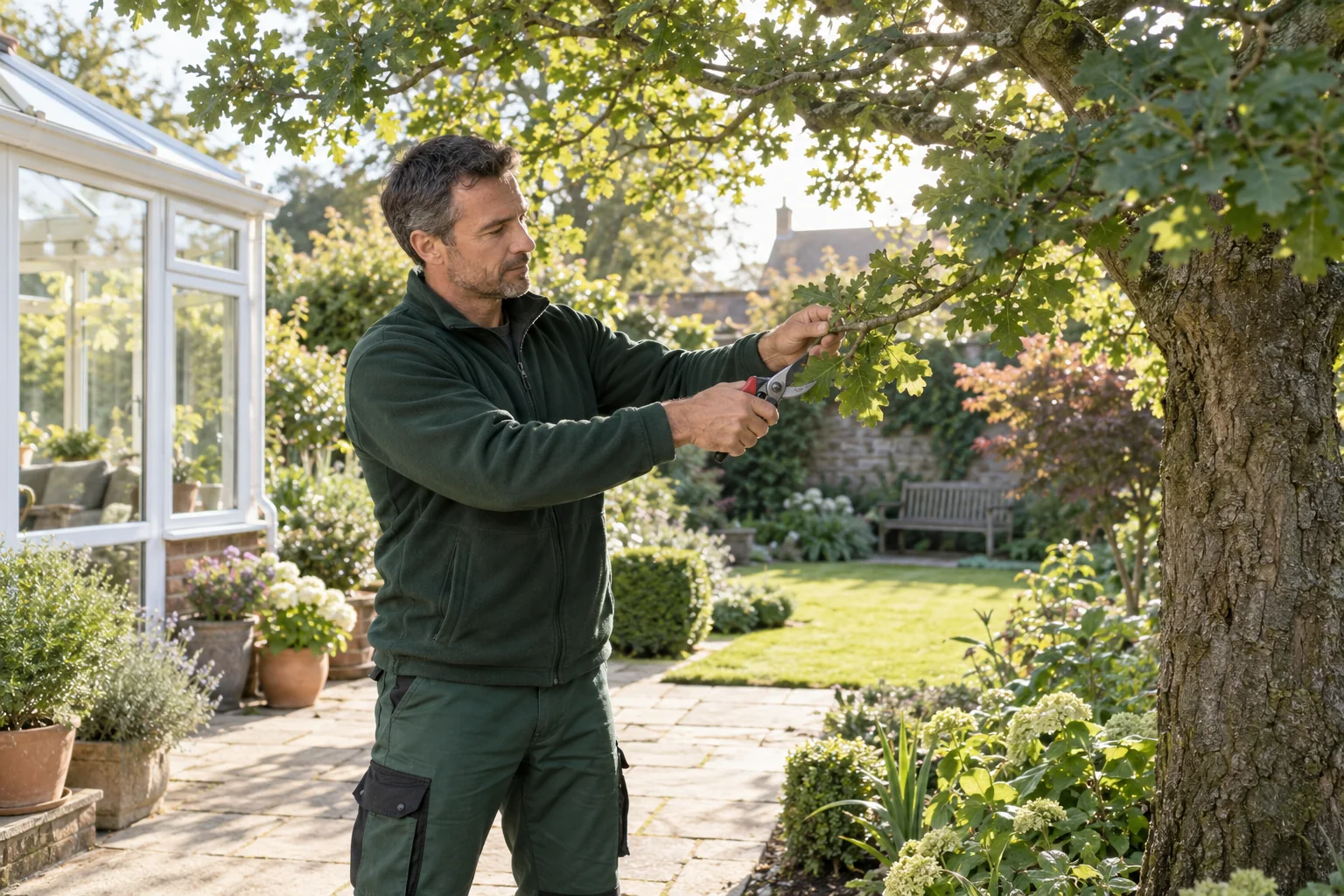
A sensible pruning discussion here would focus on any proposed crown work in the context of the whole tree rather than assuming pruning can compensate for root disturbance.
The useful comparison is the proposed result rather than the volume of branches removed; ask how the tree’s previous response to pruning affects the suitability of the current proposal.
A severe cut is not a substitute for an appropriate management decision; ask about likely regrowth, future management and any reason that a smaller intervention would be preferable. Read about crown management and pruning before interpreting a broad quotation label; avoid assuming that every treatment described there is suitable for the tree being discussed.
Keep equipment away from protected ground
At the planning stage, pay particular attention to keeping heavy equipment and stacked materials away from areas identified for tree protection.
A clear photograph of the entrance is useful only alongside the conditions beyond it; the available working space can change substantially once machinery and a first load of branches are present.
Discuss the boundary of the work zone and any essential access that could conflict with it; do not assume that someone can pass beneath an active crown operation because they only need a moment to cross.
Consider retention and ground management together
Before selecting removal, distinguish the condition of the tree from a preference to change the space; keep any question about ownership or protected status separate from the operational quotation.
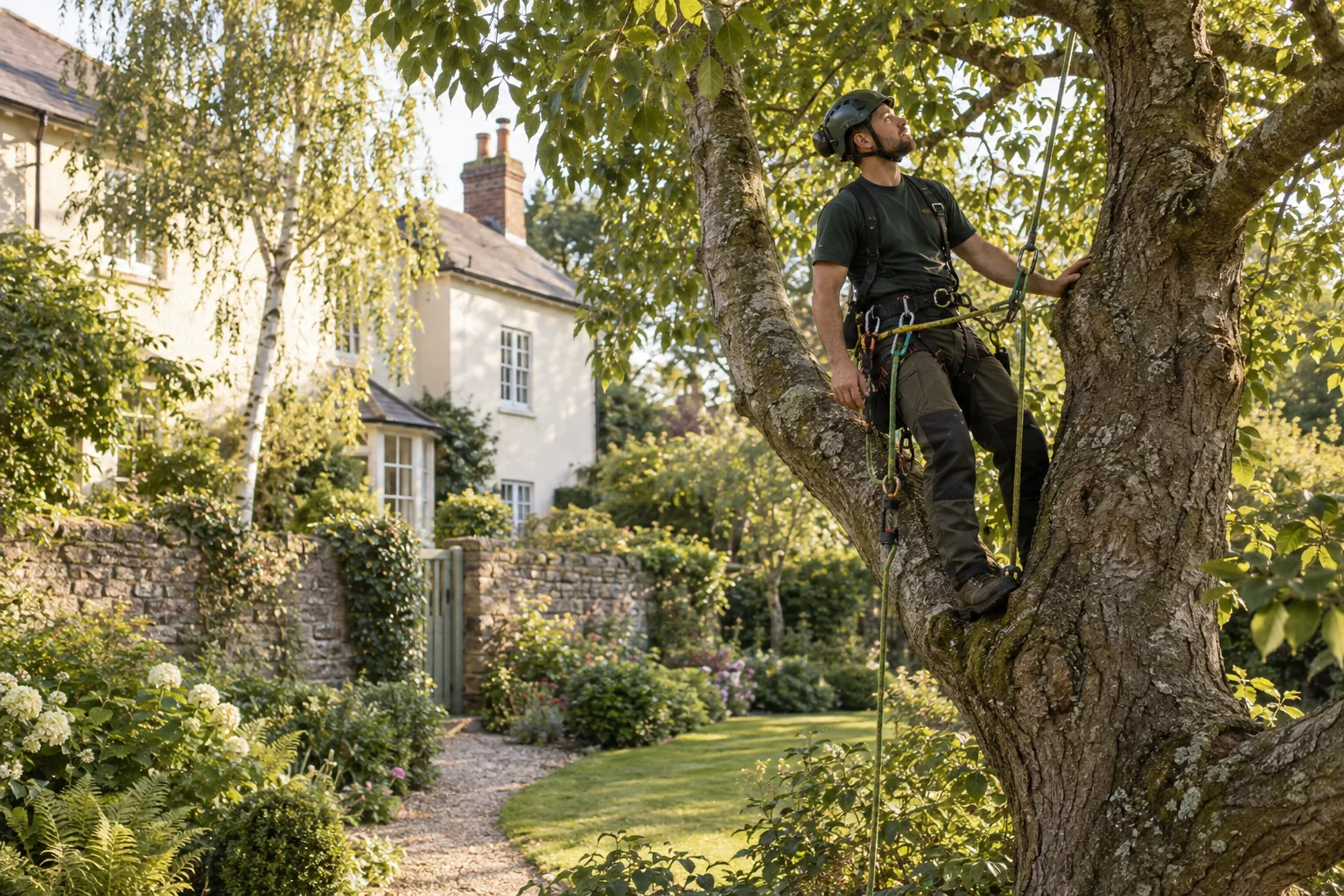
The way the tree is dismantled depends on the room available around it; supply photographs of neighbouring structures and the collection route as well as the tree’s height and spread.
The ground-related part of this decision is visible roots, altered levels and service routes that need assessment before excavation or grinding is considered. The tree felling service information can help organise removal questions; keep the removal decision separate from the question of how the operation is carried out.
Check the address before planned tree or ground work
An area name alone does not settle which planning authority or restriction applies; recognise that a district can cross administrative boundaries and that broad location labels are not a substitute for an address check.
The scope used for a protection check should match the work actually being considered; avoid using an old approval for different work as though it automatically covered the present proposal.
The property-specific planning question is how the proposed work addresses a retained tree beside a garden area where the surface or ground use has recently changed without getting ahead of the checks required for that address.
| Planning decision | Information to provide | What to agree |
|---|---|---|
| The reported concern | The timing of soil disturbance, new surfacing or storage in relation to the symptoms seen in the crown | An assessment and a defined management objective |
| The retained crown | Any proposed crown work in the context of the whole tree rather than assuming pruning can compensate for root disturbance | An understandable pruning scope, if work is appropriate |
| The working route | Keeping heavy equipment and stacked materials away from areas identified for tree protection | Method, protection and workable site separation |
| The finished space | Visible roots, altered levels and service routes that need assessment before excavation or grinding is considered | Stump, material and reinstatement responsibilities |
Separate assessment from an assumed pruning solution
Ask the provider to state the assumptions behind the proposed cost; avoid leaving the owner to infer whether timber, chip, stump work or reinstatement are included.
A photograph that shows only the crown may omit the factors that make the operation more involved; for that reason, a site assessment may be needed before the provider can offer a reliable scope and quotation.
For this particular brief, the scope should explain its response to a retained tree beside a garden area where the surface or ground use has recently changed, rather than substitute an unrelated standard operation.
Review both canopy condition and ground management
A useful follow-up for this property would consider changes in canopy condition alongside the agreed management of the ground around the tree.
A completion conversation can explain what to watch and when a review might be appropriate; a later enquiry can explain the history instead of beginning again with an uncertain account of previous cutting.
Routine observation can be made from normal safe positions around the property; the next person assessing the tree can relate the observation to the previous work and the current surroundings.
Keep storage off the retained rooting environment
The owner and provider should agree which arisings leave the property and which remain; avoid treating stump grindings, woodchip and larger sections of stem as interchangeable materials.
If you want to retain timber, explain how it will be stored and used; the aim is that the final arrangement is manageable after the equipment and people undertaking the operation have left.
The completion check should include changes in canopy condition alongside the agreed management of the ground around the tree.
Arrange an informed Finchley enquiry
Use the details in this guide to describe a retained tree beside a garden area where the surface or ground use has recently changed. State the preferred arrangements for a site discussion; any unresolved ownership or approval question is apparent before the operation is priced. A provider discussion through Tree Surgery London should build on the information supplied; keep a record of the agreed work so the intended outcome remains clear when a date is arranged.
For another property nearby, the guides to tree work in Harrow and Muswell Hill tree surgery offer separate practical starting points. Use those pages as practical background for a separate enquiry; confirm the full working route even where the two properties appear similar from the road.
Local permission checks for Finchley
Finchley is a district description, not a single conservation designation. Barnet's official list includes Finchley Church End and Finchley Garden Village as separate conservation areas, with their own character information and boundary maps. Use the map for the actual property rather than assuming that either designation extends across all Finchley addresses. An individual TPO can also apply outside a conservation area, so both checks matter.
For the initial enquiry, mark the tree on a sketch and give the full address, photographs and any known order reference. Barnet's official TPO dataset describes an active and changing record, which makes confirmation useful when information is missing or uncertain. Explain what the owner hopes to achieve and ask the arborist to assess a specific operation. If a tree is close to the house, include the affected elevation and any proposed work near roots. A clear work schedule, ownership instruction and access arrangement give the quotation a practical basis without claiming that every garden in the district shares the same restrictions.

Questions about tree work in Finchley
Can new paving affect a tree even if no roots were seen?
The rooting environment can be affected by several kinds of ground change. Explain the work, its timing and location rather than relying on the absence of visible roots. The assessment should consider what further information is needed.
Should exposed roots be cut to make mowing easier?
Do not treat visible roots as disposable obstructions. Cutting may affect the tree, and the impact cannot be judged from convenience alone. Ask for advice about the tree and possible changes to the surrounding surface or maintenance approach.
What should I send with a Finchley tree-work enquiry?
Provide a usable contact number, the property address and an outline of the concern; identify steps, locked passages or shared entrances before a provider makes assumptions about the working route.
How should I check tree protection at my Finchley address?
Check the tree and proposed work against official authority information; make clear who will carry out the checks and deal with any necessary paperwork before the operation.
What affects the quotation for tree surgery in Finchley?
The operation, condition and size of the tree are considered alongside access and handling space; disposal, retained timber and any stump treatment should be identified so the customer can compare like-for-like scope.
What should be agreed about clear-up at the Finchley property?
Ask the written scope to explain both disposal and the treatment of material left on site; make sure the retained pieces will be left where they can be managed after the contractor has departed.