
TREE SURGERY LONDON / CONSIDERED OUTDOOR CARE
Stump Grinding in London
A stump grinder breaks down the remaining stump within a defined working area. It can create useful space after a tree has been removed, but it does not extract every root across the garden. The important decisions are access, the depth needed for your next use of the area and how the resulting mix of wood and soil will be handled.
- Machinery access checked before booking
- An agreed area and working depth
- Services and grindings considered
What the machine actually does
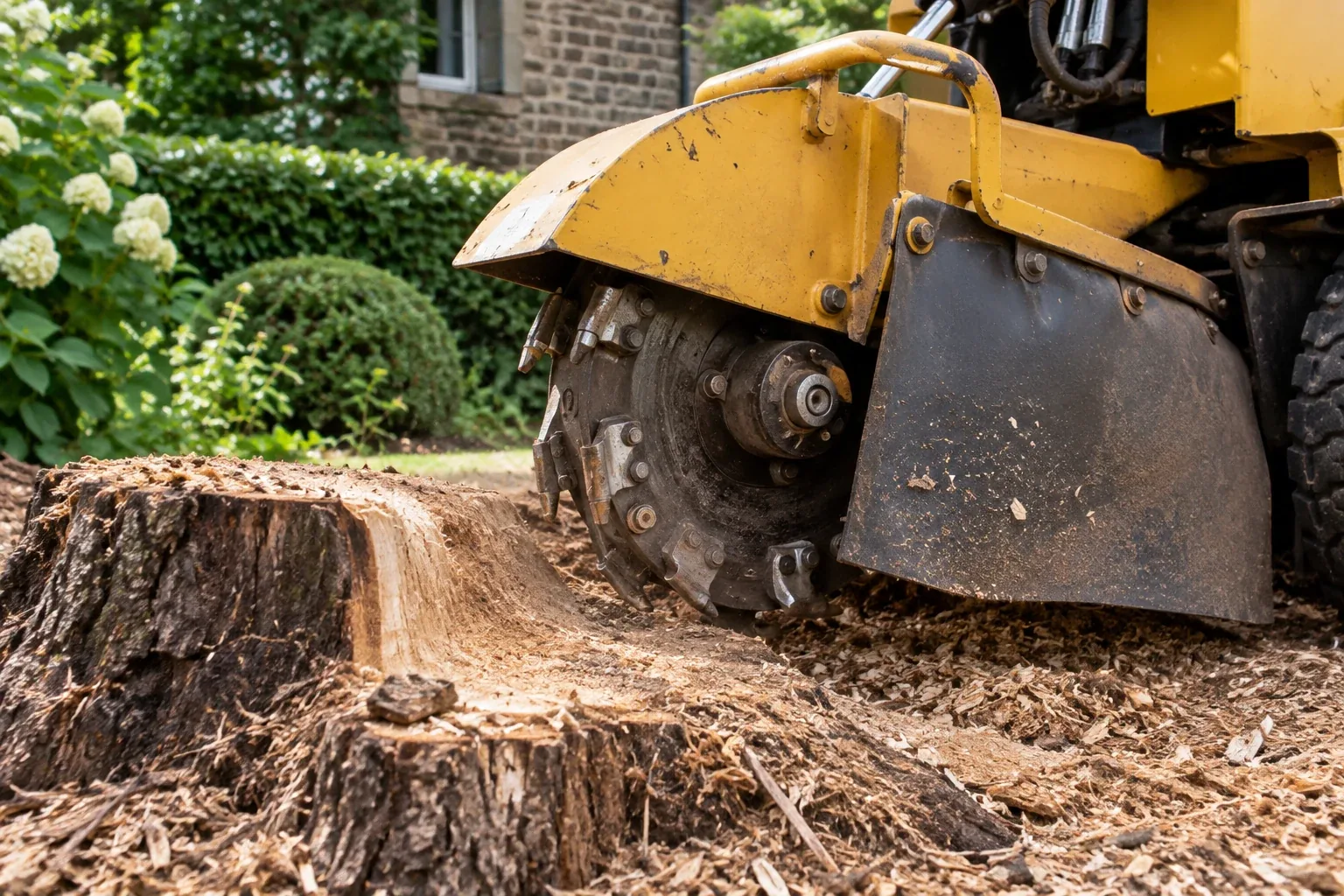
Stump grinding mechanically reduces the stump and accessible nearby material to smaller pieces. The operation leaves a mixture of wood fragments and soil, often called grindings. The extent of the work should be agreed before the visit, rather than described simply as making the stump disappear.
Roots beyond the working area can remain. If your aim is to build, excavate or install a structure, explain that requirement. A surface that looks clear is not evidence that the ground is free of roots or suitable for construction. The method should be selected in relation to the intended result, not because grinding is assumed to solve every below-ground issue.
Access is more than the width of the gate
Measure the narrowest opening and describe any turns, steps, slopes or changes in level between the road and the stump. A machine that fits through the first gate may still be unable to follow the route safely. Fragile paving, raised beds and restricted headroom can also affect access.
Send a photograph of the whole route as well as the stump. Explain if a passage is shared or if machinery would need to cross another property. Permission for that route must be established, and the ground needs to be suitable for the equipment proposed. Do not remove fences or alter levels in anticipation of a machine without first discussing what is actually required.
Decisions that shape a grinding job
| Decision | Information to provide | Scope to record |
|---|---|---|
| Access | Openings, turns, levels and surfaces | The proposed route and machine suitability |
| Depth | The intended next use | Defined level and working area |
| Ground constraints | Known services and obstructions | Checks before machinery work |
| Finish | Retain or remove grindings | Whether reinstatement is included |
Agree the depth for the intended use
The required depth differs between a modest garden reinstatement and work associated with a new design or structure. Ask how the proposed level will be described and measured. Ground levels can be uneven, and the visible stump may extend into an area partly covered by soil, paving or planting.
An agreed grinding depth is not a guarantee about the condition of soil below it. For major ground works, the person designing or carrying out the next stage may need additional information. Discuss that with landscaping or the relevant project professional before the grinding visit is treated as the final preparation for an unrelated operation.
Underground services and hidden obstructions
Tell the contractor about drains, cables, irrigation, lighting, pipes and any known buried structures near the stump. Old metal fittings, stones or material incorporated around a tree can affect the operation. A clean patch of ground does not prove that nothing is concealed beneath it.
The provider needs enough information to decide what checks or precautions are appropriate. If the location of a service is uncertain, that uncertainty should be resolved before work that could affect it. Do not assume that the machine operator can identify every buried feature merely by looking at the surface.

The work area must be controlled
Grinding can throw material and creates noise, so the surrounding area needs to be managed. Screens or other precautions may be appropriate to the setting and equipment. Residents, pets and visitors should remain outside the working zone until it is safe to return.
Nearby windows, cars, garden furniture and planting should be considered when planning the visit. Confirm who will move items and how access will be maintained for other people using a shared route. This is a machinery operation, not a task for someone to stand close beside while watching or giving directions through the work area.
Grinding after tree removal
The standing tree and the stump may be dealt with on different visits or by different equipment. If you are arranging tree felling, ask whether stump grinding is included, optional or a separate quotation. The cutting height left after removal can affect the preparation for the next operation.
Where several stumps are involved, identify each one and its approximate size. Hidden or overgrown stumps should be made known in the enquiry rather than added casually on arrival. Access preparation and removal of unrelated vegetation may need a separate scope, particularly on a plot that has not been maintained for some time.
What happens to the grindings?
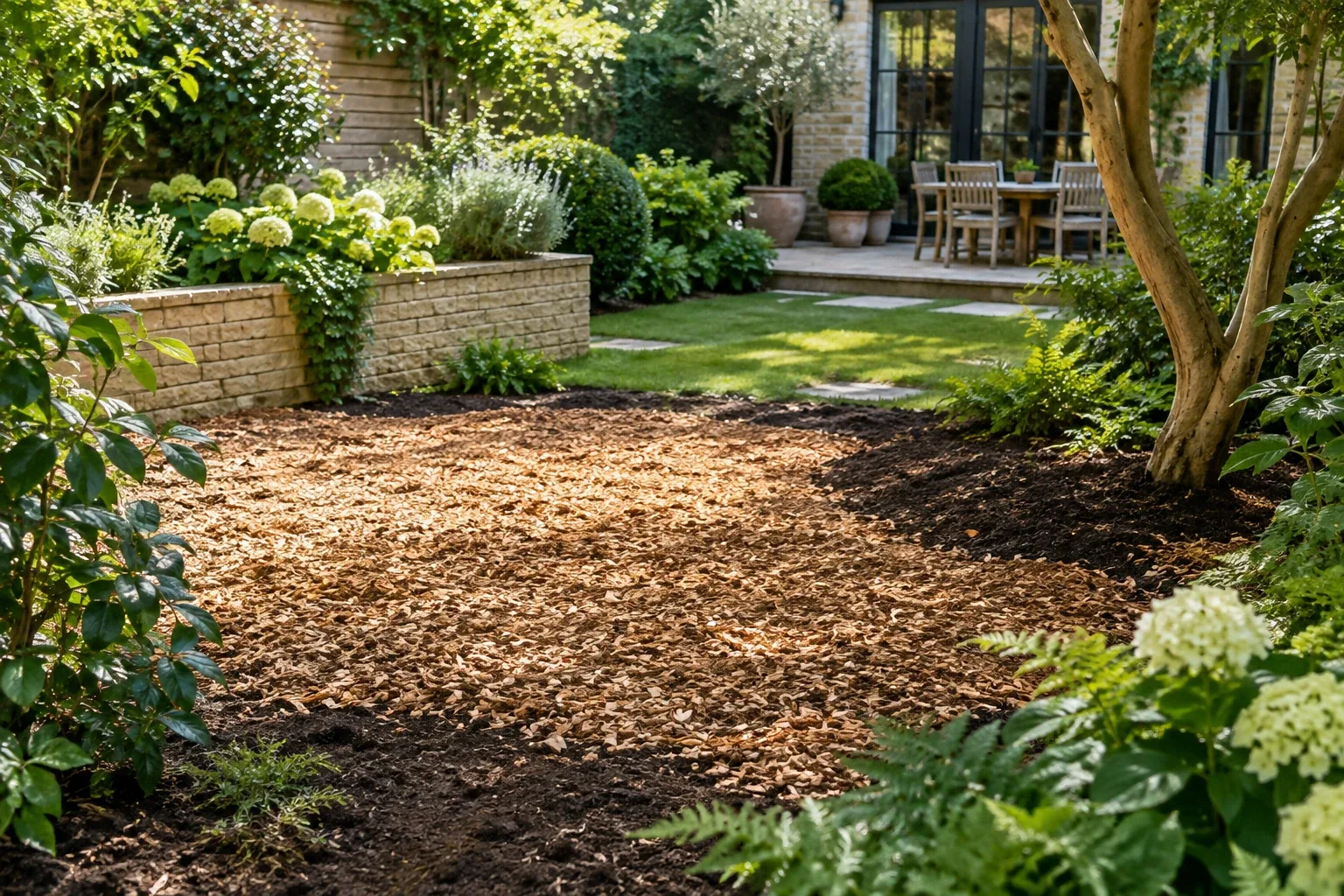
The volume of loose material can be greater than a customer expects from the visible stump alone. Agree whether it will remain, be moved within the site or be taken away. Removing grindings, importing suitable fill and restoring a finished lawn or bed are different tasks.
Fresh woody material mixed into a planting area may need consideration before new plants are installed. Discuss the next use with the relevant gardener or landscaper rather than assuming every grinding area is immediately a prepared planting bed. If material is retained, establish a suitable location that does not obstruct paths, drainage or access.
Retention and other approaches
Grinding is one option, not an obligation after every removal. A stump may sometimes remain as a deliberate garden or habitat feature where that is appropriate. Other physical removal methods can be considered for particular projects, but availability, disturbance and practicality need confirmation.
The tree stump removal page compares the outcome you want with the possible approaches. If you are planning around living nearby trees, tree care is also relevant: work around one stump should not casually damage the rooting environment of another retained tree.
Understanding the quotation
Stump dimensions, the number of stumps, access, depth and material handling affect the price. A large stump in an open position may be easier to approach than a smaller one behind steps and a narrow passage. Long carrying routes and reinstatement requirements can add separate work.
Ask for the included working area, depth, treatment of grindings and applicable VAT to be recorded. Clarify what would happen if an obstruction prevents the agreed operation. An initial estimate should not be treated as an unlimited commitment to remove unknown roots or excavate the entire garden.
Preparing the site
Provide honest measurements and describe anything you do not know. Keep the approach route available, identify fragile items and agree any necessary clearance beforehand. Leave the stump itself unchanged unless the provider has requested a specific preparation; an improvised attempt to dig around it can reveal or disturb services and roots.
After the operation, review the agreed area and what material remains. Keep the intended next stage in mind when accepting the finish. The useful question is whether the defined grinding job has been completed, rather than whether the whole garden is now ready for every possible future use.
USEFUL ANSWERS
Questions about this service
Will grinding remove all the roots?
No. The work is limited to an agreed area and depth around the stump. Roots outside that area can remain. If the requirement is associated with construction, excavation or a specific new planting, explain it before assuming grinding will produce the necessary ground conditions.
What gate measurement should I provide?
Measure the narrowest usable opening and describe the route beyond it, including turns and steps. Photographs help, but the provider must confirm whether the proposed machine can reach the stump safely. Gate width alone does not establish practical access.
Can the stump be ground below a paved surface?
The presence of paving changes the scope and may conceal services or obstructions. Explain the surface and the result you need. Lifting, reinstating or replacing paving should not be assumed to form part of a straightforward grinding quotation.
Are the grindings automatically removed?
That depends on the agreement. They may be retained, moved or removed as specified. Reinstating the area with imported soil, turf or another finish is a separate outcome and should be identified in writing if required.
Can I plant a new tree in exactly the same place?
Discuss the remaining roots, soil condition and the needs of the proposed planting. Grinding alone does not create a complete planting specification. A gardener, landscaper or suitably experienced tree professional can help assess the next stage.
Does a stump need grinding immediately after felling?
Not always. Timing depends on your plans, access and any relevant constraints. Agree whether the visits are coordinated or separate, and make sure the remaining stump is left in a condition appropriate to the method being considered.
A CLEAR NEXT STEP
Tell us about the work
Measure the narrowest access point and describe steps or tight turns. Identify the stump, explain the intended next use of the ground and agree grinding depth, material removal and backfilling before the machinery visit.
The local guides for Ealing garden tree work and Wandsworth tree care put access, retained trees and the intended finish into the wider planning discussion.