
TREE SURGERY LONDON / GARDEN & GROUNDS
Landscaping Services in London
A landscaping project should make the garden more useful while responding to the site you actually have. Existing levels, drainage, access and established trees can determine what is practical. Begin with the way you want to use the space, then agree the proposed work, preparation and finish instead of treating a collection of attractive photographs as a complete specification.
- A clear project brief and intended use
- Existing trees and site constraints considered
- Materials, preparation and finish defined
Turn a wish list into a working brief
Decide what needs to improve. You may need a more accessible route, a manageable planting area or a clearer relationship between seating and the rest of the garden. List the essential outcomes separately from preferences about appearance. That helps identify the work that matters if budget or access limits the options.
Photographs can communicate a style, but they rarely explain construction details, ground conditions or how a space will be maintained. Discuss dimensions, use and the features you want to keep. If formal design, specialist engineering or planning advice is required, establish that as a separate commission rather than assume it is included in a general landscaping enquiry.
Understand the ground before choosing the finish
Levels, soil and drainage affect the usefulness of a garden improvement. A persistent wet area may need investigation before a new surface or planting arrangement is chosen. Covering a problem does not necessarily resolve it, and the appropriate solution depends on the site rather than a standard detail copied from another garden.
Mention previous ground works, buried features and known services. Ask what information is needed before a quotation can be treated as firm. Where the condition is uncertain, a clearly described allowance or further assessment is more useful than a promise that every concealed issue is included in a single price.

Retained trees influence the layout
Mature trees can give a garden much of its character, but their roots and growing conditions need consideration when levels, access routes or surfaces change. Excavation, compaction and storage of materials can affect trees even where no branches are cut. Identify retained trees at the planning stage rather than after a route for machinery has already been chosen.
Tree care is relevant where the proposal may affect the rooting environment or where the condition of a tree needs discussion. A protected tree may also constrain the project. Do not assume that permission for a general garden improvement authorises all work around a tree or any pruning that appears convenient during construction.
Clearance is preparation, not the finished project
An overgrown plot may need a defined clearance stage before its levels, boundaries and condition can be understood. Explain which plants, materials and structures must remain. Removing everything indiscriminately can lose useful planting and make later design decisions more expensive.
Garden clearance can be scoped separately from the installation work. The quotation should explain where the preparation ends and the new work begins. Disposal of old paving, green waste, stored rubbish and excavated material may involve different handling arrangements, so avoid treating them as one unlimited clearance item.
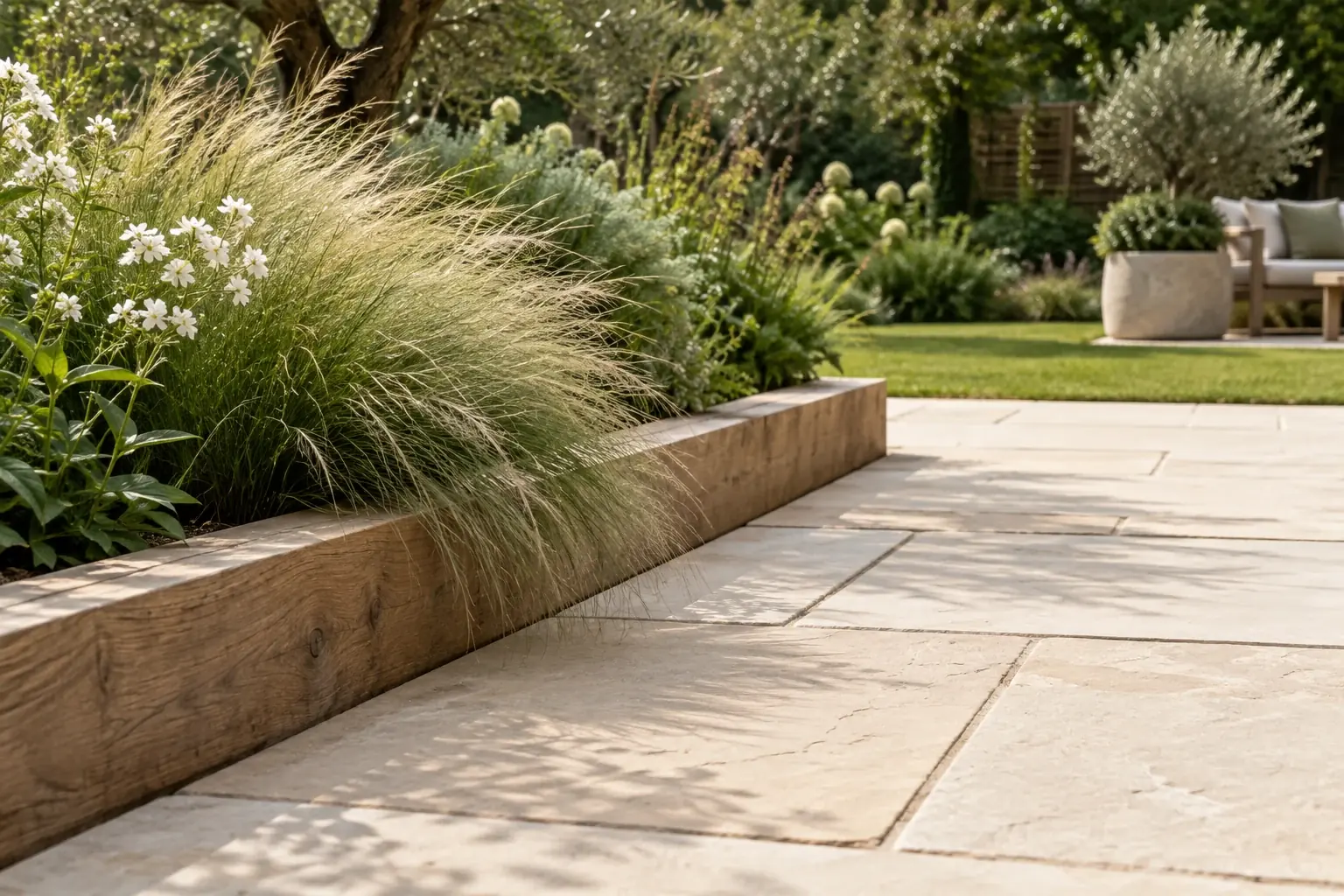
Stumps and below-ground expectations
A tree stump can affect a proposed route, bed or structure. Deal with that requirement before committing to finished levels or materials. The method needs to reflect the intended outcome; a surface cleared for ordinary garden use is not necessarily prepared for a construction requirement.
Discuss tree stump removal where a stump conflicts with the design. Confirm what may remain underground and what further preparation is needed. If another contractor depends on a particular finish or depth, make that requirement explicit so it is not discovered only when the next stage begins.
Materials, samples and quantities
Agree the proposed materials in enough detail to compare quotations. Names, sizes, colours and the area to be covered can all matter. A photograph of a finished garden does not establish the exact product or the preparation underneath it. Ask how substitutions, delivery constraints and surplus material will be handled.
Consider maintenance as well as initial appearance. Some finishes need more routine attention, and planting choices should suit the conditions and the care available. A garden that depends on frequent intervention may not meet a brief for simpler upkeep, even if it looks attractive immediately after the work.
Access and disruption
Measure entrances and describe turns, steps, shared routes and any restrictions on deliveries. Materials and waste need to travel through the same property that will remain in use during the project. Protecting that route and coordinating resident access are practical parts of the brief, not minor details to settle after work starts.
Discuss working areas, storage and what must be kept available each day. Where the project affects neighbours or a shared boundary, establish the relevant permissions. If a public route or another authority’s requirements are involved, additional arrangements may be necessary before the proposed programme is realistic.
Budget and changes during the work
Costs reflect the amount of preparation, materials, access, labour and disposal. Specialist advice or separately commissioned design can be additional. Compare written quotations against the same scope, including applicable VAT and the final condition of the site.
Changes should be agreed before they become additional work. Record the revised specification, cost and effect on the programme. A useful agreement distinguishes a genuine unforeseen condition from an optional change of preference, and identifies who has authority to approve either on behalf of the customer.
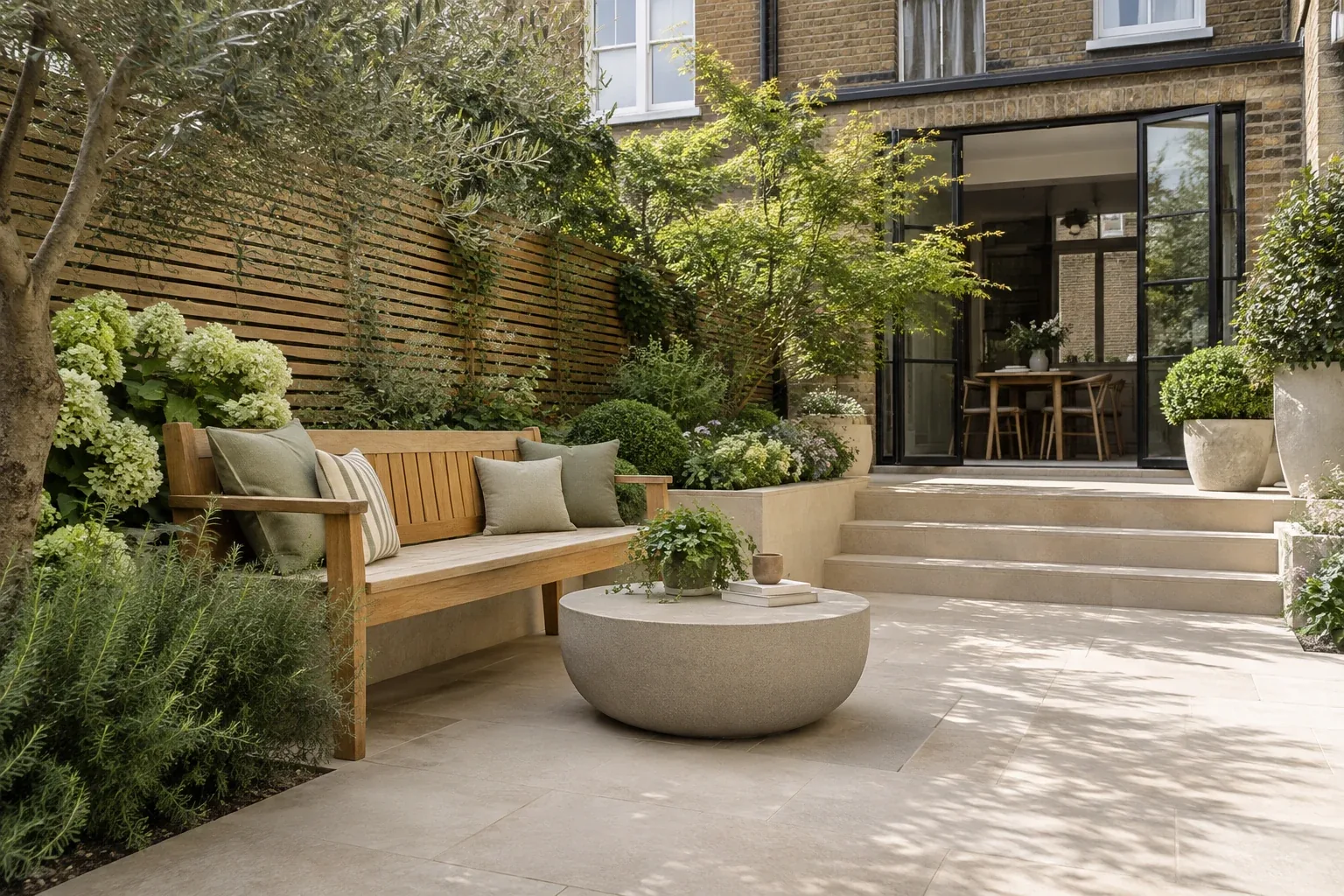
What a landscaping specification should separate
| Project element | Detail to agree | Common ambiguity |
|---|---|---|
| Preparation | Levels, clearance and ground information | Assuming all concealed conditions are covered |
| Materials | Product, quantity and approved alternatives | Choosing from an appearance photograph alone |
| Tree protection | Retained features and working constraints | Treating all ground as unrestricted |
| Finish | Reinstatement and care information | Confusing installation with future maintenance |
Handover and ongoing care
Review the completed work against the agreed design and finish. Ask about the maintenance required for new planting or surfaces, and keep any product or care information supplied. Some materials and planting need time to settle into use; the relevant guidance should be specific rather than an unsupported guarantee that no further attention will be needed.
Existing surfaces that need cleaning rather than replacement may suit pressure washing, subject to material and condition. Distinguishing restoration, routine maintenance and new landscaping can prevent unnecessary replacement. The right project is the one that solves your practical problem with a clearly understood level of disruption and future care.
USEFUL ANSWERS
Questions about this service
Does a landscaping quotation include a design service?
Only if that has been agreed. A practical work quotation, a layout proposal and a formal design commission are different scopes. Explain what drawings or decisions you need and confirm who is responsible for producing them.
Can new paving be installed close to an established tree?
The tree, roots, ground conditions and proposed construction need consideration. A standard approach may be inappropriate. Discuss the retained tree early and obtain any required arboricultural or planning advice before the route and levels are fixed.
How do I compare two landscaping prices?
Compare the same preparation, materials, quantities, disposal and finish. Check applicable VAT and any exclusions. A lower figure may describe a different project rather than a cheaper way of delivering the same outcome.
Can I change the materials after work starts?
Changes may affect cost, deliveries and the programme. Ask for the consequences and agree the revised specification before the change is implemented. Keep the record with the original quotation so the final scope remains clear.
Should the whole garden be cleared before planning?
Not automatically. Useful plants and features can be retained, and indiscriminate clearance may remove information or options. Agree what preparation is needed to understand the site, and distinguish that from the later installation work.
Will landscaping eliminate maintenance?
Every garden and surface has some care requirements. Discuss realistic upkeep when selecting materials and planting. The handover should explain relevant maintenance, rather than promise a permanently finished space that will never need attention.
A CLEAR NEXT STEP
Tell us about the work
Describe the finished garden you need and identify established trees, access constraints and features to retain. Confirm the sequence of work, relevant specialist advice, material handling and aftercare before accepting a project quotation.