
EXPERT CARE. ROOM TO GROW.
Tree Surgery London
Tree Surgery London provides tree care for homeowners, landlords and businesses across the capital. Discuss pruning, crown reduction, tree removal or stump grinding with a clear account of the problem you want to solve. The right recommendation starts with the tree’s condition, the space around it and the work that is practical for your property. Call to arrange the next step.
- Pruning, removal and crown management
- Assessment of tree condition and site access
- Work planning, protection and agreed clearance
CONSIDERED CARE / ACROSS THE CAPITAL EXPLORE THE GUIDE ↓
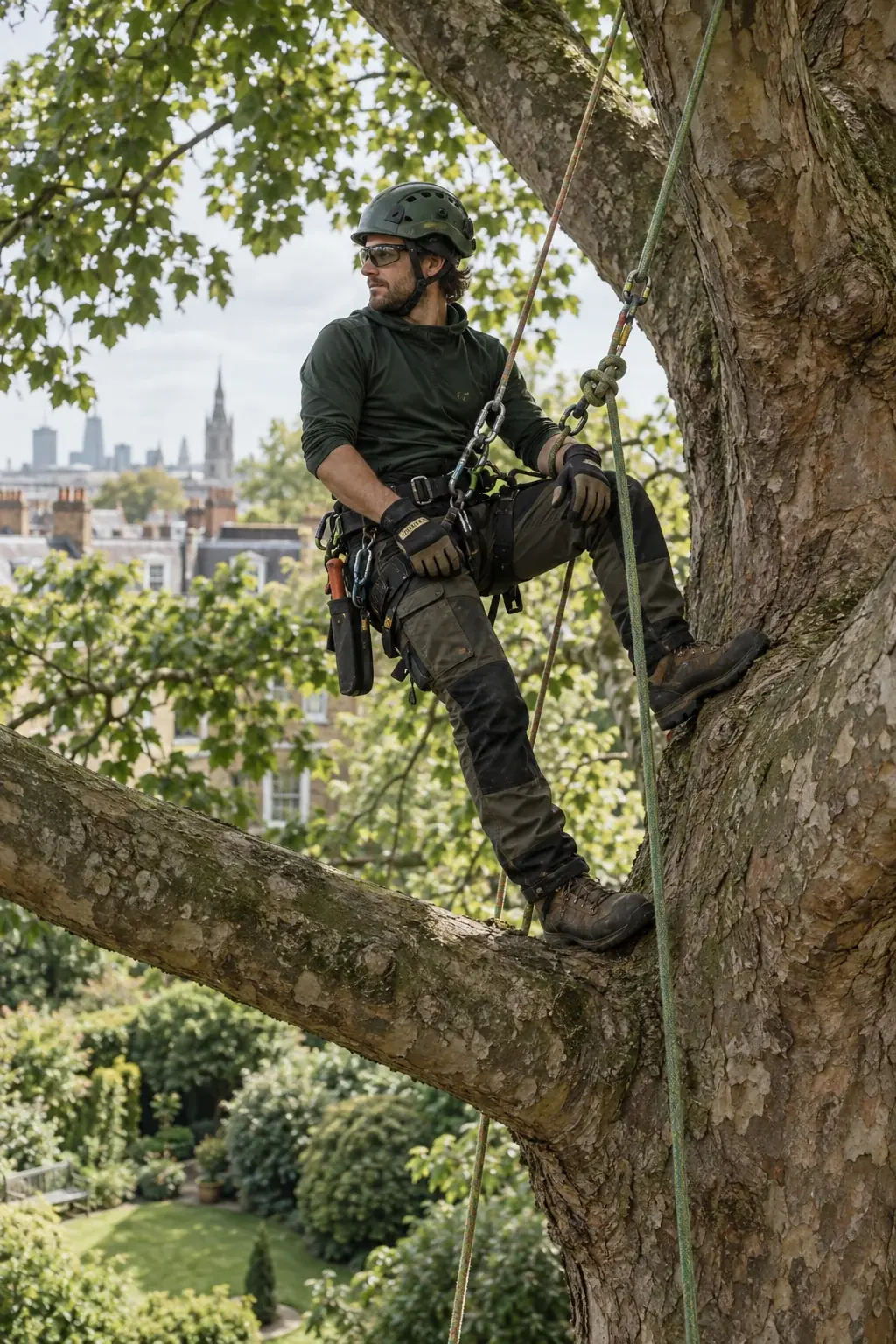
THE RIGHT WORK, FOR THE RIGHT REASON
Professional Tree Surgery in London
Good tree surgery solves a particular problem without losing sight of the living tree. A low branch may obstruct a path; a damaged limb may need attention; an overextended crown may require selective pruning. These are different jobs, and each needs a clear reason for the work.
London gardens add practical constraints: narrow passages, shared boundaries, nearby buildings and little room to lower branches. A useful assessment considers those surroundings alongside the species, structure and vitality of the tree. Removing more foliage is not automatically a better result.
When comparing tree surgeons in London, ask what the proposed work will achieve and how it will be specified. You should be able to distinguish necessary work from optional improvements. Our tree surgeon service is the starting point for discussing a site visit and the options for your property.
CARE THAT FITS THE TREE
Our Tree Surgery Services
Start with the issue you have noticed. The service description should explain both the work and its limits.
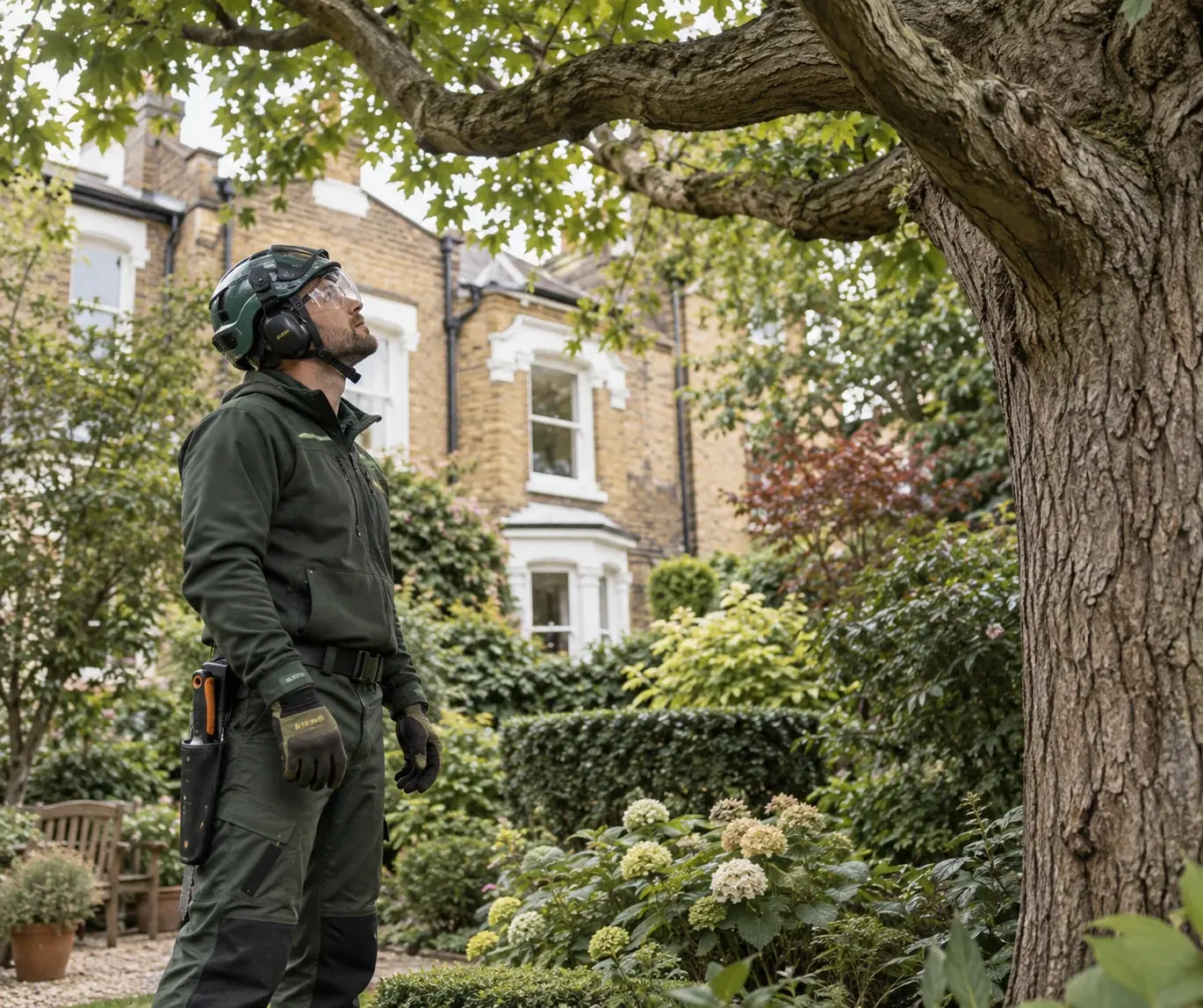
Tree pruning ↗
Selective cuts can address damaged, rubbing or poorly placed branches. A pruning specification should identify the aim and take account of the species and growth habit.
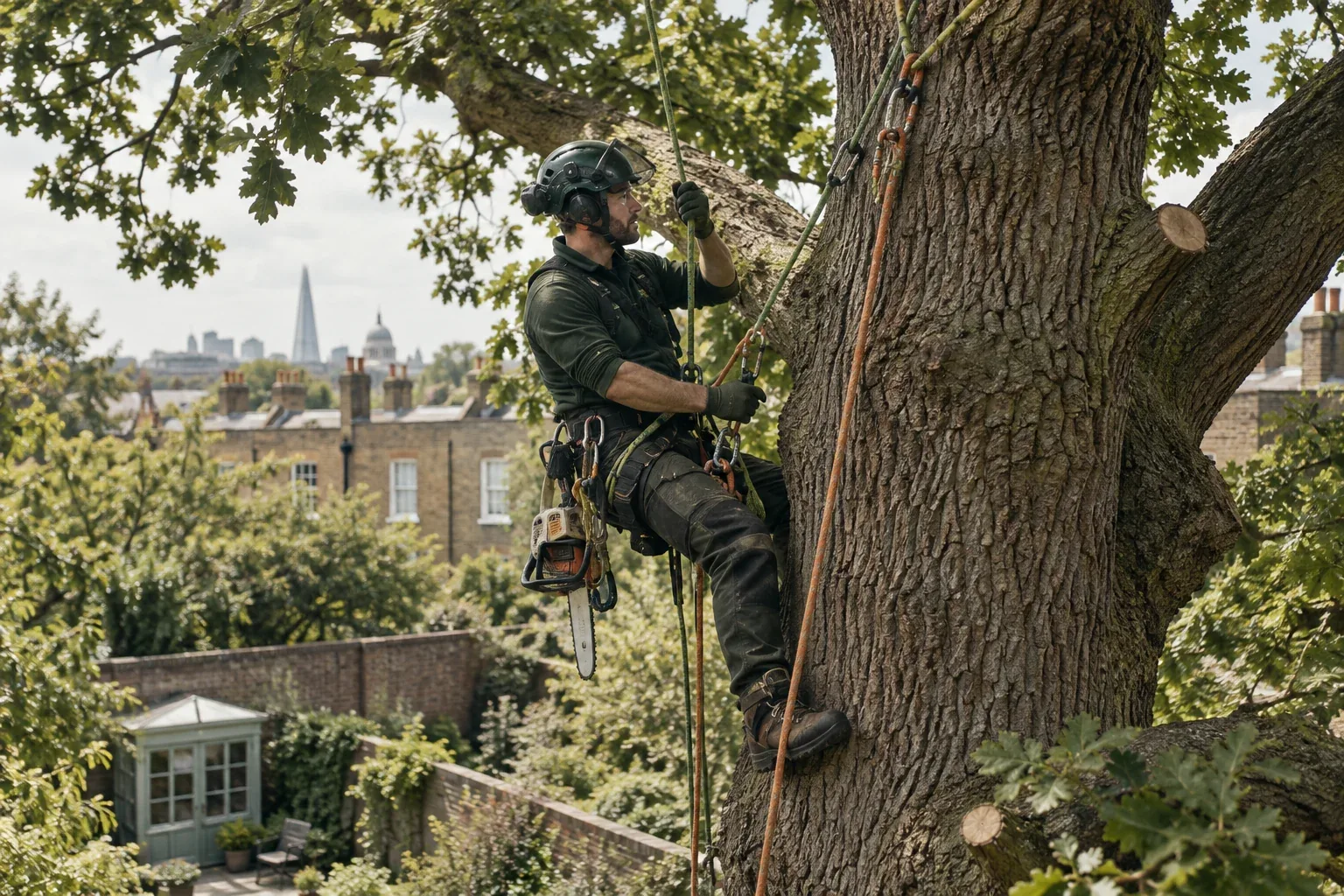
Tree removal ↗
Felling or sectional dismantling may be appropriate when retaining a tree is no longer practical. Access, nearby structures and the route for removing timber affect the method.
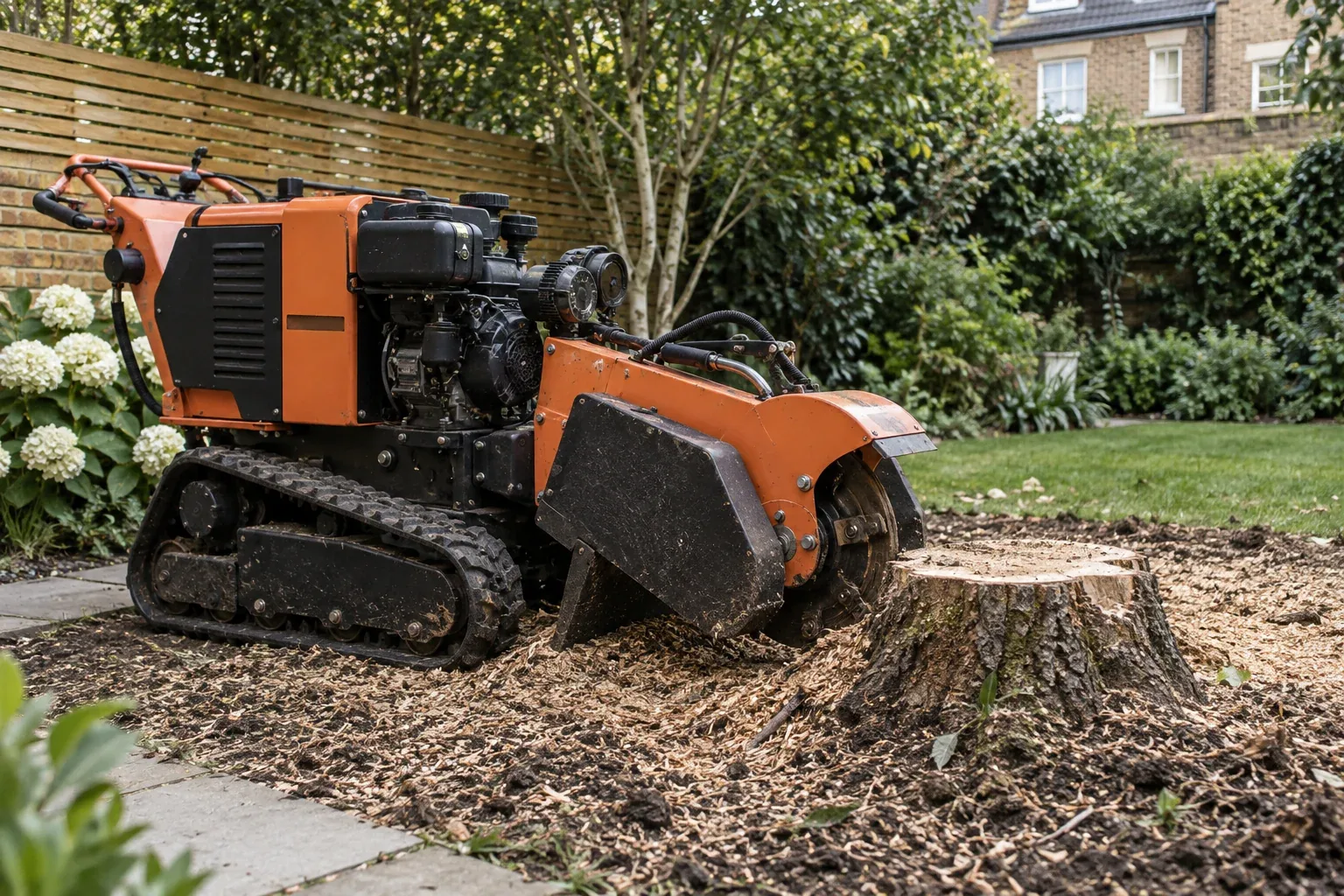
Stump grinding ↗
Grinding breaks down a stump below the surface. The agreed depth, access for machinery, underground services and treatment of the grindings need checking before the visit.
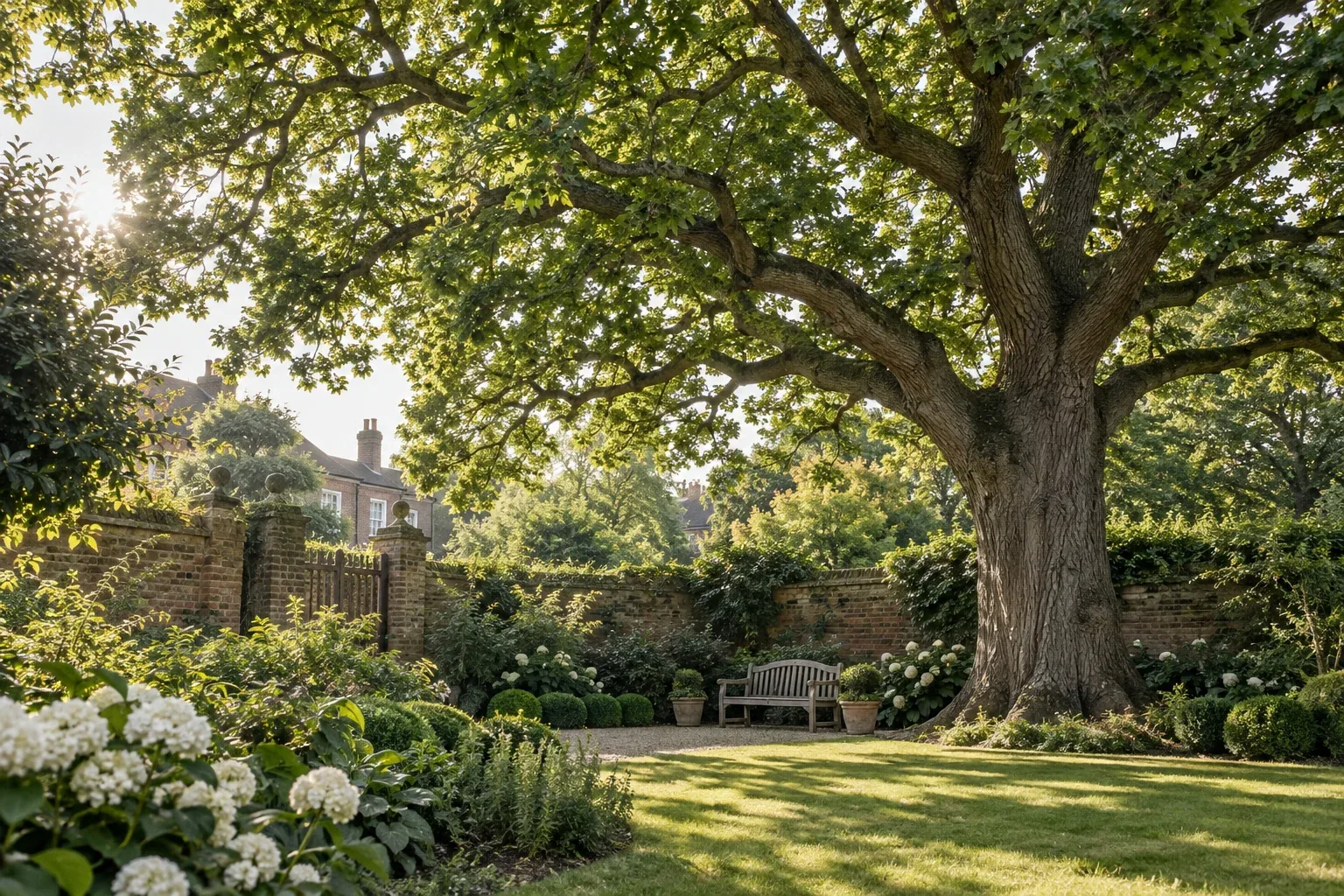
Tree care services ↗
Ongoing care can include observation, appropriate pruning and protecting soil around roots. Management should respond to the particular tree rather than follow an automatic annual cutting schedule.
Tree Surgery Services Explained
| Service | What It Involves | When It May Be Needed |
|---|---|---|
| Crown reduction | Selective shortening of branches to reduce crown height or spread. | An overextended crown, where the tree can tolerate suitable reduction. |
| Crown thinning | Selective removal within the canopy without deliberately reducing its outer dimensions. | A specific need to reduce crown density while retaining the outline. |
| Crown lifting | Removal or shortening of selected lower branches. | Clearance over a path, driveway or garden feature. |
| Deadwood removal | Removal of identified dead branches where justified. | Dead branches above regularly used areas; some deadwood can remain for habitat. |
| Tree removal | Ground-level felling or dismantling in sections. | A tree cannot reasonably be retained after assessment. |
| Stump grinding | Mechanical reduction of the stump to an agreed depth. | Preparing the area for a new use, subject to access and ground conditions. |
For the distinction between grinding and other methods, see tree stump removal. The quotation should say which method is proposed and what will remain below ground.
UNDERSTAND THE CANOPY
Tree Pruning and Crown Management
Reduction, thinning and lifting describe different outcomes. Ask for a clear specification rather than a vague instruction to “cut the tree back”. The amount and timing of pruning depend on species, condition, previous work and the purpose of the operation.
Crown reduction
Crown reduction changes height or spread. Branches are shortened to suitable growth points, retaining a coherent framework. It is not the same as topping, which leaves indiscriminate cuts and can create future management problems.
Crown thinning
Thinning changes density, not the overall size. Selected branches are removed within the canopy. It should not be sold as a guaranteed cure for shade or as a reason to strip out the inner crown.
Crown lifting
Lifting creates space beneath the canopy. Selected lower growth is removed or shortened. Excessive removal can leave large wounds and an unbalanced relationship between trunk and crown.
Explore tree pruning and crown work if you need to manage clearance, canopy spread or competing branches. The guide below explains where each type of attention applies.
A CLOSER LOOK
One tree. Different kinds of care.
Select a marker or an explanation to explore the tree. These are points for discussion, not instructions for carrying out work yourself.
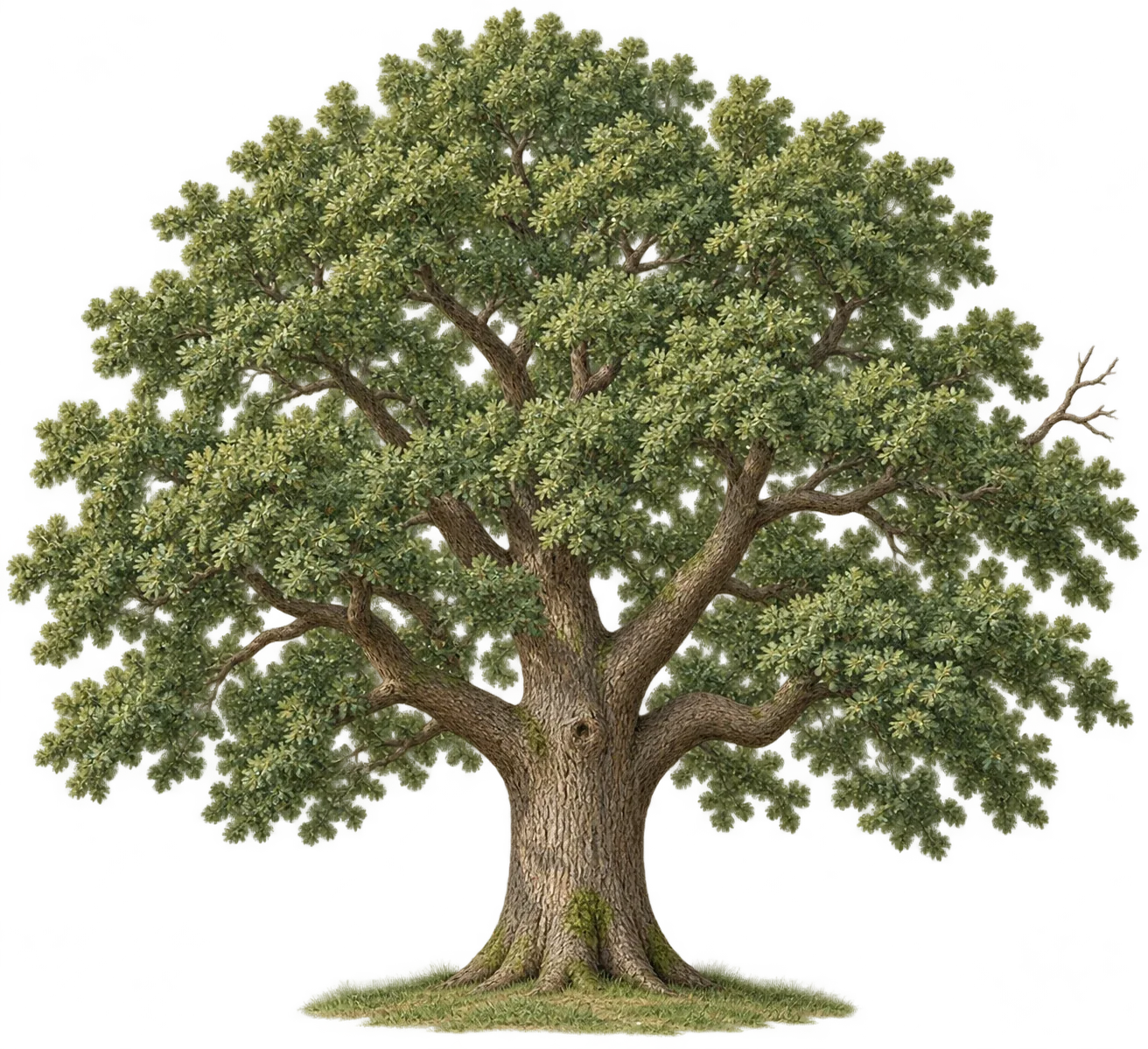
Positions are indicative; the diagram does not diagnose this tree or specify pruning cuts.
Crown Reduction
Shortening selected outer branches changes crown dimensions. The extent must suit the tree; the marker does not show a cutting line.
Crown Thinning
Selective work within the canopy changes density while keeping its outline. Removing large amounts of inner growth is not the objective.
Crown Lifting
Selected lower branches may be shortened or removed for clearance. Consider the size of wounds and the amount of live crown retained.
Deadwood Removal
A bare branch should be assessed before removal. Where there is little risk to people or property, some deadwood may be retained as valuable habitat.
Branch Inspection
Look at branch unions, damage, cracks and unusual loading. A photograph can help a discussion, but cannot establish whether a branch is safe.
Trunk Inspection
Changes in bark, cavities, wounds or fungal growth can warrant closer inspection. Appearance alone does not establish the extent of any internal decay.
Root Zone Protection
Avoid excavation, heavy storage and soil compaction around trees. The protected area needs site-specific advice; the shaded ground is illustrative, not a measured boundary.
Tree Health Assessment
Assess the whole tree: crown, trunk, root area and growing conditions. Changes over time and recent ground works matter as much as a single visible symptom.
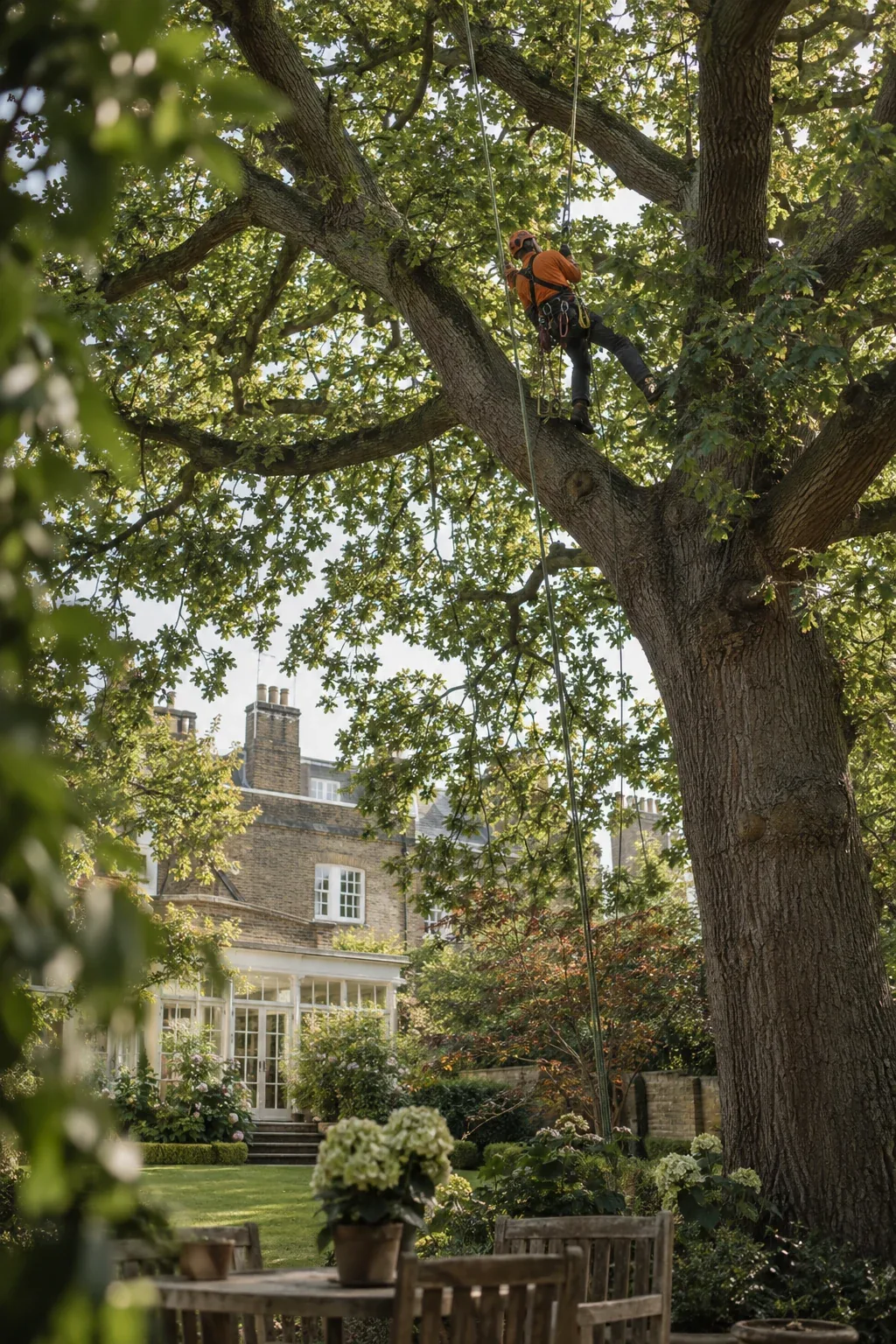
SPACE, ACCESS & THE SURROUNDINGS
Tree Removal and Difficult Access
Removal may be considered after serious structural damage, loss of vitality or an assessment that retention is unsuitable. A tree being large or close to a house does not, by itself, settle the question. Discuss proportionate alternatives before deciding.
A tree with sufficient clear space may be felled from the ground. In confined gardens, it may need dismantling in sections, with suitable lowering arrangements to protect the surroundings. The method depends on the tree and the site; lifting equipment is not automatically necessary or feasible.
- Measure the narrowest access point and mention steps or shared passages.
- Identify greenhouses, roofs, overhead services and planted areas that need protection.
- Agree how timber will be carried out and whether the stump is included.
Read about tree felling and controlled removal before asking for a quotation. If roots are suspected in building damage, seek appropriate arboricultural and building advice rather than assuming removal will resolve it.
NOTICE CHANGE EARLY
Tree Health and Arboricultural Advice
Sparse foliage, a newly broken limb or a change around the base deserves attention, but a symptom is not a diagnosis. Drought, soil disturbance, pests, disease and structural defects can produce overlapping signs. Note when the change started and whether it follows building work, a storm or altered drainage.
An arborist considers the crown, stem, branch attachments, roots and surroundings together. Some concerns call for a specialist survey or further investigation. Routine tree work and a formal report for planning, insurance or a mortgage are different commissions; confirm the purpose before booking.
Do not approach a tree with hanging branches, a newly lifted root plate or obvious recent movement. Keep people away and obtain urgent professional advice. For longer-term management, explore tree care and condition-led maintenance.
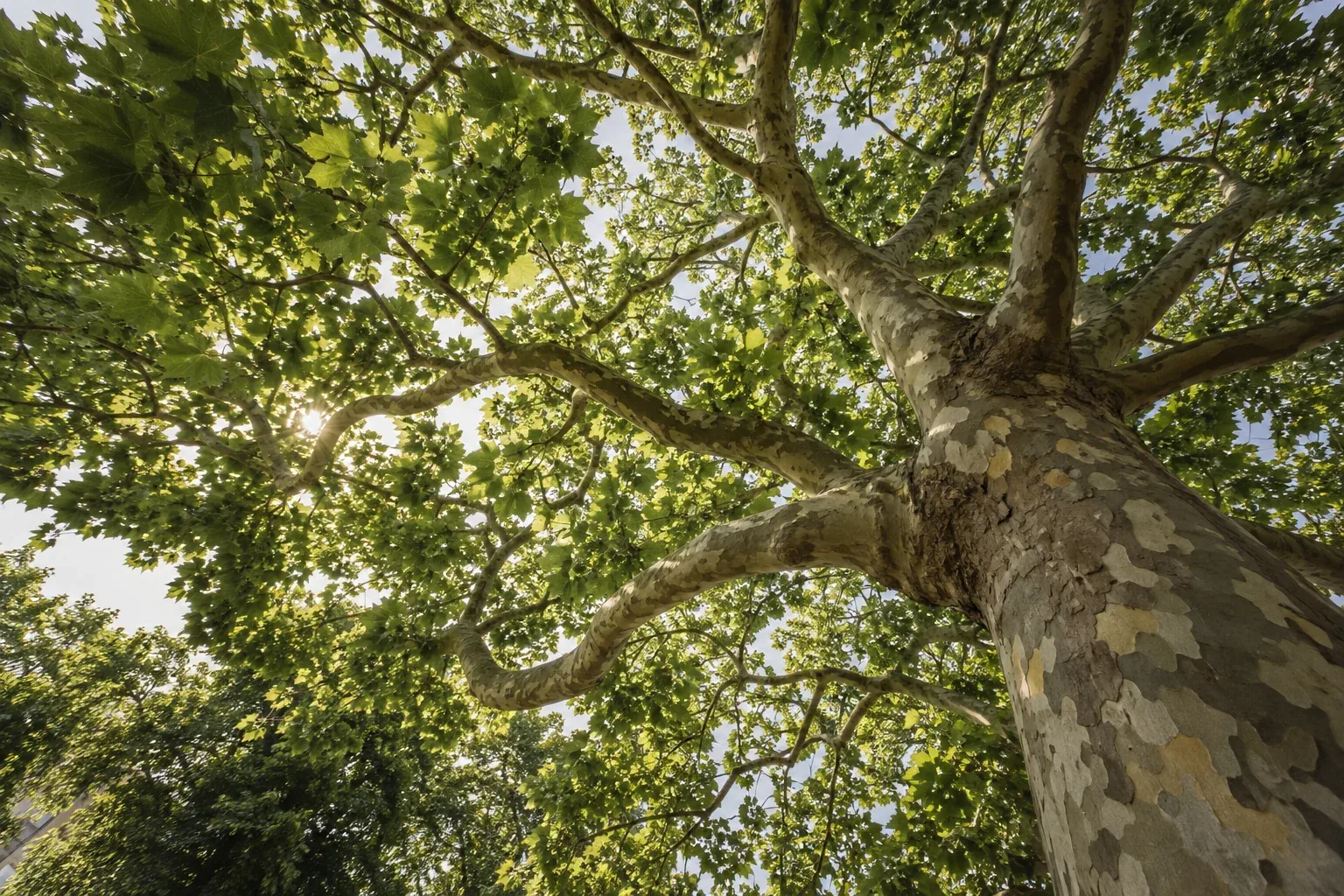
Common Tree Problems
| Tree Problem | Possible Cause | Recommended Next Step |
|---|---|---|
| Sparse leaves or dying twigs | Water stress, root disturbance, disease or other growing conditions. | Record the pattern and timing; arrange assessment if decline persists or develops suddenly. |
| Fungal brackets on the stem or base | Wood-decay fungi; significance depends on species and location. | Seek arboricultural advice. Removing a bracket does not remove decay inside the tree. |
| A split branch or hanging limb | Storm loading, a weak attachment or previous damage. | Keep clear and arrange prompt assessment; do not pull the branch down. |
| New leaning or lifted ground at the roots | Possible movement or disturbance of the rooting system. | Restrict access and seek urgent advice, especially after wind or excavation. |
| Cracks near a building | Several building or ground-related causes are possible. | Use a suitable investigation; proximity alone does not prove the tree is responsible. |
PLANNING ON THE GROUND
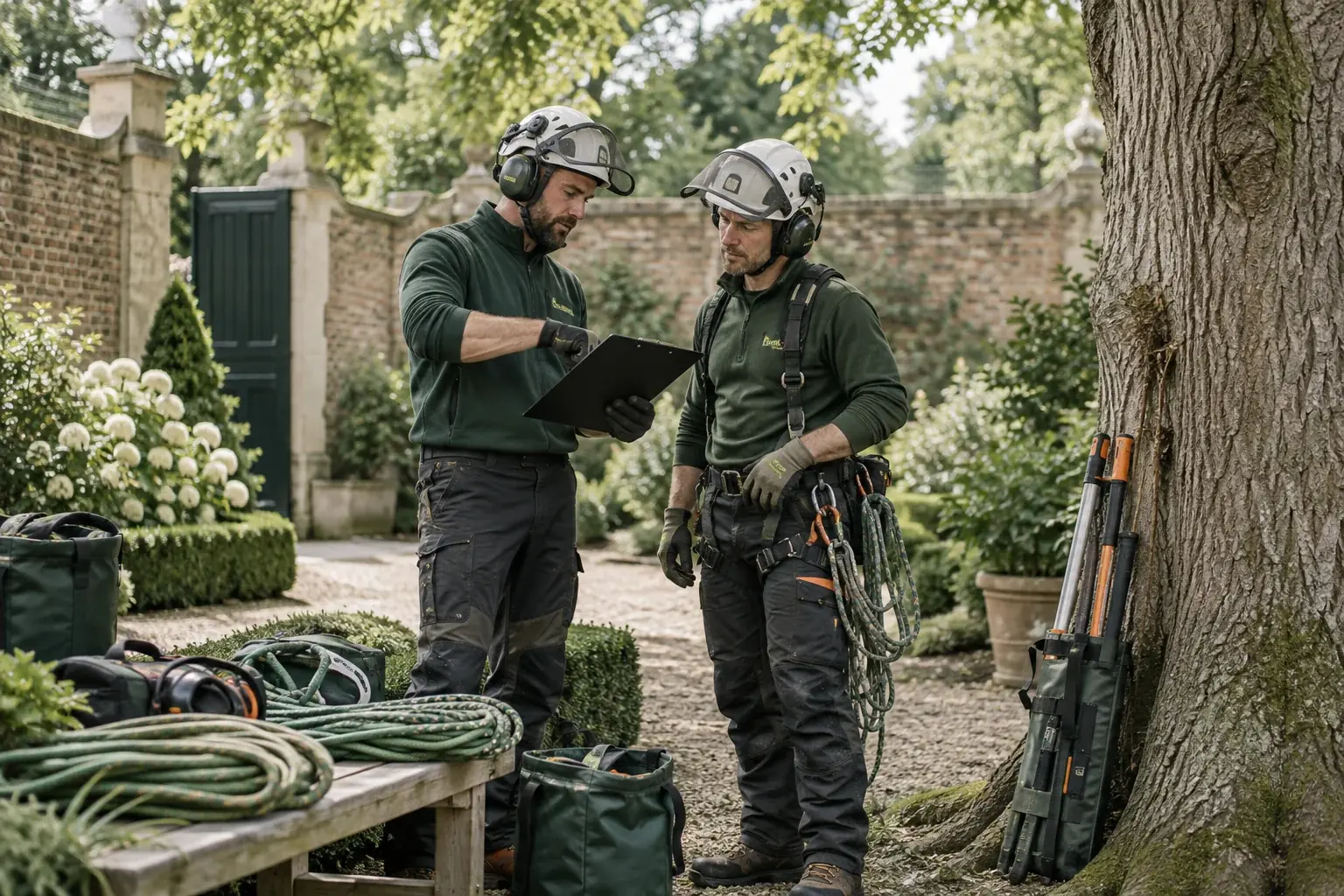
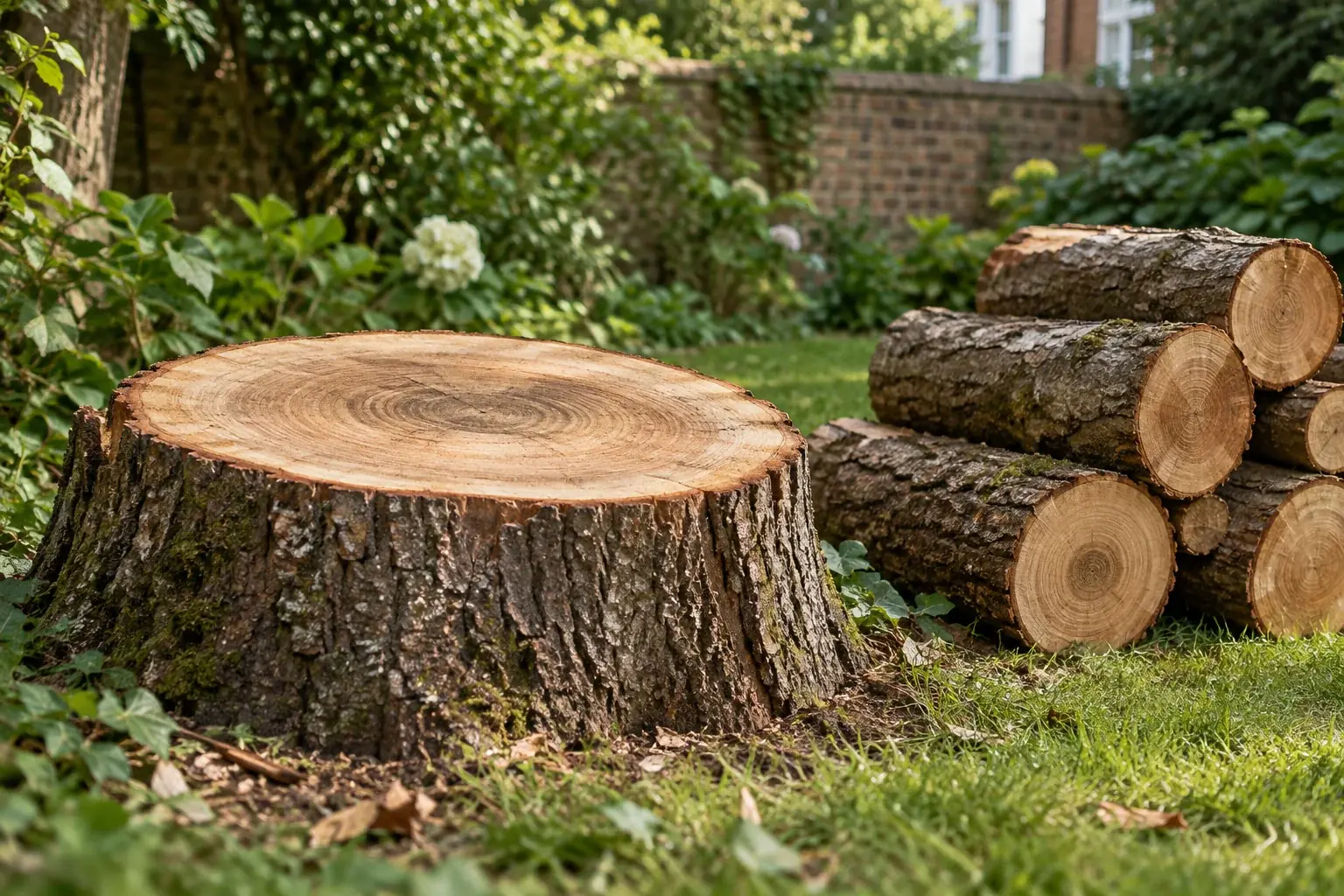
The work around the tree
Equipment, handling timber and leaving usable space deserve as much attention as the cuts in the canopy.
CHECK BEFORE WORK IS BOOKED
Tree Preservation Orders in London
A Tree Preservation Order (TPO) protects specified trees, groups or woodland. Written consent from the local planning authority is generally required for work covered by an order. Owning the tree does not remove those controls.
Start with your borough’s planning or tree officer service. Check the exact tree and the proposed work, not simply whether an online map shows a symbol. Confirm any uncertainty with the council and retain the decision and approved specification.
In a conservation area, certain work on trees without a TPO normally requires six weeks’ notice. Size thresholds and exceptions apply. A section 211 notice is a different process from a TPO application; do not assume that one substitutes for the other.
Permission checks and wildlife checks are separate. Active bird nests and protected species may affect what can be done and when. Discuss the proposed tree work before fixing a date, and consult the government guidance on protected trees for the rules and exceptions.
Tree Work Planning
| Situation | What To Check | Why It Matters |
|---|---|---|
| A potentially protected tree | TPO status, conservation area status and the exact consent or notice needed. | Work must follow the applicable controls and any authorised specification. |
| A narrow or shared route | Gate width, steps, access rights and neighbours’ arrangements. | Access affects machinery, handling and the time needed. |
| Tree work beside a road or path | Public access, work-zone control and any authority requirements. | People outside the property must also be protected. |
| Nests, cavities or possible roosts | Active nests and signs requiring specialist wildlife advice. | Tree permission does not override wildlife protection. |
| Stump grinding or ground works | Underground services, the intended depth and the area available. | Avoid assuming that a clear surface means clear ground below. |
CLEAR DECISIONS AT EACH STAGE
How Our Tree Surgeons Work
Describe the problem
Call with your postcode, the tree’s location and what has changed. Photographs and access measurements help an initial discussion; they cannot confirm every site condition.
Assess and specify
Discuss the intended outcome, tree condition and constraints. Ask for the proposed work in clear terms, together with any permissions or further advice required.
Agree the visit
Confirm the quotation, access arrangements, what needs moving and how the work area will be controlled. Check qualifications and current insurance before appointing a contractor.
Review and clear
Confirm the completed work against the agreed scope. Waste handling, logs retained on site and the final clear-up should already be part of that agreement.
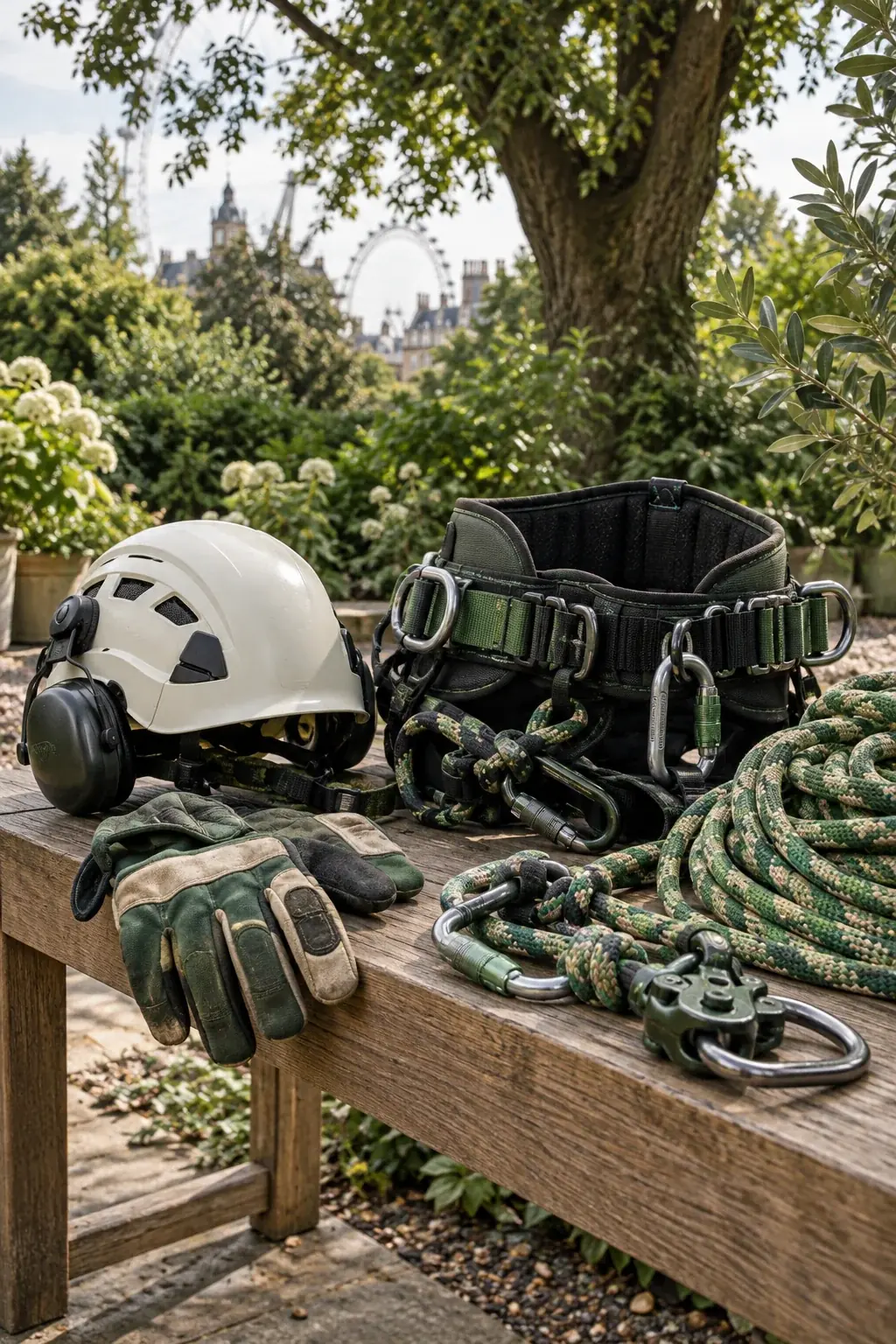
PREPARATION IS PART OF THE WORK
Safe work needs a site plan
Climbing, cutting and moving timber require a suitable work method, equipment and competent people. A confined garden also needs arrangements to keep residents, neighbours and visitors outside the work area. A helmet in a photograph is not evidence of competence.
Ask who will carry out the work, what qualifications are relevant and how a rescue would be managed for climbing operations. Public access and overhead services can change the plan. Keep children and pets away from the work zone until the contractor confirms it can be used again.
UNDERSTAND THE QUOTATION
Tree Surgery Costs in London
There is no useful single price for “a tree”. Height matters, but crown spread, branch weight, condition and the space below can be equally important. A modest tree over a conservatory can take more planning than a larger tree in an open garden.
Restricted access adds handling time. Sectional dismantling, lowering equipment, specialist access and arrangements for a public path may affect the quotation. Stump grinding, taking logs away and removing grindings are separate items unless included in writing.
Compare quotations against the same specification. Check whether VAT, clearance and any separately commissioned reports are included. If the work changes after inspection, agree the revised scope and price before it proceeds. An initial estimate based on photographs may need confirmation on site.
LONDON’S GARDENS & SHARED SPACES
Tree care across the capital
Enquiries are welcome for North, South, East, West and Central London. Give your postcode when calling to confirm availability and the practical arrangements for your site. The access and the tree’s needs matter more than a generic borough description.
USEFUL ANSWERS
Frequently Asked Questions
Practical questions to help you plan the next step.
How do I choose a tree surgeon in London?
Ask for a clear work specification, evidence of relevant qualifications and current insurance. Discuss how access, people and property will be protected. Compare the proposed outcomes as well as the price; an unspecified “cut back” is difficult to assess.
Can pruning be an alternative to removing my tree?
It may be, depending on the condition, species and problem. Selective pruning can create clearance or manage particular branches, but cannot make every damaged or declining tree suitable for retention. Ask why the recommended option is appropriate.
When is the best time to prune a tree?
Timing varies with species, condition and the reason for pruning. Some trees need different treatment from the general dormant-season approach. Wildlife and active nests also need checking. Ask for advice about the particular tree rather than booking purely by the calendar.
Is crown reduction the same as topping?
No. Crown reduction uses selective pruning to suitable growth points to alter dimensions while retaining a structured canopy. Topping makes indiscriminate cuts. Ask how the extent of the proposed reduction will be described and whether the tree can tolerate it.
Do I need permission to remove a tree in my garden?
Private ownership does not settle the question. Check TPO and conservation area controls with your borough before work is arranged. Other restrictions may also apply. Keep any written consent and make sure the work matches its terms.
Can work take place when birds are nesting?
An active wild bird nest is protected while it is in use or being built. Timing alone is not a sufficient check because nesting can occur outside typical periods. Work that could harm protected wildlife needs to be reviewed and may have to wait.
Will stump grinding remove every root?
No. Grinding reduces the stump and nearby material within the agreed working area and depth. Roots can remain beyond it. Discuss plans for replanting or construction, underground services and whether grindings will be retained or removed.
Can you assess a tree from photographs?
Photos can support an initial discussion and help identify access constraints. They cannot show every defect, root condition or relationship to nearby structures. A site assessment or a separate specialist investigation may be needed before advice or a quotation is confirmed.
What happens to the branches, logs and woodchip?
Agree this in the quotation. Say whether you want useful logs or woodchip left on site and where they can be placed. Confirm removal of unwanted material, the expected clear-up and any separate charge for stump grindings.
What should I do after storm damage?
Keep away from hanging branches, newly leaning trees and damaged overhead lines. Keep others clear and seek appropriate urgent assistance. Do not climb, pull on a broken limb or try to inspect unstable parts at close range.
START WITH THE TREE IN FRONT OF YOU
What does your tree need?
Call 020 3404 3305 with your postcode, the issue you have noticed and a little about access. Discuss the appropriate next step before committing to work.
Further reading: RHS tree pruning advice; RHS guidance on bracket fungi; wild bird protection; HSE guidance on public safety during tree work. General information cannot replace advice about a particular tree.