
TREE SURGERY LONDON / GARDEN & GROUNDS
Garden Clearance in London
An overgrown garden needs decisions about what to keep as well as what to remove. Garden clearance can restore access and reveal the space beneath unwanted growth, but it should have a defined boundary and finish. Describe the vegetation, any stored materials and the route out of the property so the work and disposal requirements can be assessed.
- Identify plants and features to retain
- Separate vegetation from other materials
- Agree the clearance boundary and finish
Recover the space without losing what matters
Before asking for everything to be cleared, identify trees, shrubs, bulbs and garden features that you want to retain. An untidy plot can contain useful planting beneath vigorous growth. Photographs, labels and a walk-through help distinguish deliberate retention from material that is intended to go.
Explain why the garden is being cleared. Preparing for a tenancy, restoring a neglected family garden and making room for a new layout lead to different priorities. If the objective is ongoing upkeep, gardening services can be discussed as the next stage once the initial recovery work is complete.
Define the area and the material
A clearance quotation should describe which parts of the garden are included. Front and rear areas, side passages, inaccessible corners and storage behind structures should not be left to assumption. Explain the height and density of growth as well as the approximate area it covers.
Green waste is different from broken furniture, old paving, builders’ material or unidentified containers. Mention all known material at the enquiry stage and ask what the provider can accept. A general photograph of an overgrown border does not disclose what may be concealed beneath it, so uncertainty should be acknowledged rather than silently included in an unlimited expectation.

Clearance and large-tree work
Removing surface vegetation is not the same operation as climbing, reducing or taking down a tree. Large woody growth and established trees may need a separate assessment, equipment and permission checks. Do not assume they are covered because they stand inside the boundary of the garden.
If a standing tree is part of the proposal, discuss tree felling explicitly. Likewise, tree stump removal is a separate outcome from clearing the growth around a stump. Identifying those tasks early helps avoid an apparently cleared plot still containing an obstruction that matters to the intended next use.
What may be hidden in an overgrown plot
Dense vegetation can conceal uneven ground, discarded sharp objects, damaged surfaces or other obstacles. Describe anything you know about the history of the site. A property that has been used for storage may need a different approach from one containing only seasonal growth and leaf litter.
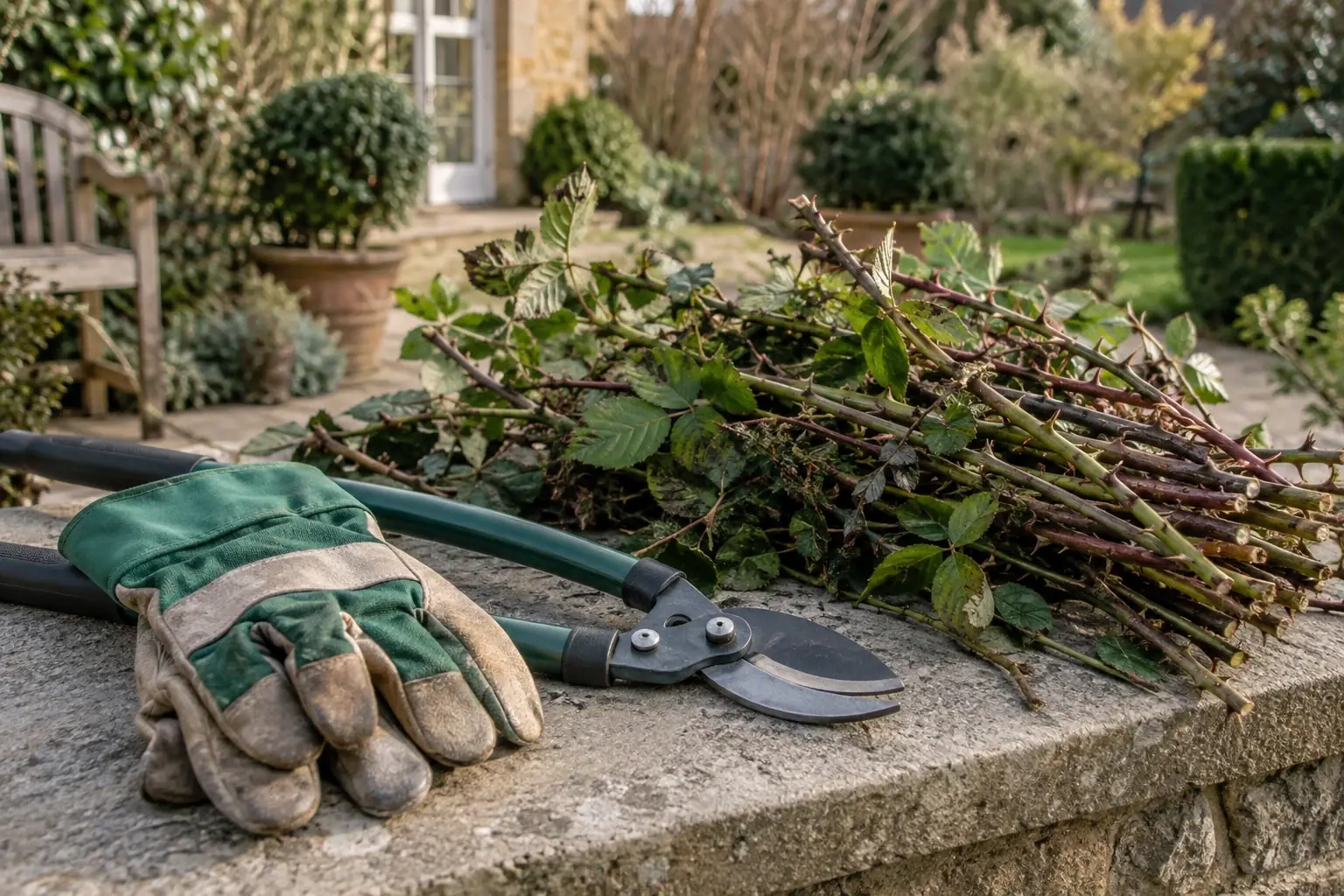
Do not search through unknown material with bare hands to provide a more complete description. If suspicious or potentially hazardous material is found, stop and ask how it should be assessed. Specialist materials should not be mixed casually with ordinary garden arisings or assumed to form part of a routine clearance service.
Access controls the practical work
The route for people, tools and waste influences how the job can be carried out. Measure gates and explain turns, steps, slopes and shared entrances. A long route through the property can add handling time even where the garden itself is modest in size.
Discuss parking or loading arrangements and any restrictions on when shared access can be used. Neighbours’ land is not automatically available as a convenient exit. If materials need to pass through a building, agree protection and practical arrangements before the visit rather than expecting that route to be accepted on arrival.
Wildlife and protected features
Overgrown gardens can provide habitat. Vegetation should be checked appropriately before disturbance, especially where active nests or other protected wildlife may be present. A desire to recover the space quickly does not remove those considerations. The method or timing may need to change if a constraint is identified.
Trees subject to a Tree Preservation Order or conservation-area controls require particular attention if work could affect them. Clearance should also respect retained roots and planting. An instruction to remove unwanted growth is not permission to excavate around an established tree or alter ground levels without considering the consequences.
Waste handling is part of the quotation
Ask how the different material will be separated, moved and dealt with. The amount can be difficult to estimate from a single image, especially where growth is dense. State whether you want any suitable organic material retained for an agreed use on site.
If waste is being removed, discuss the provider’s arrangements and relevant documentation rather than judge the job only by how quickly a vehicle leaves the property. Additional non-garden material can affect the quotation and disposal options. A defined inventory makes it easier to understand what is included and prevents an avoidable disagreement at the end of the visit.
What does a cleared garden look like?
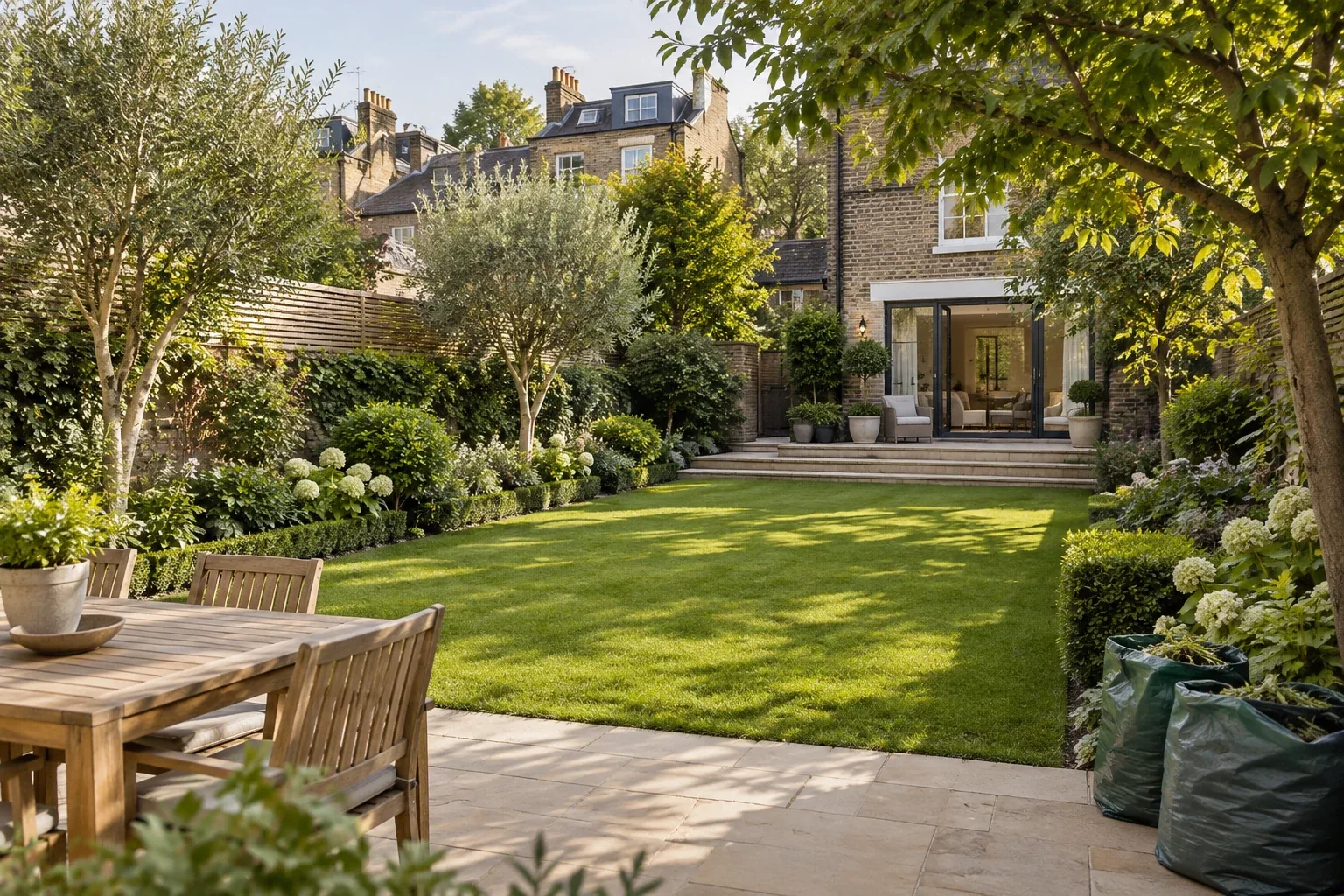
Clearance can leave a garden accessible and visibly more open without producing a finished lawn, prepared planting bed or new surface. Roots, uneven soil and old structures may still require separate decisions. Agree the expected level of tidying and what will remain.
For a redesigned layout, landscaping should follow a clear brief rather than rely on the idea that clearance itself creates a blank, construction-ready site. A photograph taken after vegetation removal may reveal conditions that could not be assessed beforehand. Allow for a useful review between stages instead of committing to a finish before the ground is understood.
Separate the clearance tasks
| Material or feature | Question to settle | Possible separate scope |
|---|---|---|
| Unwanted vegetation | Which plants remain? | Later maintenance |
| Established trees | What tree work is intended? | Pruning or removal assessment |
| Stumps and roots | What use must the ground support? | Grinding or other removal options |
| Stored or concealed materials | What can the provider accept? | Specialist handling or another quotation |
Pricing and staged work
The volume and type of material, density of growth, access and disposal requirements influence the cost. A large area with light growth is not equivalent to a small area filled with mixed stored materials. Ask what information is needed for a reliable quotation and whether an on-site check is required.
Some gardens benefit from a staged approach: recover access, assess what is revealed, then agree further work. The quotation should distinguish a first stage from a commitment to complete every possible task. Record any revised scope and price before additional clearance or specialist work proceeds.
Preparing and reviewing the visit
Mark items to retain and make the route available. Tell the provider about pets, shared entrances and anything that must remain usable. Avoid cutting back vegetation yourself in a way that obscures instructions or leaves unstable material; agree any preparation that would genuinely help.
At the end, review the agreed areas and waste arrangements. Keep a record of any limitations or further tasks identified. The next useful step may be a modest maintenance plan rather than another major clearance. A garden that is easier to manage is a practical outcome, even where longer-term improvements are deliberately left for a separate decision.
USEFUL ANSWERS
Questions about this service
Does garden clearance include all rubbish on the property?
Only the material agreed in the scope. Green waste, bulky items, builders’ material and potentially hazardous waste are different categories. Describe them separately and confirm what the provider can accept before treating the visit as a complete disposal service.
Can useful plants be kept during clearance?
Yes, retention instructions should be part of the brief. Mark or photograph the plants and features that matter, and discuss uncertain areas before work begins. A request to clear a garden should not mean every living plant is automatically unwanted.
Will weeds never return after a clearance?
Clearance does not create a permanent maintenance-free garden. Some growth can return from seeds, roots or neighbouring areas, depending on the plants and methods involved. Discuss the appropriate follow-up rather than rely on an unsupported promise of permanent eradication.
Can an old shed be removed at the same time?
Mention it separately. A structure can involve different materials, access and safety questions from vegetation. Confirm whether assessment, dismantling and disposal are offered and included; do not assume they form part of an ordinary green-waste quotation.
What if unknown material is uncovered?
The scope may need to be reviewed. Do not expect the provider to handle every concealed item without assessment. Ask how additional or unsuitable material will be identified, priced and dealt with before work proceeds beyond the original agreement.
Is the ground ready for landscaping afterwards?
Not automatically. Clearance may reveal uneven levels, stumps, buried surfaces or other constraints. Review the exposed site and agree the preparation needed for the next project instead of treating removal of vegetation as a complete construction specification.
A CLEAR NEXT STEP
Tell us about the work
Identify vegetation, branches and any mixed material in the clearance area. Mark planting and items to retain, explain the removal route and confirm which waste streams and final condition are included in the price.