TREE SURGERY LONDON / CONSIDERED OUTDOOR CARE
Tree Felling and Removal in London
Removing a tree changes the garden permanently and needs more thought than deciding where the trunk will fall. The tree’s condition, the space around it and the route for handling timber determine the practical options. This service covers enquiries about felling and sectional removal; keeping them together avoids treating two methods of the same job as unrelated services.
- Ground felling or sectional dismantling
- Access and neighbouring property considered
- Timber, stump and clearance scope agreed
When removal may be the appropriate outcome
Reasons for considering removal include serious structural damage, a tree that has died, or a management decision that cannot reasonably be achieved through retention. None of those conclusions should be reached solely from a tree’s size. The condition, the consequences of failure and the use of the surrounding space need to be understood together.
Explain why you want the tree removed and whether there is an existing assessment, council decision or planning requirement. A new garden layout is a different brief from a damaged tree after a storm. Where the concern is branch clearance or the spread of an otherwise retainable crown, tree pruning may offer an alternative worth discussing before removal is authorised.
Felling and sectional dismantling are different methods
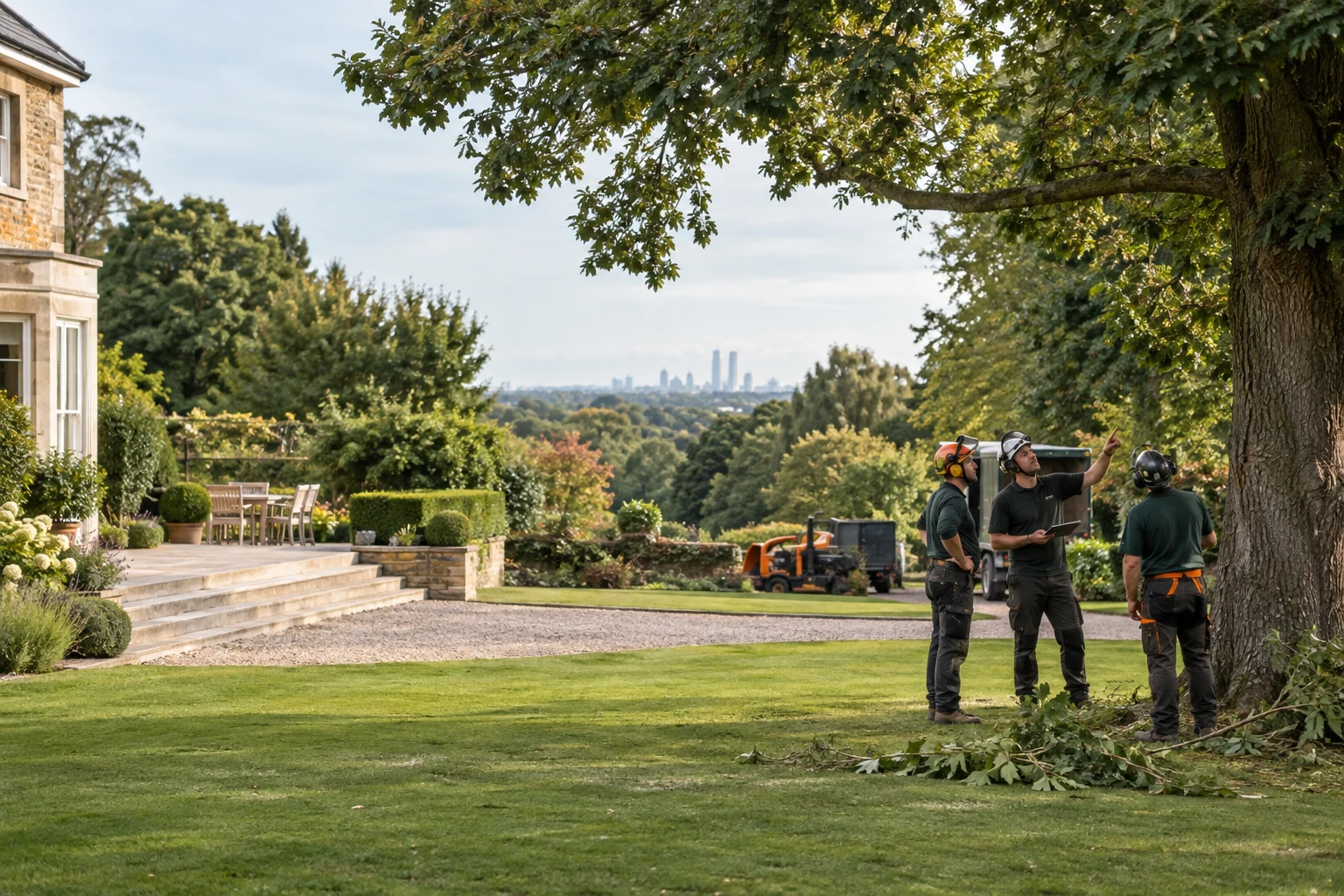
Ground felling brings the tree down in a planned direction where there is suitable clear space and the operation is appropriate. In a confined garden, a contractor may instead dismantle the tree in sections. The latter can involve controlled handling of branches and timber so material does not simply drop into the area below.
The appropriate method depends on more than whether a climber can reach the crown. Defects, available working space, neighbouring structures and suitable access equipment all affect the decision. A particular machine should not be promised before the site is understood. Discuss the proposed approach with the provider and ask what constraints could change it.
Restricted London access
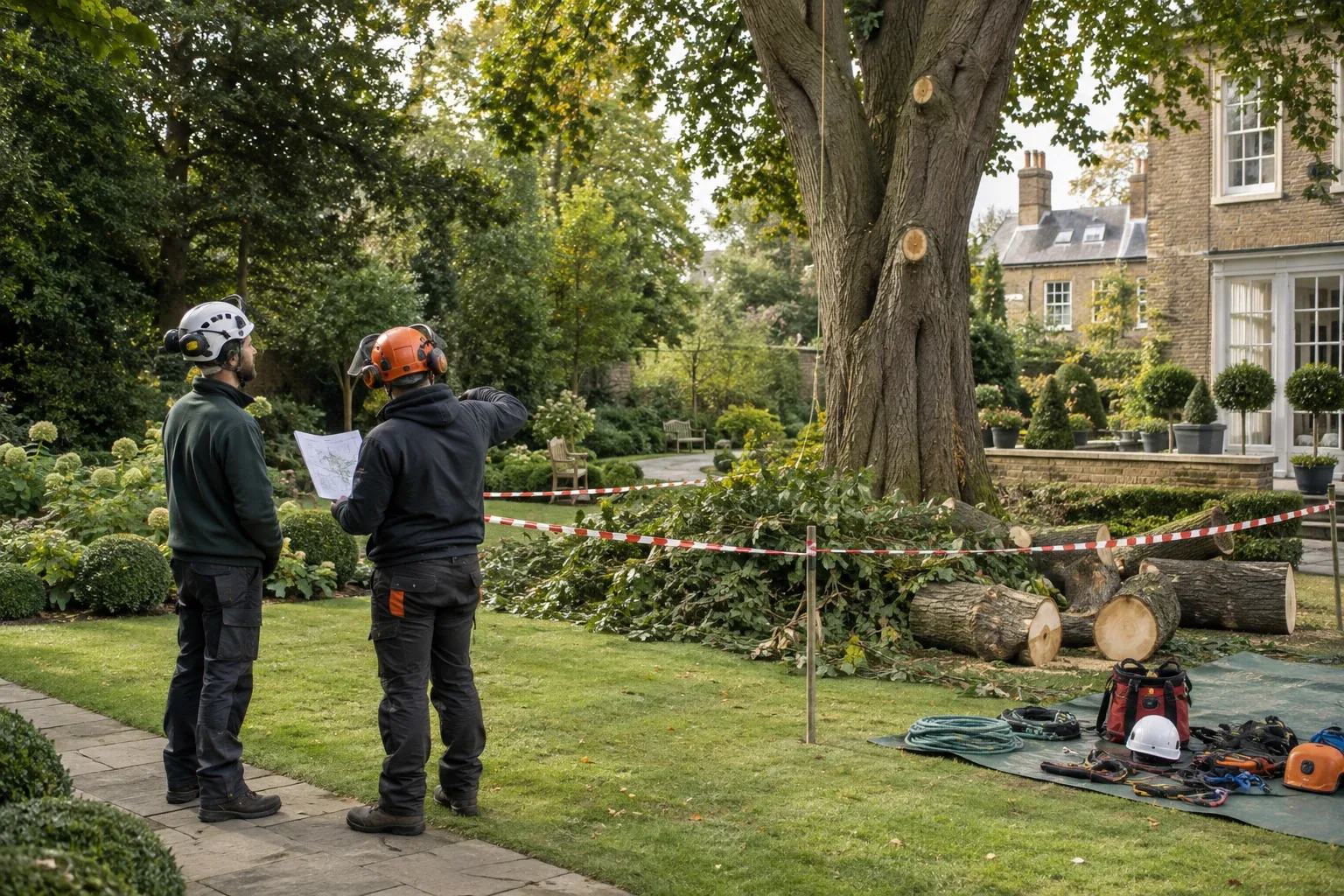
A narrow passage may be sufficient for people but unsuitable for certain machinery. Steps, right-angle turns, low archways and changes in level can make moving equipment or timber difficult. Measure the narrowest points and mention whether the route is shared. If material must travel through a building, that needs explicit consideration rather than an assumption made after arrival.
Parking and loading arrangements also matter. A nearby space for a vehicle may be restricted or unavailable, adding carrying distance and handling time. Ask who will arrange any necessary parking provision. Explain if work must be coordinated with residents, a caretaker or a managing agent so the site can be accessed without unexpected delays.
Buildings, boundaries and public routes
Identify conservatories, roofs, garden offices, walls and planted beds beneath or close to the crown. A method suitable for an open lawn may be inappropriate above a fragile structure. The work area must also be controlled so residents and visitors cannot wander under operations or into machinery handling areas.
Where a tree stands beside a road or public path, further arrangements may be needed with the relevant authority. Overhead services introduce another important constraint. Do not touch branches near damaged or live electrical lines; keep clear and seek the appropriate assistance. Tree work should not begin on the assumption that everyone using a nearby route will notice and avoid the operation.
Protected trees and the reason for the work
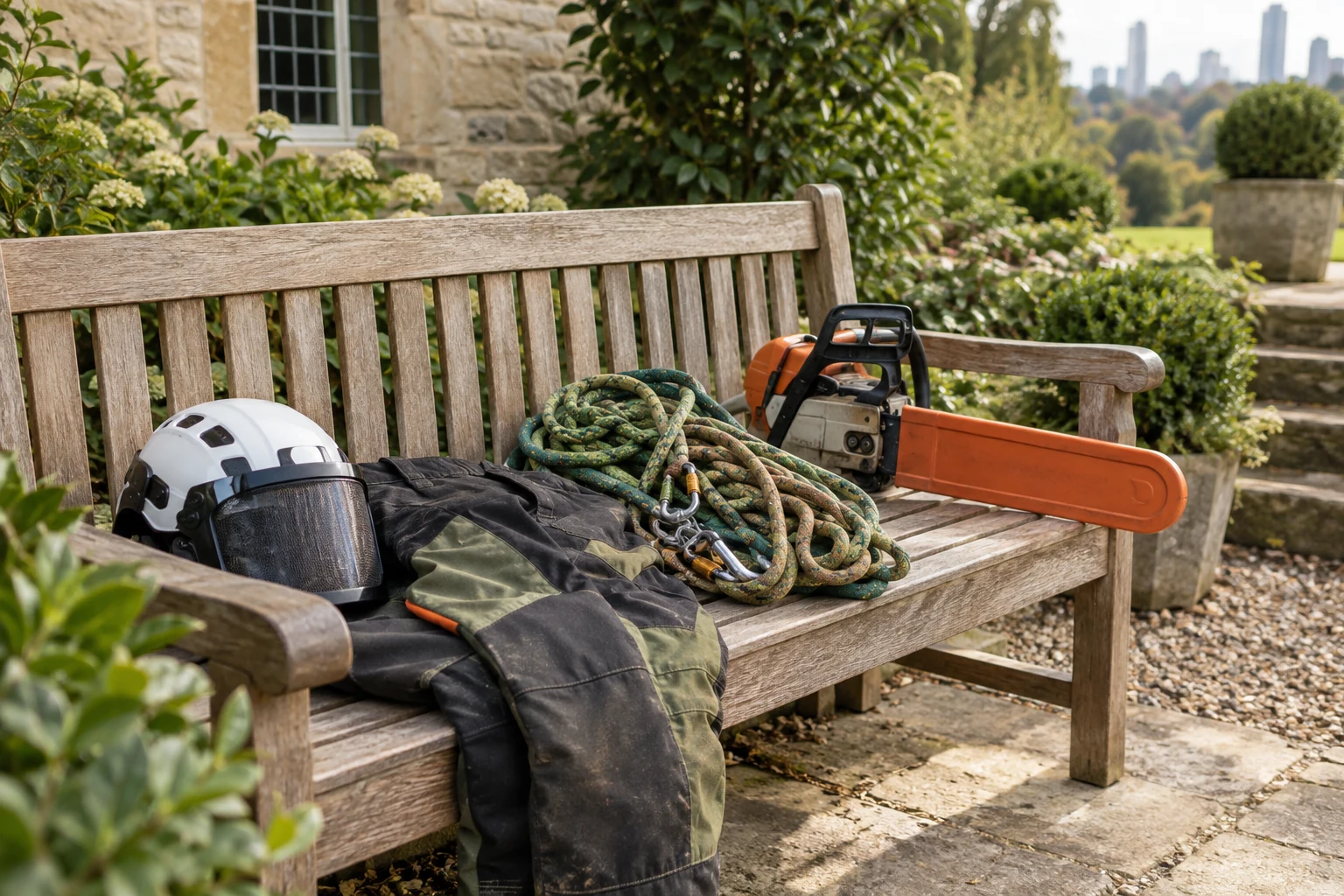
Check the tree’s status with the local planning authority before agreeing removal. A Tree Preservation Order can restrict felling, while a conservation-area tree may be subject to a notice process. Other planning or ownership restrictions can also be relevant. Make sure the permission or notice relates to the correct tree and the precise proposal.
An exception for particular circumstances should not be treated as a blanket permission. If damage or deterioration is the reason for an urgent request, record what has happened without putting yourself at risk and obtain suitable advice. Wildlife protection remains a separate consideration. The presence of a consent does not establish that active nests or roosts may be disturbed.
What happens to the stump?
Cutting down the standing tree normally leaves a stump unless another operation has been agreed. Establish the intended cutting level and whether you will need to use the area for planting, access or construction. A stump left for habitat is a different outcome from a space prepared for a new surface.
Stump grinding uses machinery to reduce the stump within an agreed area and depth. Tree stump removal considers the wider choice of outcome and methods. Neither should be assumed to remove every root throughout the garden. Mention underground services and any intended ground works when discussing the follow-on job.
Timber and green waste
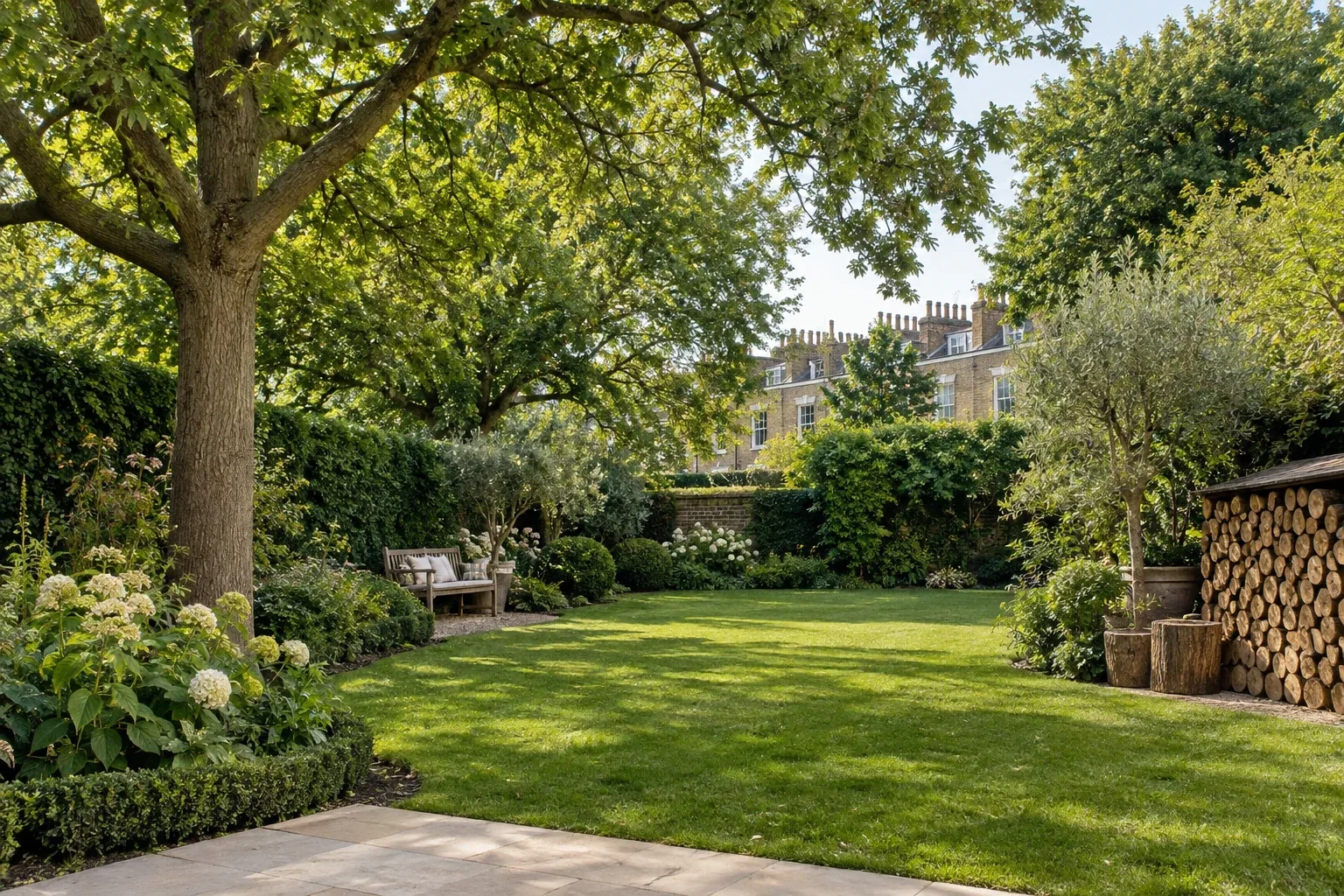
Branches, foliage and trunk sections are different materials to handle. Decide whether you want logs or woodchip retained, how much and where they can be placed. Keeping timber does not necessarily mean it will be cut, carried and stacked to a firewood specification. Include that request in the quotation if it matters to you.
Removing the tree also does not automatically clear unrelated vegetation, sheds or old garden waste. If the wider plot needs attention, garden clearance can be scoped as a separate task. A defined boundary between jobs helps the provider plan vehicle capacity and prevents a final clear-up from becoming an unquoted whole-garden clearance.
How the price is shaped
Crown size, timber weight, the tree’s condition and the method all influence the cost. So do carrying distance, protection of nearby property and arrangements for public access. Height is useful information, but it is a poor basis for comparing prices without the surrounding detail.
Ask whether the quotation includes applicable VAT, waste removal, stump treatment and any specialist equipment. If an initial estimate is based on photographs, establish what remains to be confirmed. The provider should explain material changes to the scope or method before extra work is undertaken; a larger bill should not be the first indication that the agreed job has changed.
What is included in a removal enquiry?
| Item | Decision to make | Why it affects planning |
|---|---|---|
| Standing tree | Felling or sectional method | Space, condition and nearby property |
| Stump | Retain, cut low or arrange further work | Different tools and access may be required |
| Timber | Remove or retain agreed material | Handling and vehicle capacity |
| Site | Tree-only work or wider clearance | Avoids an ambiguous finish |
Preparing for the visit and the next use of the space
Confirm the arrival and access arrangements, then agree which furniture, vehicles or stored items need moving. Keep children and pets out of the work zone. Do not attempt to make the tree easier to remove by cutting branches yourself beforehand; changes can affect the contractor’s intended approach.
After the work, review the agreed clearance and the remaining ground conditions. Replanting or installing a new surface may require additional preparation. If the aim is a redesigned garden, discuss that with landscaping rather than assuming tree removal produces an immediately finished planting bed or construction base.
USEFUL ANSWERS
Questions about this service
Is tree removal always carried out by felling the whole tree?
No. Where there is insufficient suitable space, a tree may need to be dismantled in sections. Condition and site constraints determine the approach. Ask which method is proposed and what must be checked before the quotation is confirmed.
Can a tree be removed from a garden with no side entrance?
Access without a side passage can be challenging and must be described early. Routes through buildings, shared land or neighbouring gardens require specific agreement. Do not assume that machinery or timber can use an alternative route without the owner’s permission.
Does the removal price include the stump?
Only if the quotation says so. Removing the standing tree and dealing with the stump are separate operations. Confirm the proposed stump level or grinding depth and whether the area needs to be left suitable for a particular next use.
Will taking a tree down solve cracks in a house?
That cannot be concluded from proximity alone. Building movement may have several causes and needs appropriate investigation. Where a tree is suspected, obtain suitable arboricultural and building advice before making a removal decision based on an assumed link.
Can I keep all the timber?
Discuss quantity, location and handling in advance. Keeping trunk sections is not the same as receiving prepared firewood. Ask what size material can be left, whether carrying or stacking is included and how it will affect the work area.
What if wildlife is found shortly before work?
The operation may need to be reviewed or postponed. Permission to fell a protected tree does not override wildlife law. Ask the appointed contractor how checks are made and how an unexpected constraint affects the booking and any preparatory arrangements.
A CLEAR NEXT STEP
Tell us about the work
Call with the postcode, your main concern and the access arrangements. Confirm the proposed scope and the appointed provider before booking.