LONDON TREE CARE / Harrow
Tree Surgery Harrow
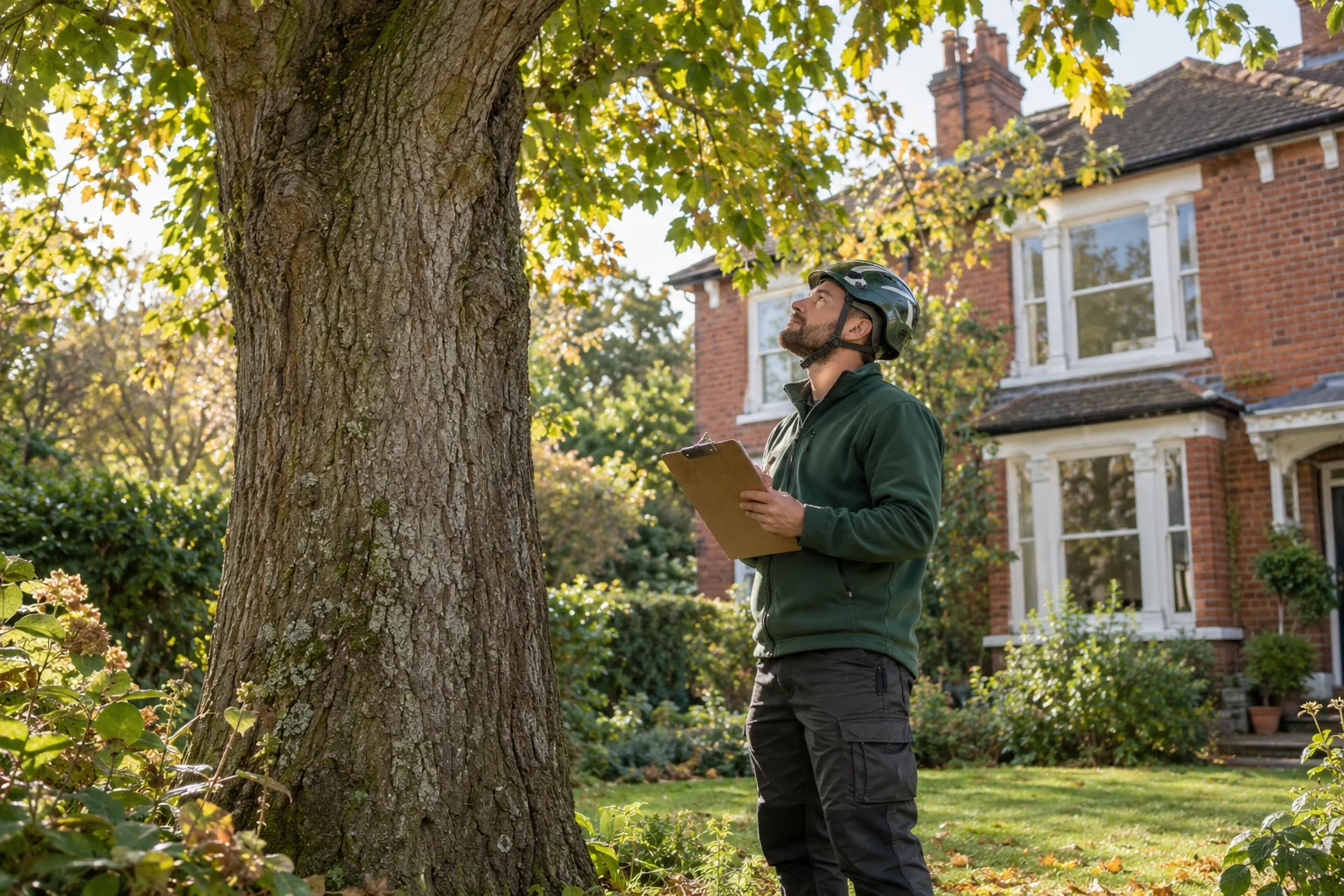
A large or older tree deserves a considered assessment rather than an automatic removal recommendation. For a Harrow enquiry, describe the specific concern and the places that could be affected if a branch or stem failed. Age, size, cavities and deadwood require interpretation in context. Tree Surgery London accepts tree-care requests across Harrow. An appropriate inspection can help distinguish an observable feature from a management priority and explain when further investigation, selective work or a review period may be appropriate.
- Interpret features in their context
- Avoid treating age as a diagnosis
- Use findings to guide proportionate work
Home / London coverage / Harrow
The wider Tree Surgery London service covers enquiries about appropriate tree management, while this guide explains how to inspect mature trees without assuming age is a defect.
Interpret mature-tree features in their surroundings
Begin with what you can actually see rather than deciding which operation the tree needs; mention earlier recommendations and supply any written report, making clear whether the original advice has already been acted upon.
For this enquiry, useful starting evidence would include the position and extent of the visible feature and the use of the ground or buildings within reach of the tree.
A remote conversation should make clear the limits of the information available; the eventual recommendation may involve investigation, monitoring or a limited intervention rather than immediate major pruning or felling. Use the tree care service information to prepare assessment questions; ask the provider to explain what can reasonably be established during the proposed visit.
Keep treatment proportionate to the inspection findings
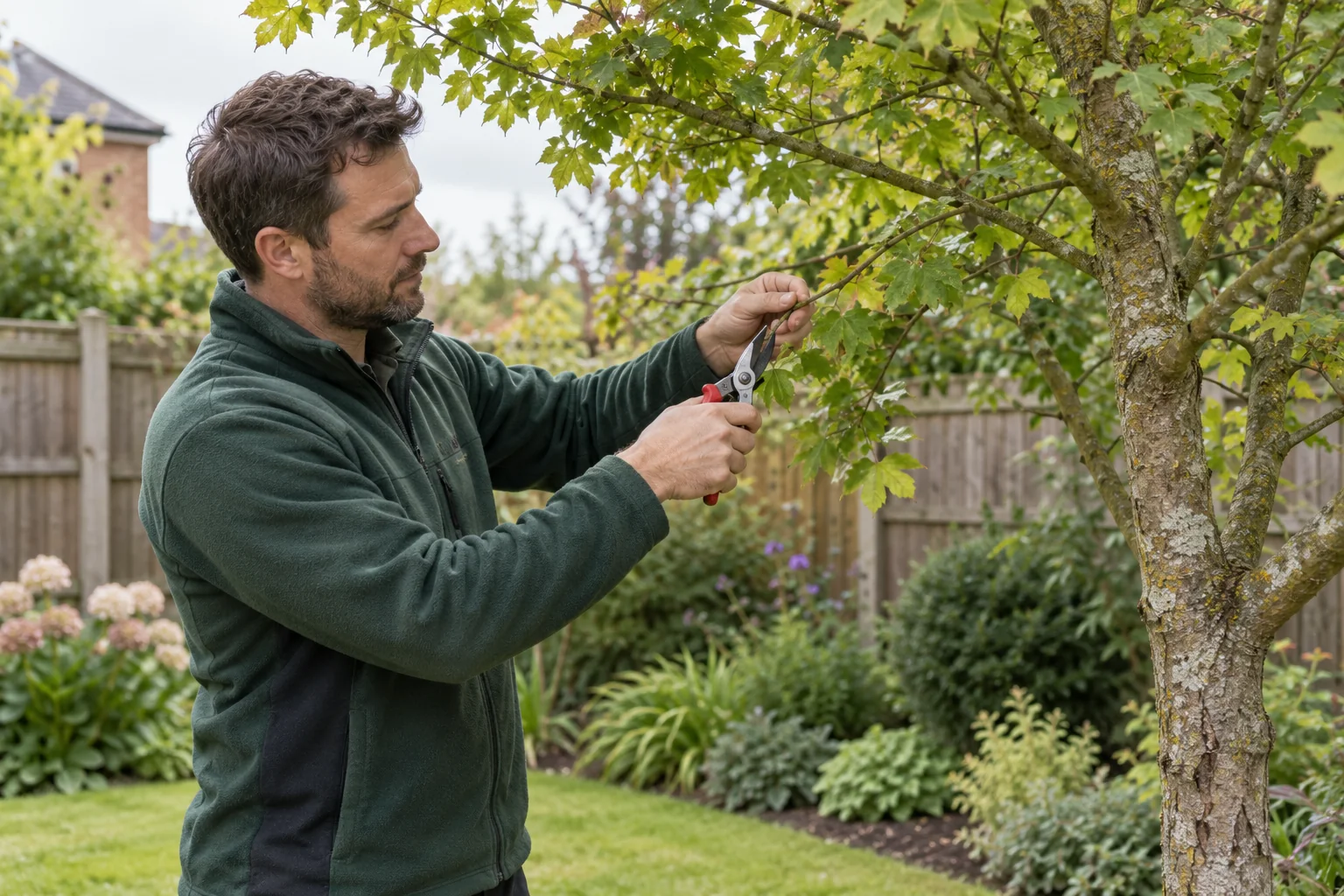
A sensible pruning discussion here would focus on selective treatment that follows the assessment rather than an assumption that an older crown must be heavily reduced.
A written pruning proposal should show what will remain after the cuts; ask how the tree’s previous response to pruning affects the suitability of the current proposal.
Taking more foliage off does not automatically produce a more durable improvement; ask about likely regrowth, future management and any reason that a smaller intervention would be preferable. Use the pruning service overview to compare the terminology; avoid assuming that every treatment described there is suitable for the tree being discussed.
| Planning decision | Information to provide | What to agree |
|---|---|---|
| The reported concern | The position and extent of the visible feature and the use of the ground or buildings within reach of the tree | An assessment and a defined management objective |
| The retained crown | Selective treatment that follows the assessment rather than an assumption that an older crown must be heavily reduced | An understandable pruning scope, if work is appropriate |
| The working route | Viewing the trunk and crown from safe positions without climbing the tree or probing suspect areas yourself | Method, protection and workable site separation |
| The finished space | Avoiding unnecessary excavation or storage beneath a mature tree that is being retained | Stump, material and reinstatement responsibilities |
Check restrictions on the assessed mature tree
Before agreeing a start date, establish the relevant authority and the tree’s protection position; recognise that a district can cross administrative boundaries and that broad location labels are not a substitute for an address check.
Where an application or notification is required, describe the proposed work clearly; avoid using an old approval for different work as though it automatically covered the present proposal.
The property-specific planning question is how the proposed work addresses a mature tree with an observed cavity or dead branch whose significance has not been assessed without getting ahead of the checks required for that address.
Consider removal through evidence rather than age
A felling proposal needs a clear explanation of why that outcome is appropriate; keep any question about ownership or protected status separate from the operational quotation.
A removal method must account for the work space and the objects within reach; the provider may need to handle branches and timber in controlled sections rather than rely on a single open fall zone.
The ground-related part of this decision is avoiding unnecessary excavation or storage beneath a mature tree that is being retained. Read the sectional removal guidance when reviewing a felling proposal; keep the removal decision separate from the question of how the operation is carried out.
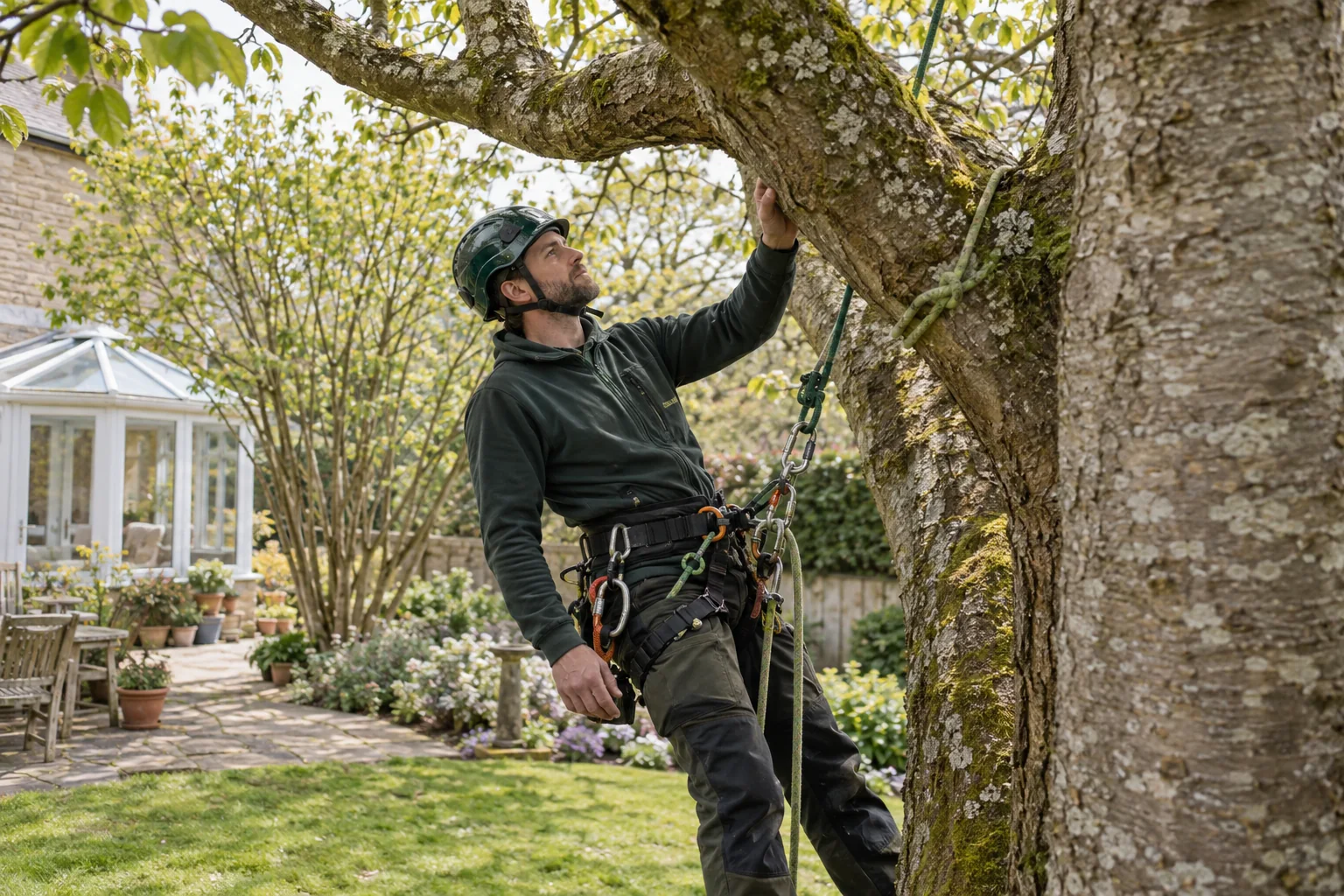
Observe suspect features without climbing or probing
At the planning stage, pay particular attention to viewing the trunk and crown from safe positions without climbing the tree or probing suspect areas yourself.
Access information should cover the entire journey between the work area and collection point; the available working space can change substantially once machinery and a first load of branches are present.
The contractor needs a workable separation between the operation and occupied space; do not assume that someone can pass beneath an active crown operation because they only need a moment to cross.
Ask the price to follow the recommended intervention
Compare the written scope before comparing the total price; avoid leaving the owner to infer whether timber, chip, stump work or reinstatement are included.
The difficulty of protecting structures or managing shared access can influence the proposal; for that reason, a site assessment may be needed before the provider can offer a reliable scope and quotation.
For this particular brief, the scope should explain its response to a mature tree with an observed cavity or dead branch whose significance has not been assessed, rather than substitute an unrelated standard operation.
Avoid unnecessary disturbance around a retained mature tree
For the space left at ground level, consider avoiding unnecessary excavation or storage beneath a mature tree that is being retained.
Discuss what the ground will be used for before selecting a stump treatment; known cables, pipes, drainage and neighbouring structures should be identified before work beneath the surface is planned.
If another contractor will complete the garden work, establish the handover condition; this matters especially where turf, paving or a new planting hole has been promised as the next stage of the project. Read the guide to stump grinding before agreeing the finished ground condition; leave final suitability to an assessment of the stump and route.
Record the features that need another look
A useful follow-up for this property would consider the features identified during inspection and the circumstances that should prompt an earlier review.
The retained tree should have a realistic management plan beyond the day of pruning; a later enquiry can explain the history instead of beginning again with an uncertain account of previous cutting.
An ongoing record is most helpful when it shows dates and the part of the tree concerned; this matters especially if the use of the surrounding space changes or new building and garden work is proposed nearby.
Define handling near the retained rooting area
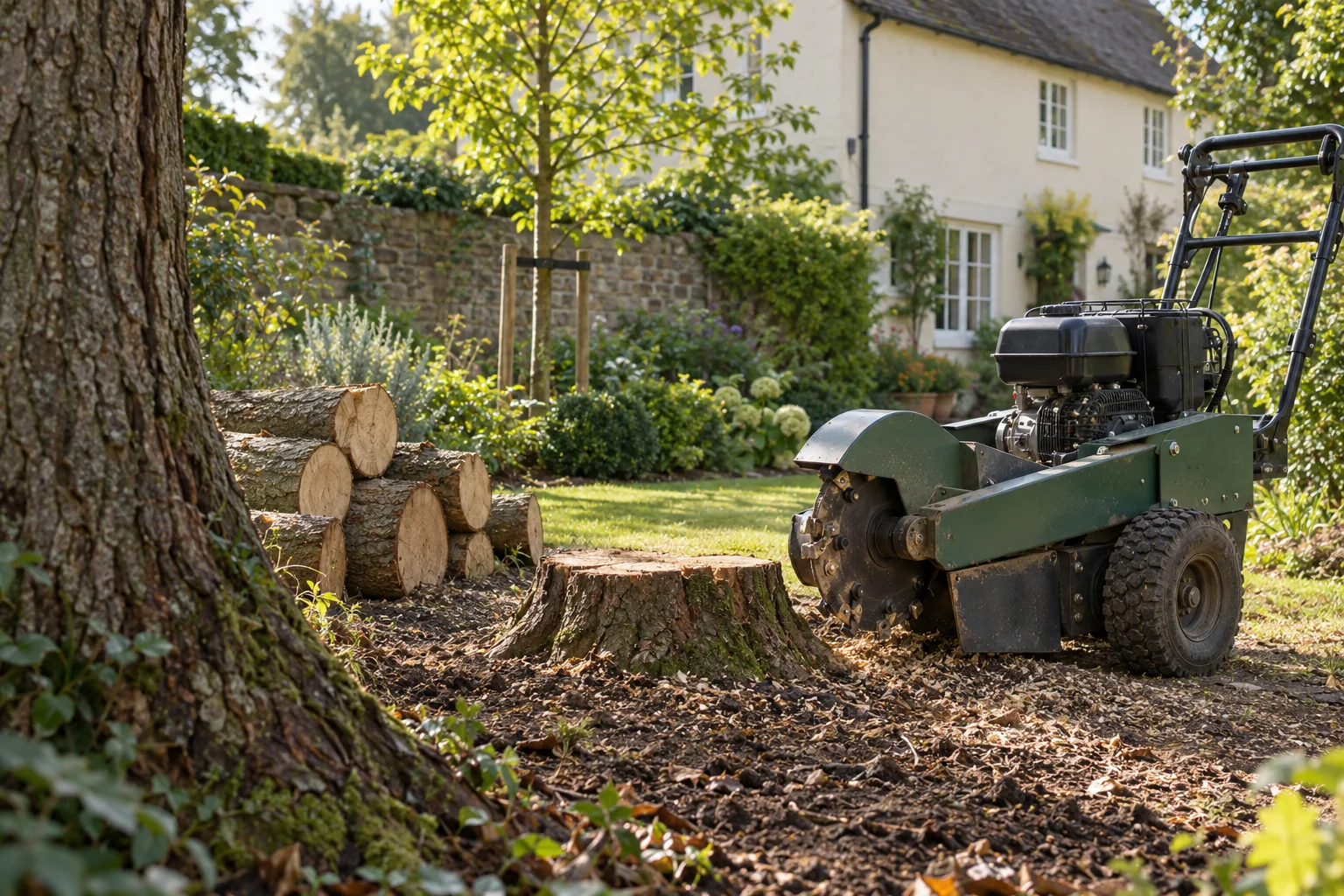
Material handling deserves a separate line in the job specification; avoid treating stump grindings, woodchip and larger sections of stem as interchangeable materials.
The size and location of any retained pieces should be agreed in advance; keep the site’s essential routes and any agreed protection around retained trees clear of stacked material.
The completion check should include the features identified during inspection and the circumstances that should prompt an earlier review.
Arrange an informed Harrow enquiry
Use the details in this guide to describe a mature tree with an observed cavity or dead branch whose significance has not been assessed. Explain who can attend or provide access at the property; any unresolved ownership or approval question is apparent before the operation is priced. The enquiry can be considered with a suitable provider through Tree Surgery London; keep a record of the agreed work so the intended outcome remains clear when a date is arranged.
For another property nearby, the guides to tree work in Wembley and Finchley tree surgery offer separate practical starting points. The nearby guides should not replace a check of the actual address and tree; confirm the full working route even where the two properties appear similar from the road.
Local permission checks for Harrow
Harrow's tree guidance makes an important distinction between a tree standing near a building and evidence that it is causing damage. If cracking or movement is the concern, involve the building insurer or appropriate investigator rather than assuming that pruning or felling will solve it. A tree's proximity alone cannot establish the cause. An arborist can assess its condition and contribute relevant observations without replacing the structural investigation.
Check protection separately. Harrow publishes TPO and conservation-area information and asks for a detailed specification when tree work is proposed. If an insurer recommends an operation on a protected tree, that recommendation does not remove the permission requirement. Gather the supporting documents and identify the tree consistently on the plan and photographs. Discuss the proposed cuts, the objective and the implications for retaining the tree before making an application. Confirm current decision arrangements with the authority rather than relying on a promised appointment, then align the contractor's quotation with the authorised scope and agreed site access.
Questions about tree work in Harrow
Does a hollow trunk mean a tree is unsafe?
A cavity is a feature for competent assessment, not a complete verdict. Its significance depends on the tree, remaining structure and surroundings. Keep clear of a suspected immediate hazard and explain the observation when arranging advice.
Will an inspection always lead to pruning?
No. A reasoned assessment may recommend work, further investigation, monitoring or no immediate intervention. Ask for the findings and management advice to be explained in terms you can use when looking after the property.
What should I send with a Harrow tree-work enquiry?
Begin with a short explanation of the desired result and clear site photographs; identify steps, locked passages or shared entrances before a provider makes assumptions about the working route.
How should I check tree protection at my Harrow address?
Use the exact property details to identify the relevant planning authority; make clear who will carry out the checks and deal with any necessary paperwork before the operation.
What affects the quotation for tree surgery in Harrow?
Quotations should account for the agreed crown work or removal and the practical site constraints; include clear responsibility for ground preparation or reinstatement that sits outside the tree-work operation.
What should be agreed about clear-up at the Harrow property?
The finish should distinguish removal of cut material from soil replacement or surface reinstatement; make sure the retained pieces will be left where they can be managed after the contractor has departed.