LONDON TREE CARE / Muswell Hill
Tree Surgery Muswell Hill
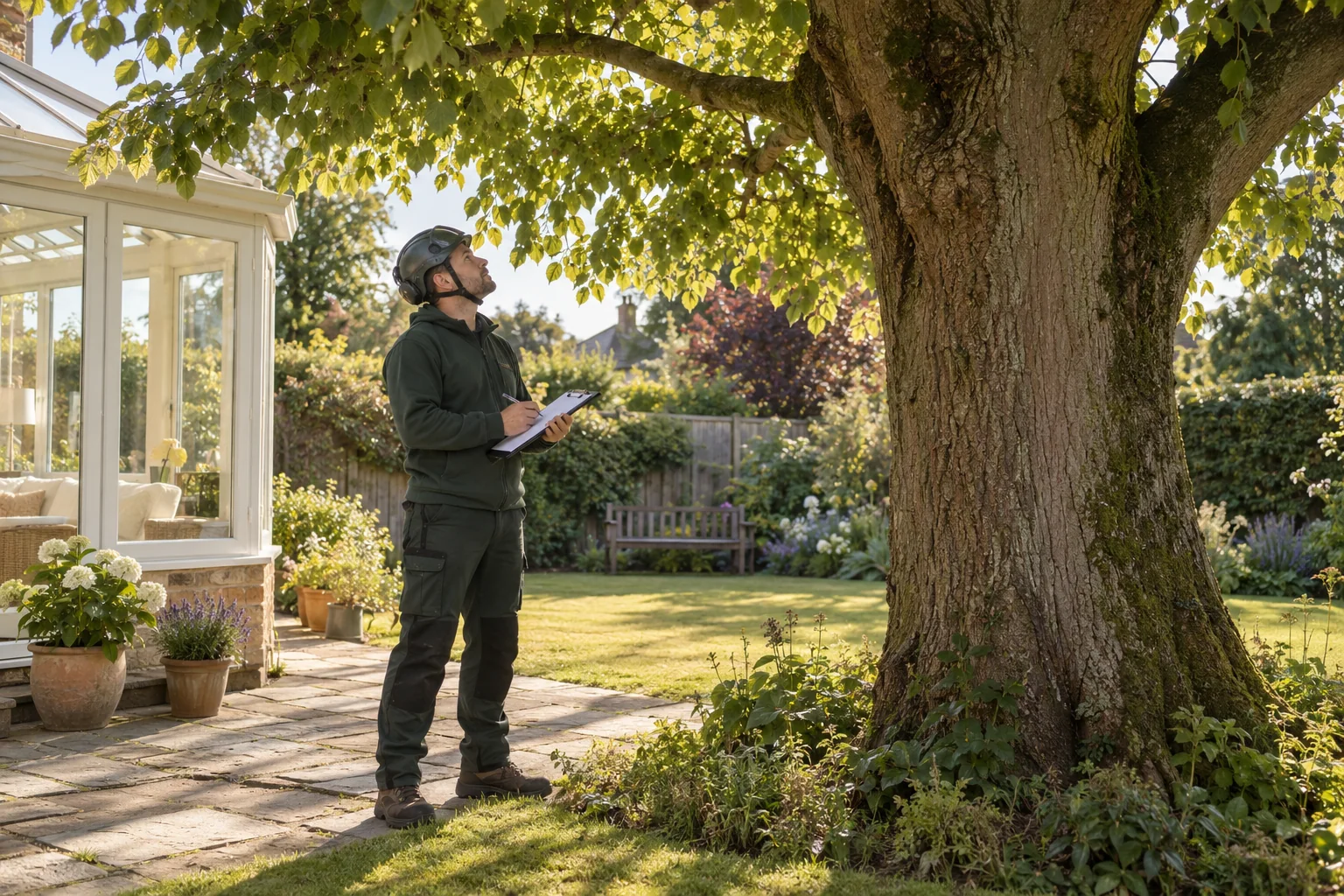
Trees move in wind, but a change in movement or a newly visible defect should not be dismissed. A Muswell Hill enquiry is most useful when it describes exactly what has changed and what lies within reach. Tree Surgery London accepts requests across Muswell Hill for assessment and appropriate management. Explain whether the concern is a branch brushing a roof, a hanging limb, a crack or movement around the base.
- Report a change in movement accurately
- Keep people away from suspect branches
- Choose treatment after inspection
Home / London coverage / Muswell Hill
Those observations lead to different questions, and no photograph should be obtained by approaching a potentially unstable tree. The wider Tree Surgery London service covers enquiries about appropriate tree management, while this guide explains how to distinguish movement, contact and structural concern.
Describe what changed in the tree’s movement
Before choosing a treatment, give the provider a reliable account of the concern; mention earlier recommendations and supply any written report, making clear whether the original advice has already been acted upon.
For this enquiry, useful starting evidence would include the location of any crack, hanging branch or change around the base from a safe viewing position.
A photograph can support the conversation but cannot establish every hidden condition; the provider may need to examine the trunk, branch unions and accessible base before defining the appropriate next step. The assessment and tree care overview explains the wider service context; ask the provider to explain what can reasonably be established during the proposed visit.
Keep routes clear of the suspected hazard
At the planning stage, pay particular attention to an exclusion area that prevents people using a route beneath the part of the tree causing concern.
Explain restrictions along the handling route before a quotation relies on it; the available working space can change substantially once machinery and a first load of branches are present.
A safe plan must account for the movement of people as well as tree material; do not assume that someone can pass beneath an active crown operation because they only need a moment to cross.
Let assessment guide any removal recommendation
If removal is proposed, ask what evidence and site requirements support the decision; keep any question about ownership or protected status separate from the operational quotation.
A garden tree cannot always be felled into one clear area; supply photographs of neighbouring structures and the collection route as well as the tree’s height and spread.
The ground-related part of this decision is new soil cracking or disturbance near the base that should be reported without walking across the suspect area. Use the guide to removing a tree as preparation for discussing the method; keep the removal decision separate from the question of how the operation is carried out.
Avoid an arbitrary top cut as a structural answer
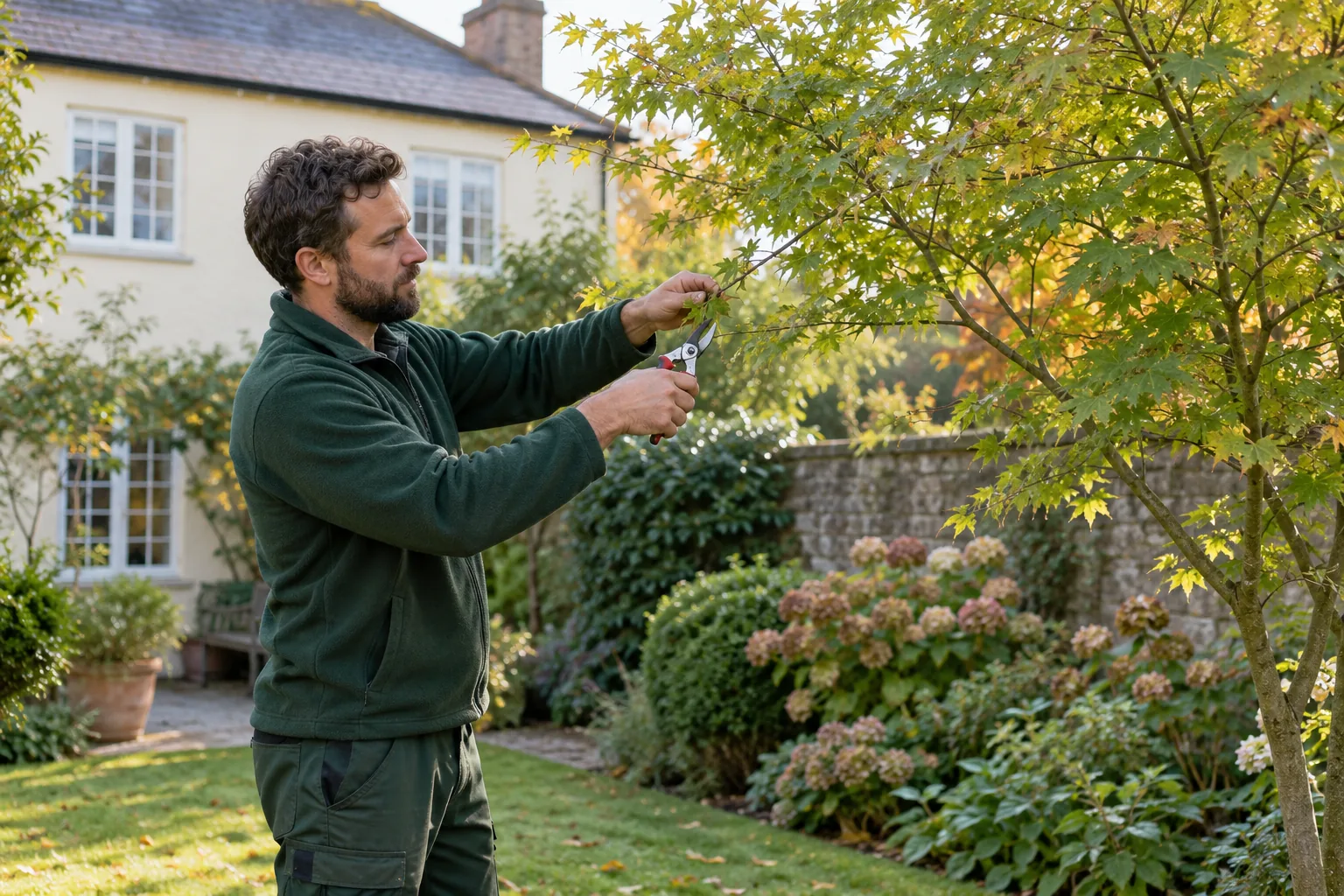
A sensible pruning discussion here would focus on a management option supported by inspection rather than the idea that shortening the top automatically solves every structural issue.
Clarify the relationship between the requested clearance and the remaining branch framework; ask how the tree’s previous response to pruning affects the suitability of the current proposal.
The amount removed needs to be justified by the objective and the tree; ask about likely regrowth, future management and any reason that a smaller intervention would be preferable. The guide to tree pruning options provides useful background; avoid assuming that every treatment described there is suitable for the tree being discussed.
| Planning decision | Information to provide | What to agree |
|---|---|---|
| The reported concern | The location of any crack, hanging branch or change around the base from a safe viewing position | An assessment and a defined management objective |
| The retained crown | A management option supported by inspection rather than the idea that shortening the top automatically solves every structural issue | An understandable pruning scope, if work is appropriate |
| The working route | An exclusion area that prevents people using a route beneath the part of the tree causing concern | Method, protection and workable site separation |
| The finished space | New soil cracking or disturbance near the base that should be reported without walking across the suspect area | Stump, material and reinstatement responsibilities |
Confirm requirements for the exact proposed intervention
Treat permission checks as a specific task for the tree and address concerned; recognise that a district can cross administrative boundaries and that broad location labels are not a substitute for an address check.
A general wish to tidy the tree is not a sufficiently clear basis for an authorisation check; avoid using an old approval for different work as though it automatically covered the present proposal.
The property-specific planning question is how the proposed work addresses a tree reported to be moving differently where the owner needs to distinguish ordinary crown movement from a new concern without getting ahead of the checks required for that address.
Define the operation after the concern is assessed
The quotation should let you recognise the result you are buying; avoid leaving the owner to infer whether timber, chip, stump work or reinstatement are included.
Two similarly sized trees can require different working arrangements; for that reason, a site assessment may be needed before the provider can offer a reliable scope and quotation.
For this particular brief, the scope should explain its response to a tree reported to be moving differently where the owner needs to distinguish ordinary crown movement from a new concern, rather than substitute an unrelated standard operation.

Report changes around the base from a safe position
For the space left at ground level, consider new soil cracking or disturbance near the base that should be reported without walking across the suspect area.
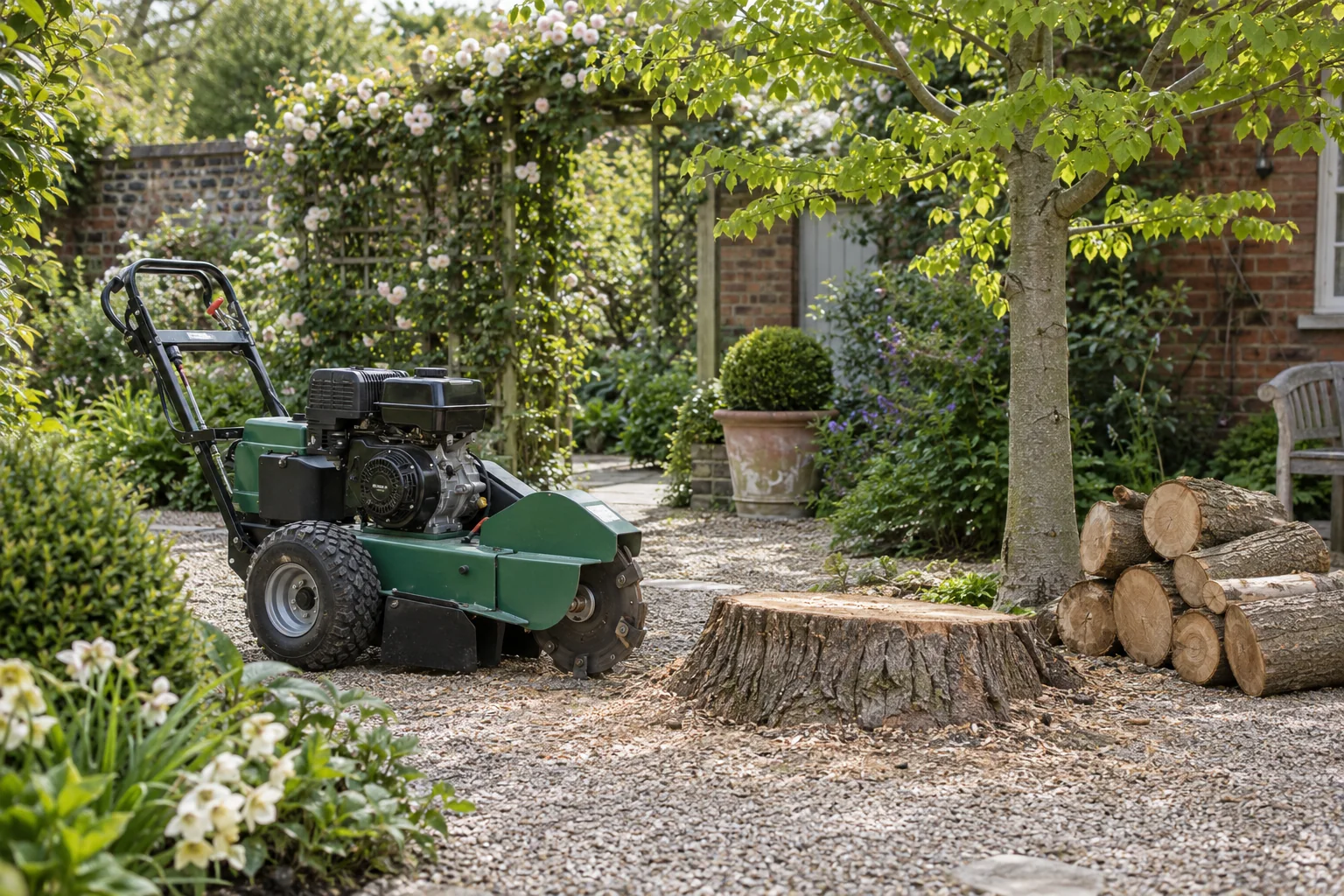
Ask the quotation to distinguish stump reduction from the work that follows it; known cables, pipes, drainage and neighbouring structures should be identified before work beneath the surface is planned.
The surface can look clear while woody material remains below; allow the person responsible for the final surface to confirm what preparation is necessary for that use. Compare the proposal with the stump grinding guidance; leave final suitability to an assessment of the stump and route.
Agree handling without reopening an unsafe route
Waste removal is easier to understand when each type of material is named; avoid treating stump grindings, woodchip and larger sections of stem as interchangeable materials.
A request to keep logs should include the practical limits of the storage space; the aim is that the final arrangement is manageable after the equipment and people undertaking the operation have left.
The completion check should include the specific warning signs and review advice explained after the tree has been assessed.
Record warning signs and the recommended review
A useful follow-up for this property would consider the specific warning signs and review advice explained after the tree has been assessed.
Record the work undertaken and any advice given about the remaining tree; a later enquiry can explain the history instead of beginning again with an uncertain account of previous cutting.
The owner can keep a simple record of changes without attempting a specialist inspection; the next person assessing the tree can relate the observation to the previous work and the current surroundings.
Arrange an informed Muswell Hill enquiry
Use the details in this guide to describe a tree reported to be moving differently where the owner needs to distinguish ordinary crown movement from a new concern. Give the person handling the enquiry enough detail to arrange the next step; any unresolved ownership or approval question is apparent before the operation is priced. Contact Tree Surgery London with the brief so the appropriate next step can be discussed; keep a record of the agreed work so the intended outcome remains clear when a date is arranged.
For another property nearby, the guides to tree work in Finchley and Wood Green tree surgery offer separate practical starting points. Another garden may need a different working method and specification; confirm the full working route even where the two properties appear similar from the road.
Local permission checks for Muswell Hill
For Muswell Hill, Haringey is an important starting authority, but the neighbourhood name should not replace an address check near the Barnet boundary. Barnet's official planning material includes Muswell Hill addresses around Colney Hatch Lane, illustrating why a familiar place label can reach beyond one borough. Confirm the authority for the site before selecting its protection map or tree-work form.
Haringey's application guidance asks for a plan identifying the trees and a clear specification of the proposed work. Use that approach for the arborist's brief as well: show the whole crown, identify the observed concern and explain the intended outcome. A tree-health assessment may recommend monitoring or a limited intervention rather than wholesale reduction. Check the current TPO and conservation position before acting on the proposal, and keep any decision alongside the quotation. Access across another property needs its own agreement. Including those arrangements early helps the final instruction reflect the actual tree and site instead of a general description of the wider district.
Questions about tree work in Muswell Hill
Should I wait for a routine visit after a branch has split?
Explain the split and any exposure of people or buildings as soon as you contact a provider. Keep the affected area clear. The appropriate response depends on the actual situation; a routine appointment should not be assumed suitable for an active hazard.
Will removing the top make a leaning tree safe?
A lean and the significance of any change need assessment. An arbitrary top reduction may fail to address the problem and can create other management issues. Describe the history and any recent movement rather than specifying a cut in advance.
What should I send with a Muswell Hill tree-work enquiry?
A marked photograph and a simple access description are useful starting information; identify steps, locked passages or shared entrances before a provider makes assumptions about the working route.
How should I check tree protection at my Muswell Hill address?
Locate the correct address and ask about the tree’s current protection position; make clear who will carry out the checks and deal with any necessary paperwork before the operation.
What affects the quotation for tree surgery in Muswell Hill?
The working method and protection needs can matter as much as the apparent amount of growth; disposal, retained timber and any stump treatment should be identified so the customer can compare like-for-like scope.
What should be agreed about clear-up at the Muswell Hill property?
State which branches, timber and chip will be removed and identify anything you want to retain; stump grindings should be discussed separately if grinding is part of the agreed operation rather than assumed within removal.