LONDON TREE CARE / Twickenham
Tree Surgery Twickenham
Felling a tree and finishing the space it occupied are separate decisions. A Twickenham quotation should make clear what happens to the stem, stump, roots and remaining material, particularly if the owner plans to replant or change the garden layout. Tree Surgery London takes enquiries for Twickenham tree work, including removal and stump grinding. Discuss the intended use of the ground at the outset.
- Distinguish felling from stump work
- Choose the next use of the space
- Specify grindings and soil treatment
Home / London coverage / Twickenham
A tidy surface is not the same as an excavated root area, and a clear specification helps avoid that misunderstanding. The wider Tree Surgery London service covers enquiries about appropriate tree management, while this guide explains how to choose the right treatment after a tree is removed.
Distinguish removal of the stem from finishing the plot
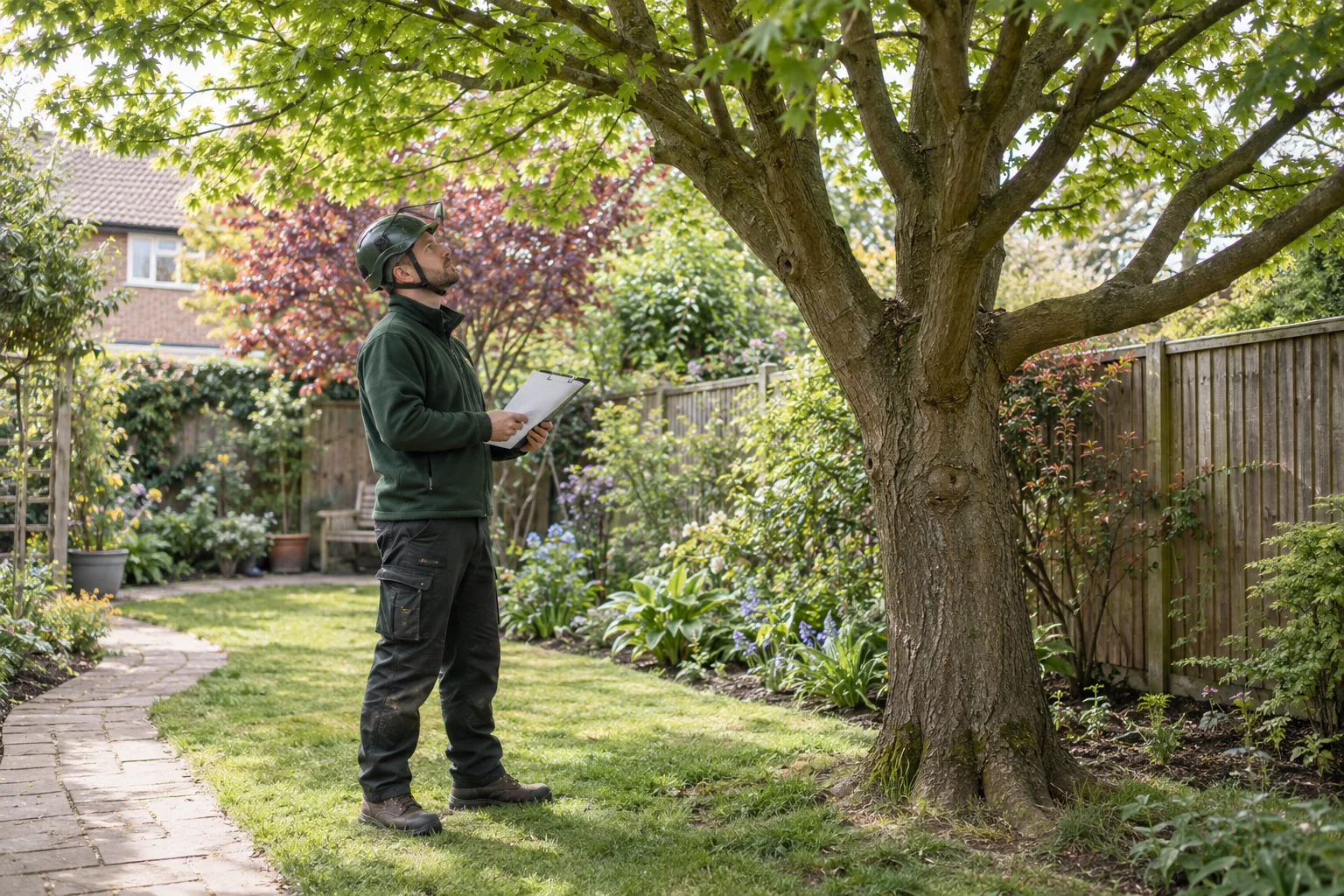
Before selecting removal, distinguish the condition of the tree from a preference to change the space; avoid treating a large canopy or an inconvenient position as a complete assessment on its own.
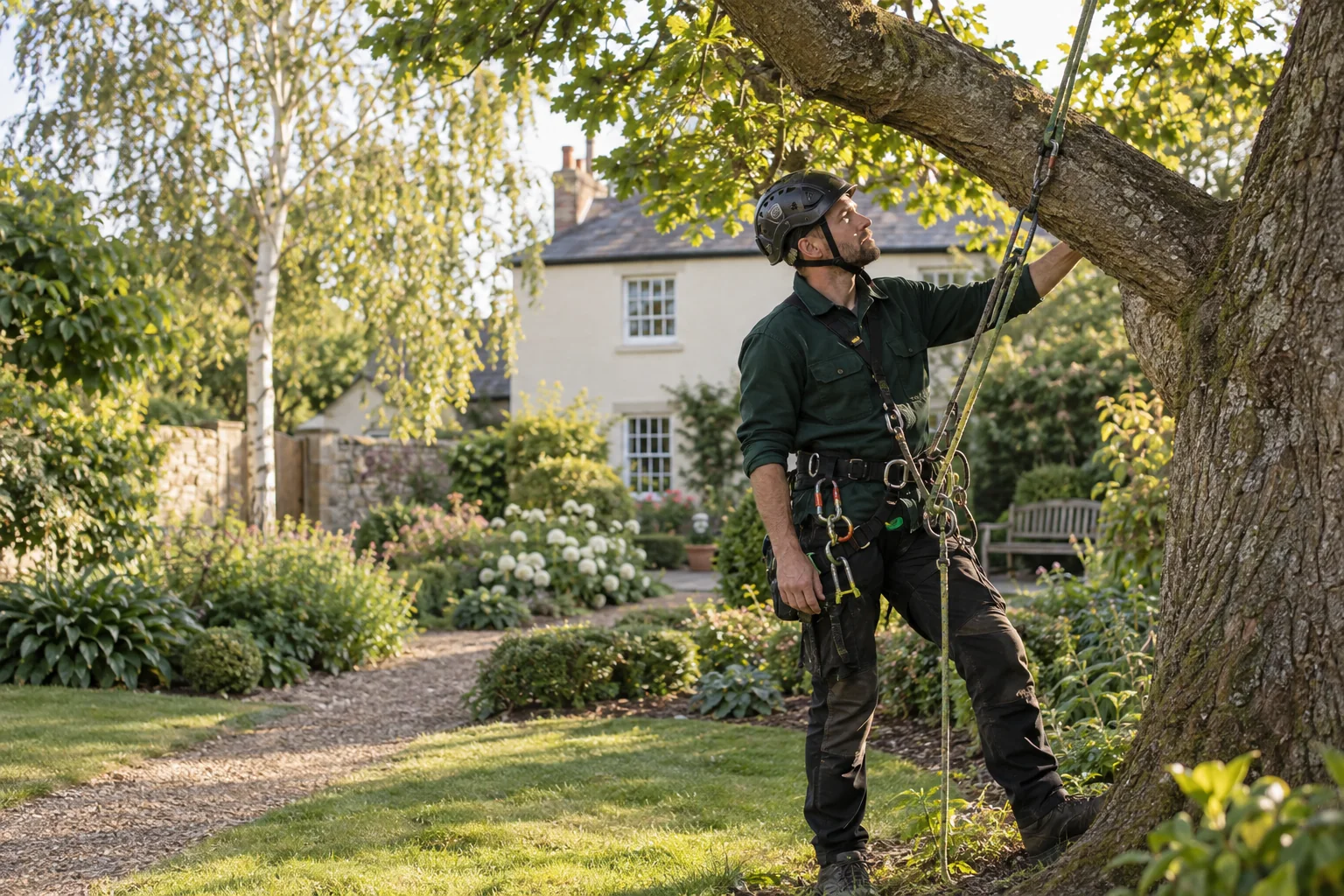
The way the tree is dismantled depends on the room available around it; the agreed scope should say how the resulting timber is to be reduced, retained or removed from site.
The ground-related part of this decision is a stated grinding depth and treatment of residual roots that reflect the intended next use of the space. The tree felling service information can help organise removal questions; make sure the proposed material handling fits the access described in the enquiry.
Assess the tree and its proposed successor space
A useful assessment starts with evidence about the tree and its surroundings; show the whole tree as well as the reported feature, because a close-up alone can conceal its position within the crown.
For this enquiry, useful starting evidence would include the stump position, nearby surfaces and any evidence of services passing through the proposed working area.
Do not interpret a preliminary discussion as a full inspection; the condition of a retained tree needs to be considered together with the space, buildings and routes within its potential reach. Consult the guide to looking after retained trees alongside the site brief; a site inspection should be used where the available evidence does not resolve the concern.
| Planning decision | Information to provide | What to agree |
|---|---|---|
| The reported concern | The stump position, nearby surfaces and any evidence of services passing through the proposed working area | An assessment and a defined management objective |
| The retained crown | Retention options before removal is settled, including whether a defined pruning objective could address the original concern | An understandable pruning scope, if work is appropriate |
| The working route | The narrowest part of the route and any turns that could limit the stump grinder available for the job | Method, protection and workable site separation |
| The finished space | A stated grinding depth and treatment of residual roots that reflect the intended next use of the space | Stump, material and reinstatement responsibilities |
Choose grinding depth for the next garden use
For the space left at ground level, consider a stated grinding depth and treatment of residual roots that reflect the intended next use of the space.
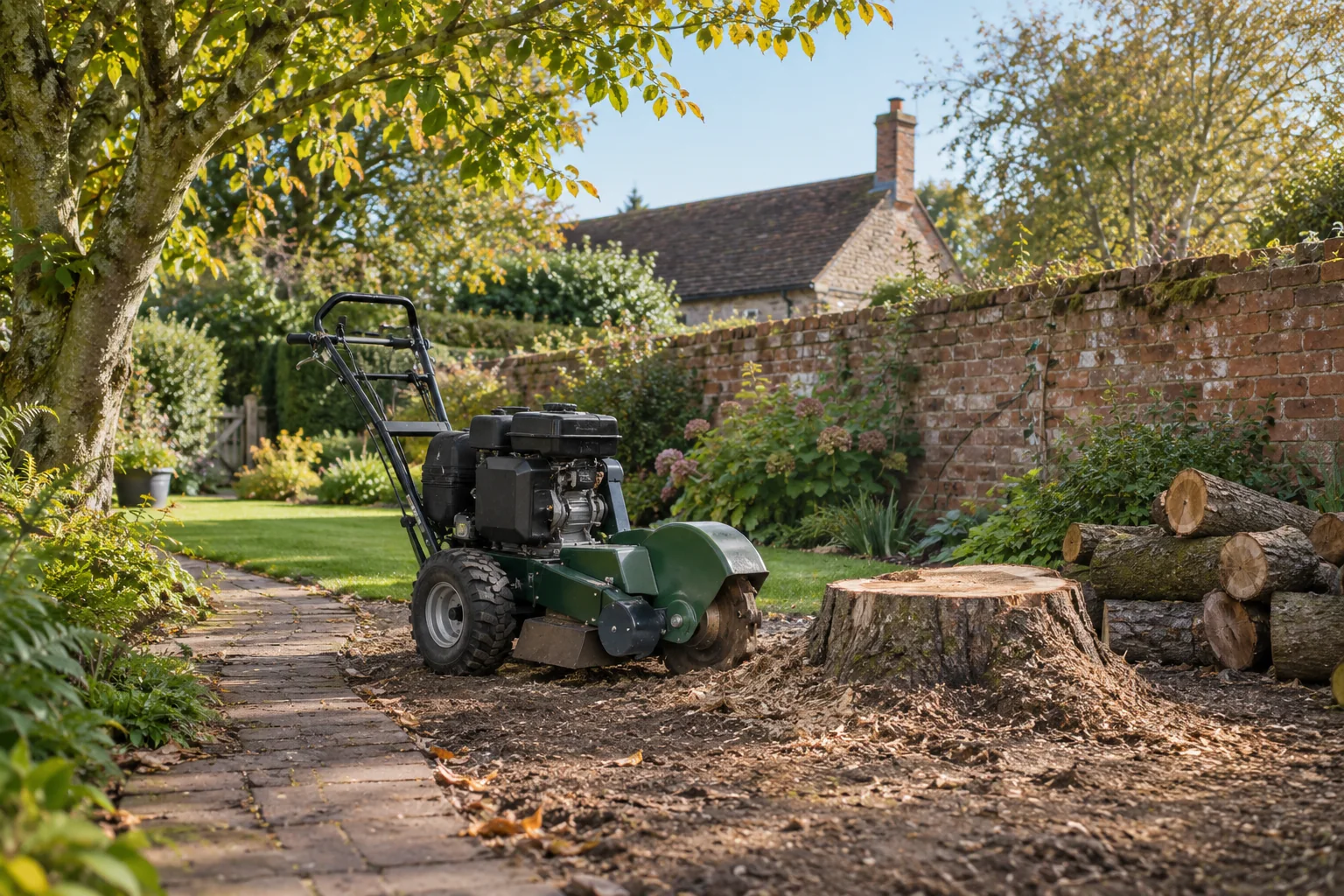
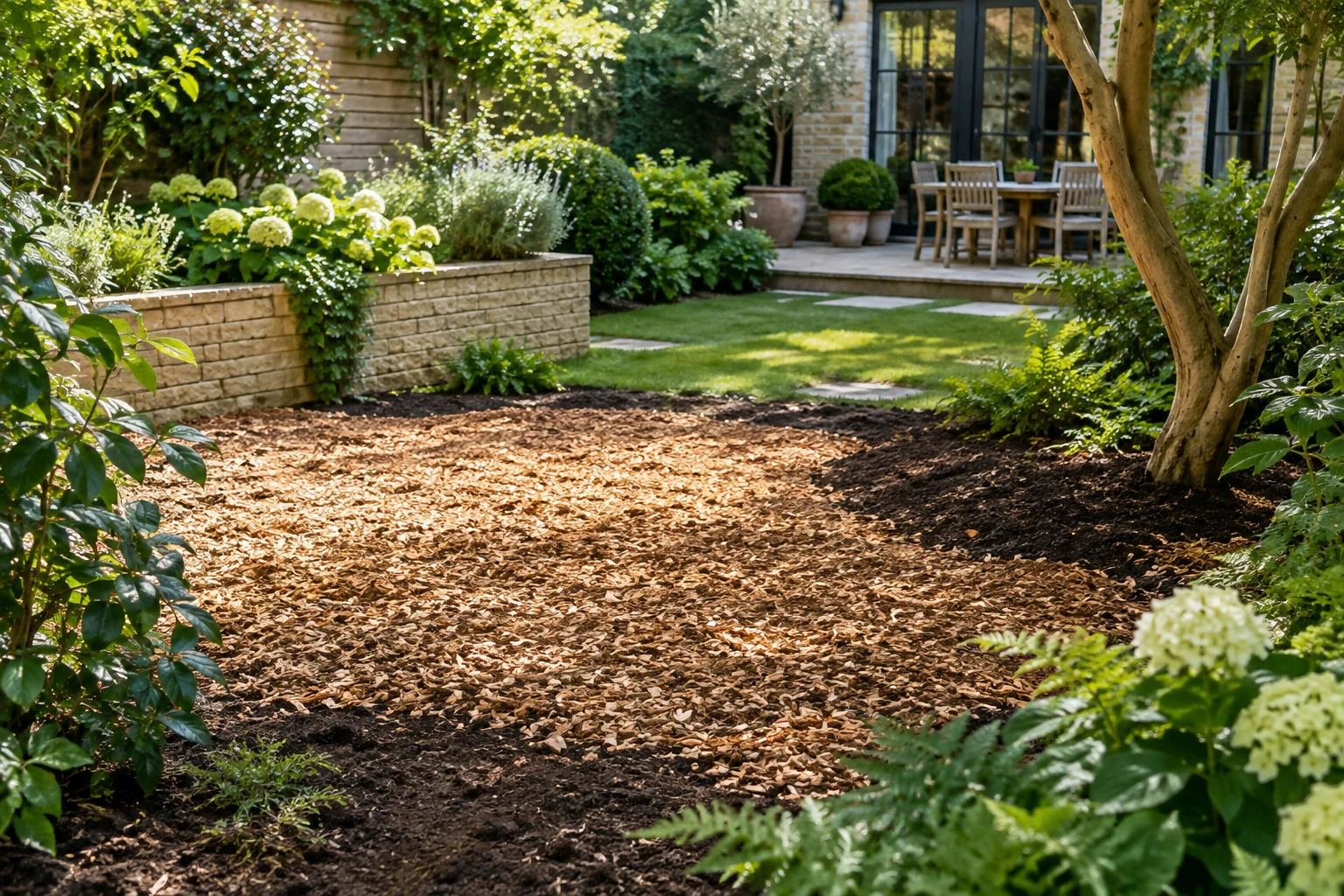
Grinding the visible stump is only one possible part of preparing the area; make clear whether the work includes removing grindings, bringing in suitable soil or restoring a finished surface.
Do not confuse the end of stump treatment with completion of the wider garden project; retained roots and the condition of the surrounding soil should be discussed honestly before the job is accepted. The stump treatment service provides background to the machinery discussion; the exact position and intended future use should be checked at the property.
Consider a retention option before clearing the ground
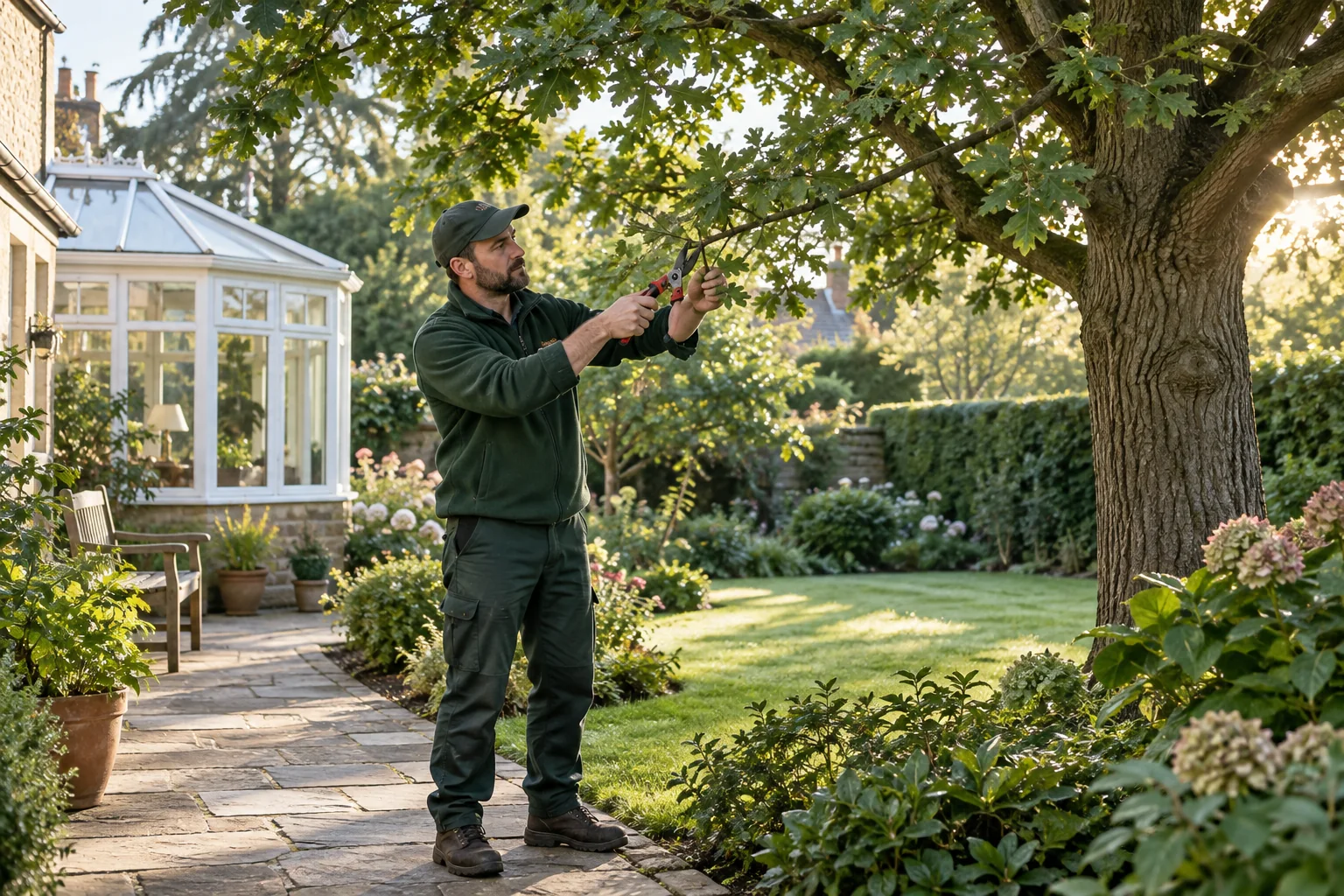
A sensible pruning discussion here would focus on retention options before removal is settled, including whether a defined pruning objective could address the original concern.
The useful comparison is the proposed result rather than the volume of branches removed; the aim is that two different quotations are not being compared as though they described exactly the same operation.
A severe cut is not a substitute for an appropriate management decision; a realistic plan recognises that the tree will continue to develop and may require reassessment as circumstances change. Read about crown management and pruning before interpreting a broad quotation label; allow the actual tree and the desired outcome to determine what is appropriate.
Measure the whole route to the stump
At the planning stage, pay particular attention to the narrowest part of the route and any turns that could limit the stump grinder available for the job.
A clear photograph of the entrance is useful only alongside the conditions beyond it; use clear measurements rather than an estimate based on whether a person can comfortably walk through.
Discuss the boundary of the work zone and any essential access that could conflict with it; necessary household or business movements can be coordinated without improvising a route through the work.
Check removal conditions and replacement requirements
An area name alone does not settle which planning authority or restriction applies; an online map or previous conversation may not establish the requirements for the operation now being proposed.
The scope used for a protection check should match the work actually being considered; check the decision and conditions before assuming that a quotation amounts to permission to proceed.
The property-specific planning question is how the proposed work addresses a removal proposal where the owner wants to reuse the ground but has not yet chosen between planting and hard landscaping without getting ahead of the checks required for that address.
Separate stump and reinstatement costs in the scope
Ask the provider to state the assumptions behind the proposed cost; the aim is that a lower figure is not being accepted for an operation that leaves important parts of the requested work undone.
A photograph that shows only the crown may omit the factors that make the operation more involved; explain the full site conditions before treating a preliminary estimate as a confirmed price for the visit.
For this particular brief, the scope should explain its response to a removal proposal where the owner wants to reuse the ground but has not yet chosen between planting and hard landscaping, rather than substitute an unrelated standard operation.
Decide how grindings and larger timber are handled
The owner and provider should agree which arisings leave the property and which remain; identify an accessible storage position if any wood is to be kept rather than collected with the other arisings.
If you want to retain timber, explain how it will be stored and used; a piece that can be handled by the contractor may still be too heavy for the owner to move afterwards.
The completion check should include settlement, remaining woody material and any agreed soil replacement before new planting begins.
Review the ground before replacement planting
A useful follow-up for this property would consider settlement, remaining woody material and any agreed soil replacement before new planting begins.
A completion conversation can explain what to watch and when a review might be appropriate; remember that a tree remains a living structure whose growth and surroundings can change over time.
Routine observation can be made from normal safe positions around the property; the limits of visual observation should be recognised rather than treated as a substitute for competent assessment.
Arrange an informed Twickenham enquiry
Use the details in this guide to describe a removal proposal where the owner wants to reuse the ground but has not yet chosen between planting and hard landscaping. State the preferred arrangements for a site discussion; mention documents or photographs that will help the provider understand the concern. A provider discussion through Tree Surgery London should build on the information supplied; the provider establishes what assessment and scope are appropriate for the particular request.
For another property nearby, the guides to tree work in Richmond and Wimbledon tree surgery offer separate practical starting points. Use those pages as practical background for a separate enquiry; the ownership position and applicable permissions should be established for the tree concerned.
Local permission checks for Twickenham
For Twickenham, Richmond upon Thames Council provides the protected-tree enquiry and application route. It distinguishes TPO controls from the Section 211 notification used for relevant conservation-area trees without an individual order. Locate the property on current mapping and identify the tree before deciding which route applies. An earlier owner's understanding of protection is useful background, but it should not replace a current check.
The pruning proposal should begin with a purpose. Clearance above an occupied part of the garden, management of a damaged limb and a change to the outline of the whole crown call for different assessments. Ask the arborist to explain the feasible operation and the form that will remain, rather than selecting a pruning label without a specification. Include previous work if known, photographs from more than one viewpoint and any restrictions on access. Confirm who can authorise the work and whether neighbouring land is required. That gives the permission enquiry and quotation a shared, site-specific basis.
Questions about tree work in Twickenham
Does tree removal include the stump?
It should never be assumed. Ask the quotation to distinguish stem removal, stump grinding, grindings disposal and any reinstatement. The stump may be left at an agreed height if no further treatment has been commissioned.
Can I plant a replacement in exactly the same spot?
That depends on the remaining root material, soil and replacement tree. Discuss the intended planting before grinding is specified. A nearby position may be more practical than treating the old hole as automatically ready for a new root system.
What should I send with a Twickenham tree-work enquiry?
Provide a usable contact number, the property address and an outline of the concern; alongside any existing tree report or protection correspondence that may affect the proposed operation and its timing.
How should I check tree protection at my Twickenham address?
Check the tree and proposed work against official authority information; any uncertainty should be clarified before a start date is treated as fixed or equipment is expected on site.
What affects the quotation for tree surgery in Twickenham?
The operation, condition and size of the tree are considered alongside access and handling space; provide accurate route dimensions and describe features that will require protection before a price is finalised.
What should be agreed about clear-up at the Twickenham property?
Ask the written scope to explain both disposal and the treatment of material left on site; this matters especially where the space will be handed to another trade or returned to ordinary household use immediately afterwards.