LONDON TREE CARE / Chiswick
Tree Surgery Chiswick
If shade has become the reason for considering tree surgery in Chiswick, describe where and when the loss of light matters. A dark kitchen window, a shaded lawn and a low branch over a table are not interchangeable concerns. Different crown operations affect them differently, and none can promise a particular level of daylight. Tree Surgery London takes Chiswick enquiries and can discuss the tree problem before a specification is agreed.
- An informed choice between thinning, lifting and reduction
- Balancing filtered light with a sustainable crown
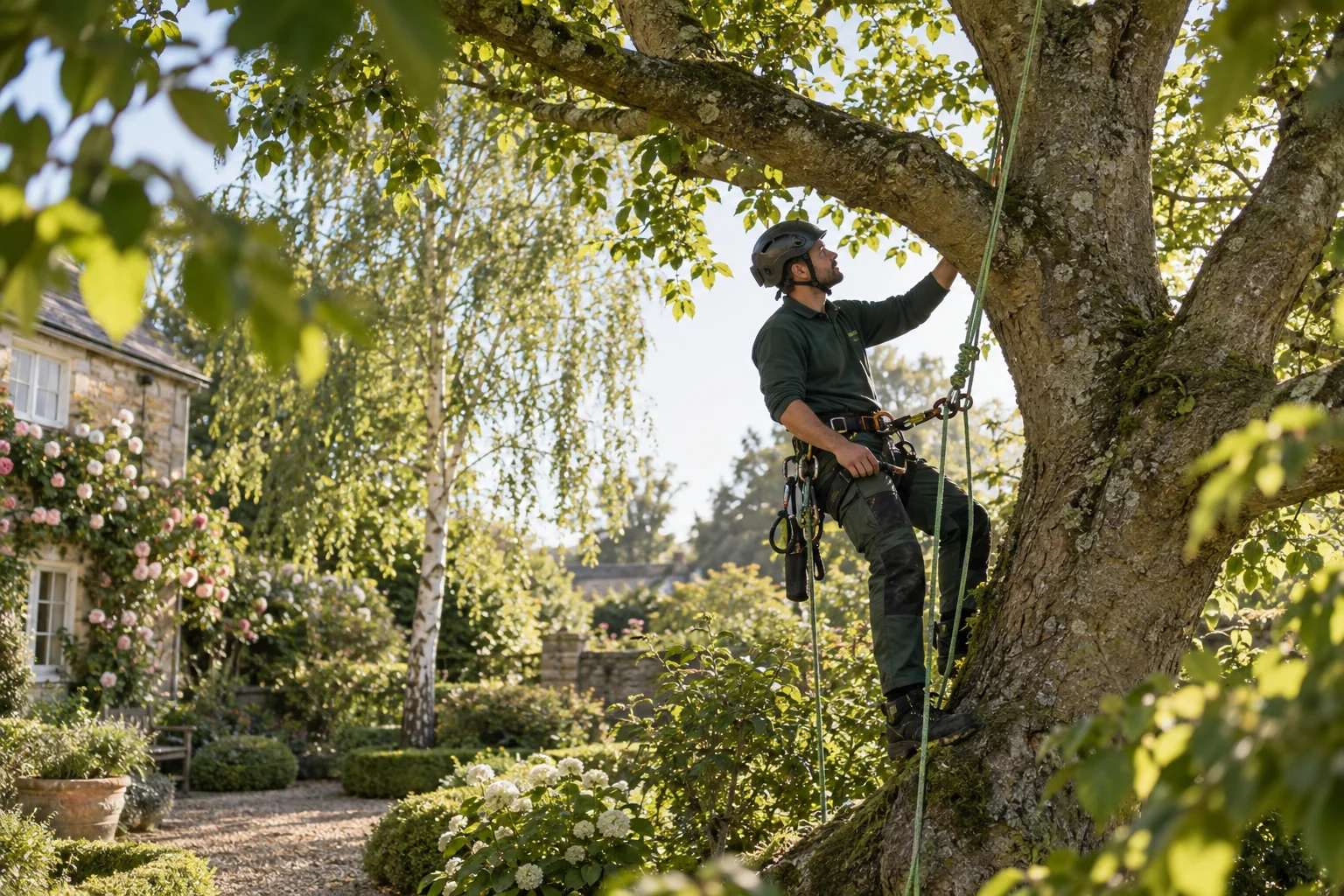
- Practical preparation for a broad canopy above a lawn and seating space

Home / London coverage / Chiswick
The aim should be a useful improvement that also respects the tree’s species, condition and existing form.
Crown thinning removes selected branches within a canopy; it does not necessarily make the outline smaller. Crown lifting addresses lower branches, while reduction changes the spread or height through suitable pruning points. Ask which operation responds to your actual concern. Requesting all three simply to obtain the greatest immediate change may remove more foliage than the tree can comfortably support.
Record the parts of the day when shade causes a problem and photograph the relevant view from the house or garden. Seasonal leaf cover affects the comparison, so keep the date with each photograph. This information helps a discussion, but an arborist should still inspect the branching structure before recommending cuts. A tree can remain worth retaining even where complete elimination of shade is unrealistic.
Agree a realistic scope and a suitable work date
Check whether the tree is subject to protection for the actual property, then agree who will obtain any required authority response. A daylight concern does not remove the need for those checks. Record the proposed crown operation clearly so it can be compared with the relevant decision or notification position. Timing should follow the identified tree and planned cuts, with wildlife and site conditions considered by the contractor. Do not promise another garden trade a newly opened canopy before the scope and necessary preliminary steps have been confirmed.
When comparing quotations, look at the result each one describes rather than a promise of more light. Ask whether arisings, access protection and any separately commissioned assessment are included. A less severe operation may produce a modest improvement while avoiding an unsuitable loss of foliage; that reasoning should be explained. Keep dated before-and-after photographs from comparable views. They provide a more useful basis for discussing the tree’s response and remaining shade than relying on memory or expecting the same visual effect at every time of year.

Name the light problem before naming the service
Walk through the garden and identify the particular view or activity affected. A canopy above a table can feel enclosing even when the main concern is a low limb rather than overall density. A lawn can also struggle for reasons unrelated to tree shade. Describe what you observe without promising yourself that a single pruning operation will correct every garden condition.
The differences between lifting, thinning and reduction are set out in the crown management guide. Ask which one, if any, addresses your priority and how much of the existing canopy will remain. A quotation should explain the intended change rather than list several operations without distinguishing their purposes.
| Decision to make | Information to provide | What to clarify |
|---|---|---|
| An informed choice between thinning, lifting and reduction | Views of a broad canopy above a lawn and seating space and the feature that prompted the enquiry | The intended result and the limits of the recommended operation |
| Pruning or removal | Tree condition, previous work and the reason for the request | How the recommendation addresses balancing filtered light with a sustainable crown |
| Work method and access | Gate measurements, route photographs and fixed obstacles | Equipment, handling arrangements and protection included in the scope |
| Permission position | Exact property address, tree reference and any existing records | Who confirms the applicable requirements before work proceeds |
| Completion and follow-up | Whether timber stays and what use follows the operation | Clearance, remaining ground work and any recommended review |
Preparing for the visit in Chiswick
Mark the seating, play or lawn area that matters to you on a simple garden sketch. Do not use a promised percentage of extra sunlight as a substitute for a pruning specification. Ask how the proposed crown will look in leaf and what follow-up management might be needed.
Compare a useful improvement with its limits
Photographs taken at different times can show where shade falls, but they do not replace an inspection of suitable branch junctions. A desired gap in the canopy may not be achievable without disproportionately large cuts. Ask the arborist to explain a reasonable alternative and what seasonal difference you might still notice after the work.
A tree showing an unexplained loss of foliage needs a condition discussion before being thinned to improve light. Use the tree care information to frame that concern separately. Removing foliage because a crown looks dense is not the same decision as investigating why part of it is failing to develop normally.
Consider the garden after the operation
Think about the effects you value as well as the ones you want to change. Shelter, screening and the established outline may be part of the reason for retaining the tree. A modest operation can leave some shade deliberately; the contractor should explain that result so it is not mistaken for incomplete work.
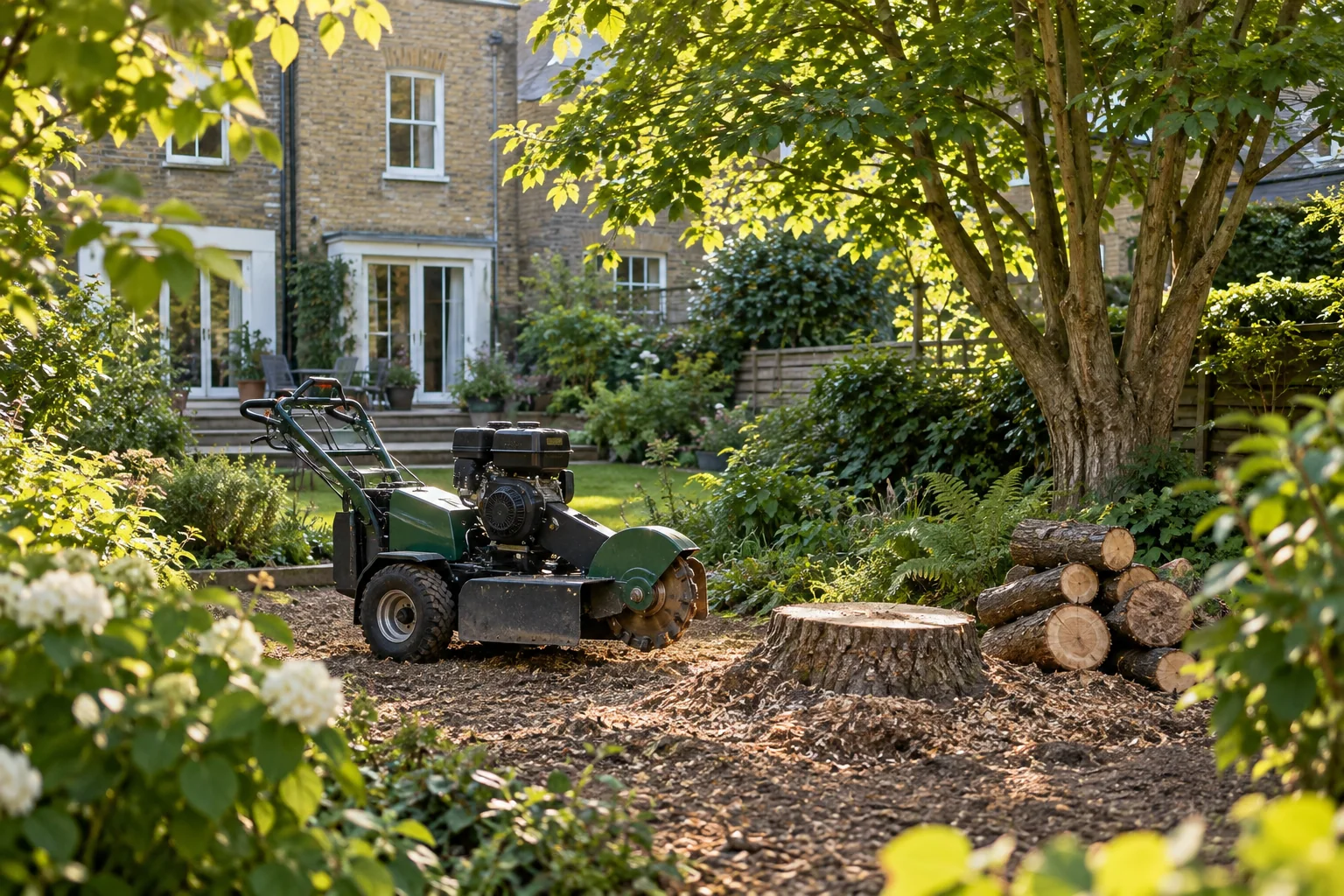
If the assessment leads to a discussion of tree removal, compare the whole outcome with retention. Include the stump and future use of the ground rather than comparing only the initial canopy change. Keep any follow-up advice so future pruning is based on the tree’s response, not an automatic repeat of the same request.
Treat the lawn or seating area beneath active pruning as part of the work site, even if the purpose is to make it more pleasant afterwards. Agree where household users can pass without entering the cutting or branch-handling area, and keep the affected space unavailable until the contractor confirms it can be used again. Do not move a chair back beneath the crown while material is still being handled.
Discuss the next step for your Chiswick property
Start with the Chiswick enquiry information and explain the result you want, the tree concern and the access available. For an informed choice between thinning, lifting and reduction, the Tree Surgery London homepage gives the wider introduction to the service. For an address outside Chiswick, the guides for Hammersmith and Acton provide related local enquiry routes; use the actual property address when arranging attendance.
Availability, the final operation and the quotation should be confirmed for the individual Chiswick property, with balancing filtered light with a sustainable crown explained before the work date is agreed.
Local permission checks for Chiswick
Chiswick should not be treated as a single-council label when checking tree permissions. Hounslow's own Chiswick Greentalk neighbourhood description includes the south-eastern corner of Ealing, with Bedford Park specifically mentioned. Establish the authority for the property before using a TPO map or sending a tree-work application. A W4 address or the word Chiswick in an enquiry is not enough to choose the correct planning department.
Hounslow cautions that its TPO map may not reflect the latest changes. If a record is unclear, request confirmation from the planning authority and keep the reply with the work schedule. For an Ealing address, check Ealing's current conservation-area boundaries as well as individual orders. Explain the proposed pruning in relation to an identifiable tree and a practical objective, such as clearance of a particular elevation. This is more useful than asking for a general tidy-up and avoids assuming that a familiar maintenance routine is automatically exempt from protection.
Questions about tree work in Chiswick
Will thinning make the whole tree smaller?
Thinning changes selected growth inside the crown and does not necessarily reduce its outline. If spread or height is the issue, ask which operation addresses that objective without confusing it with improved internal spacing.
Can crown lifting improve space above a table?
Lower-branch clearance may be relevant, but its suitability depends on branch size, position and the remaining crown. Show the seating area and ask what clearance can reasonably be achieved rather than specifying a height alone.
How do I explain a daylight problem?
Photograph the affected view and note the season and time of day. Explain which room or garden area matters; that gives the arborist a more precise objective than a general request for extra light everywhere.
Is a heavy reduction a lasting solution to shade?
Heavy cutting may create a significant regrowth response and future management demands. Ask about the likely effect and the tree’s tolerance, recognising that a retained tree can continue to cast useful or unwanted shade.
Should every Chiswick tree be pruned in winter?
Timing depends on the species, condition and intended cuts. Ask for advice on the actual tree rather than applying a single seasonal rule, and identify any related project deadline before fixing the operation.
Can pruning guarantee a healthier lawn?
Lawn performance has several influences, and a tree operation cannot guarantee the outcome. Discuss shade as one consideration alongside the wider garden conditions instead of treating canopy cutting as a complete lawn diagnosis.
How can I judge whether the intended light improvement occurred?
Keep the agreed tree specification and use photographs from comparable positions, with dates and seasonal context. The completion check concerns whether the operation was carried out as agreed; the amount of shade at a later moment also depends on leaf cover, sun position and the remaining canopy.