LONDON TREE CARE / Acton
Tree Surgery Acton
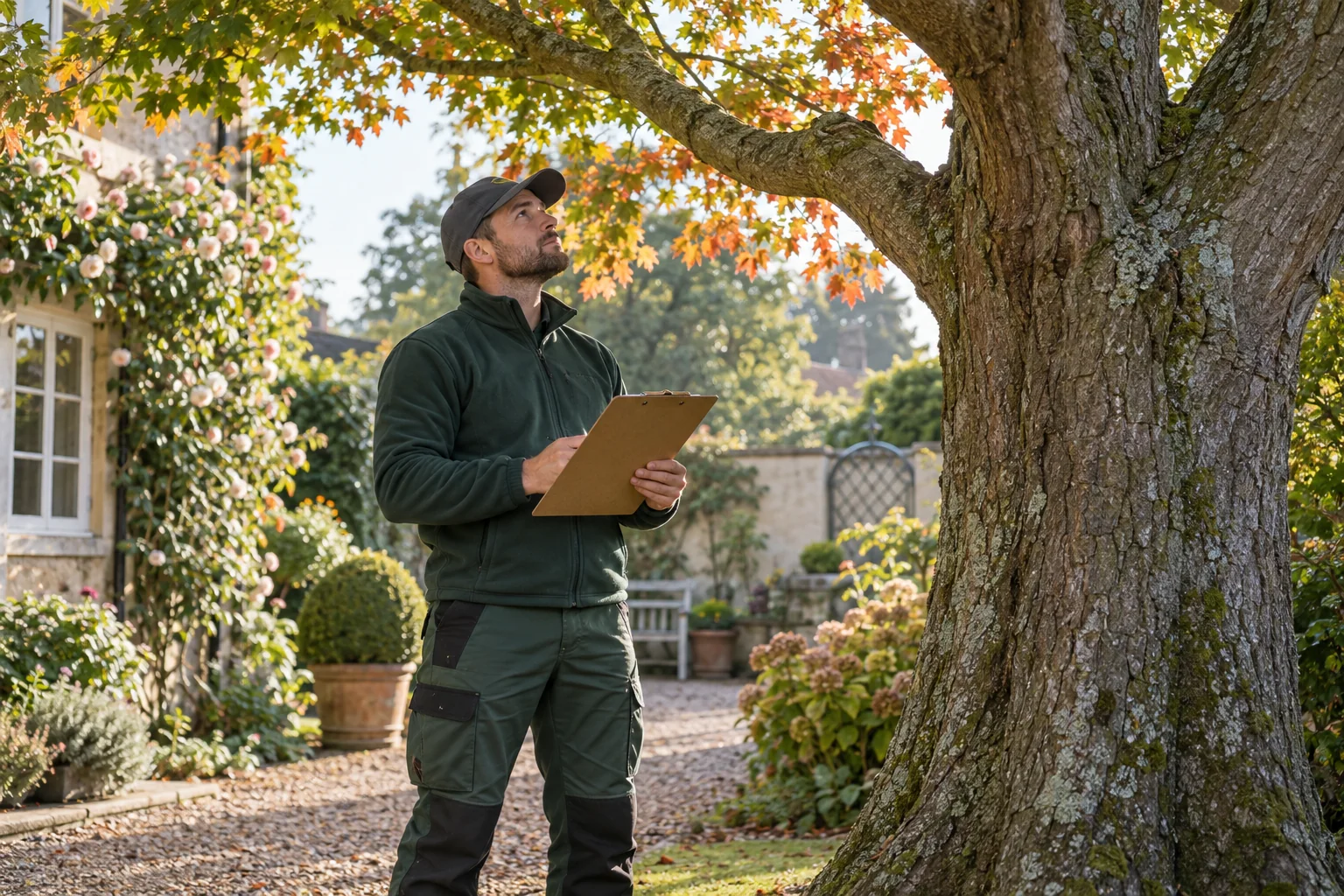
Tree surgery and garden improvement can affect the same space in Acton. New paving, a replacement shed or a redesigned border may change conditions around a retained tree even when no branches are cut. Bring those plans into the conversation early. Tree Surgery London accepts Acton enquiries and can help you identify the tree work questions that should be resolved before a wider project proceeds.
- A garden project planned around retained trees
- Protecting the tree while changing nearby surfaces
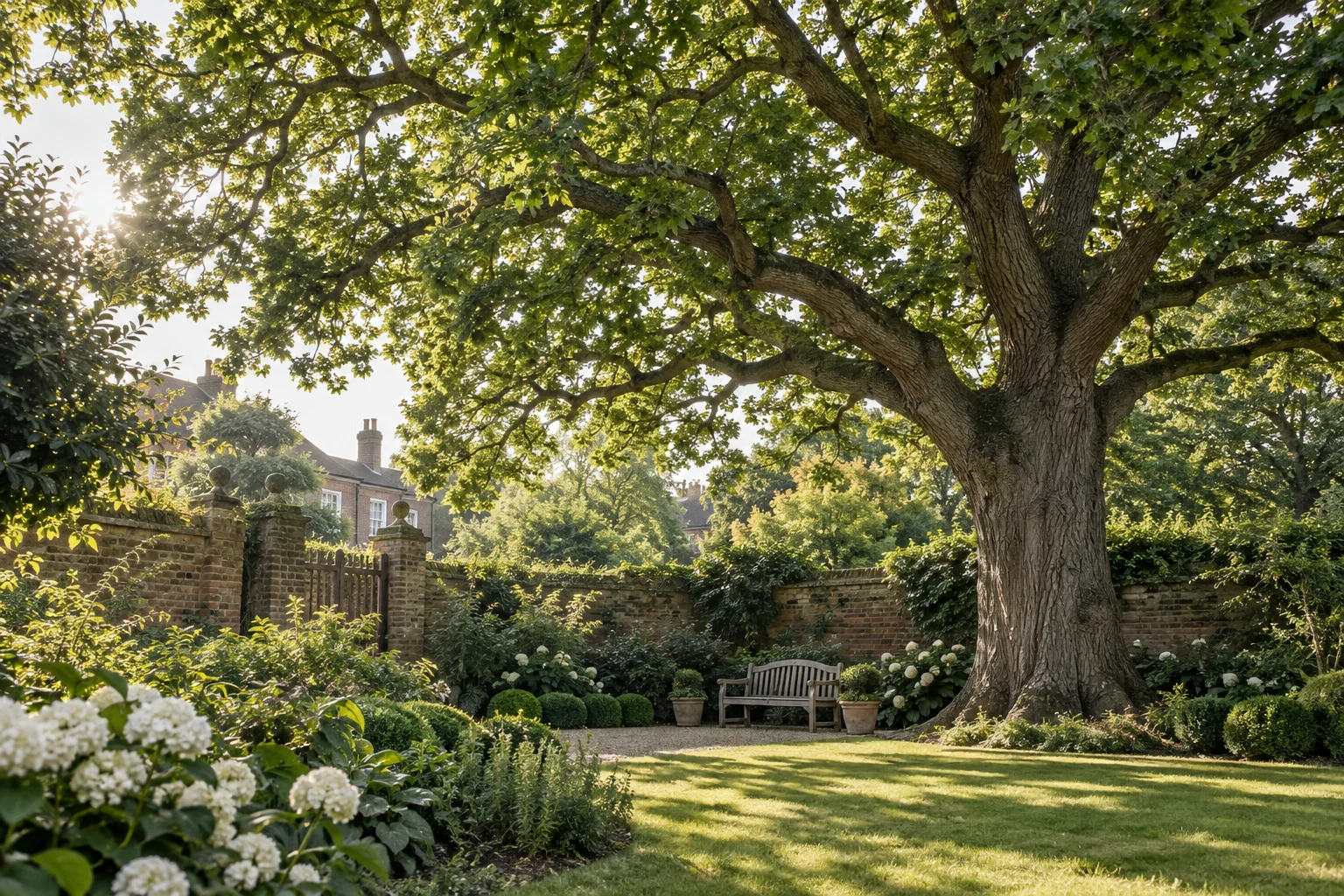
- Practical preparation for an established tree beside a proposed garden renovation
Home / London coverage / Acton
The first decision is often what needs protecting, rather than what needs removing.
Show the arborist the proposed finished layout as well as the current garden. Digging, changes in soil level, storage of materials and repeated traffic can affect roots or the soil they depend on. The extent of a root system cannot be judged accurately from the outline of the canopy alone. Do not assume that a small surface alteration is harmless because it lies beyond the outer branches.
If a tree is to remain, ask what advice is required on its protection during the project. Routine pruning is not a substitute for planning around roots. Where construction or design decisions require a formal arboricultural assessment, establish that scope separately from a quotation for practical tree work. Having the right information before contractors arrive can avoid a conflict between the garden design and tree retention.
Bring the proposed garden into the tree discussion
Photograph the current site and mark the intended changes on a sketch. Show excavation, new surfaces and the route for construction materials. The tree’s needs can conflict with a project even when the final structure does not touch its branches. Understanding that relationship early gives the owner and designer more choices than discovering it after ground work begins.
The tree care overview provides background for a discussion about retention and condition. Explain if your request concerns practical work, project-protection advice or a documented assessment for another purpose. Those are related questions, but they are not automatically covered by one quotation for cutting branches.
Keep pruning separate from protection requirements
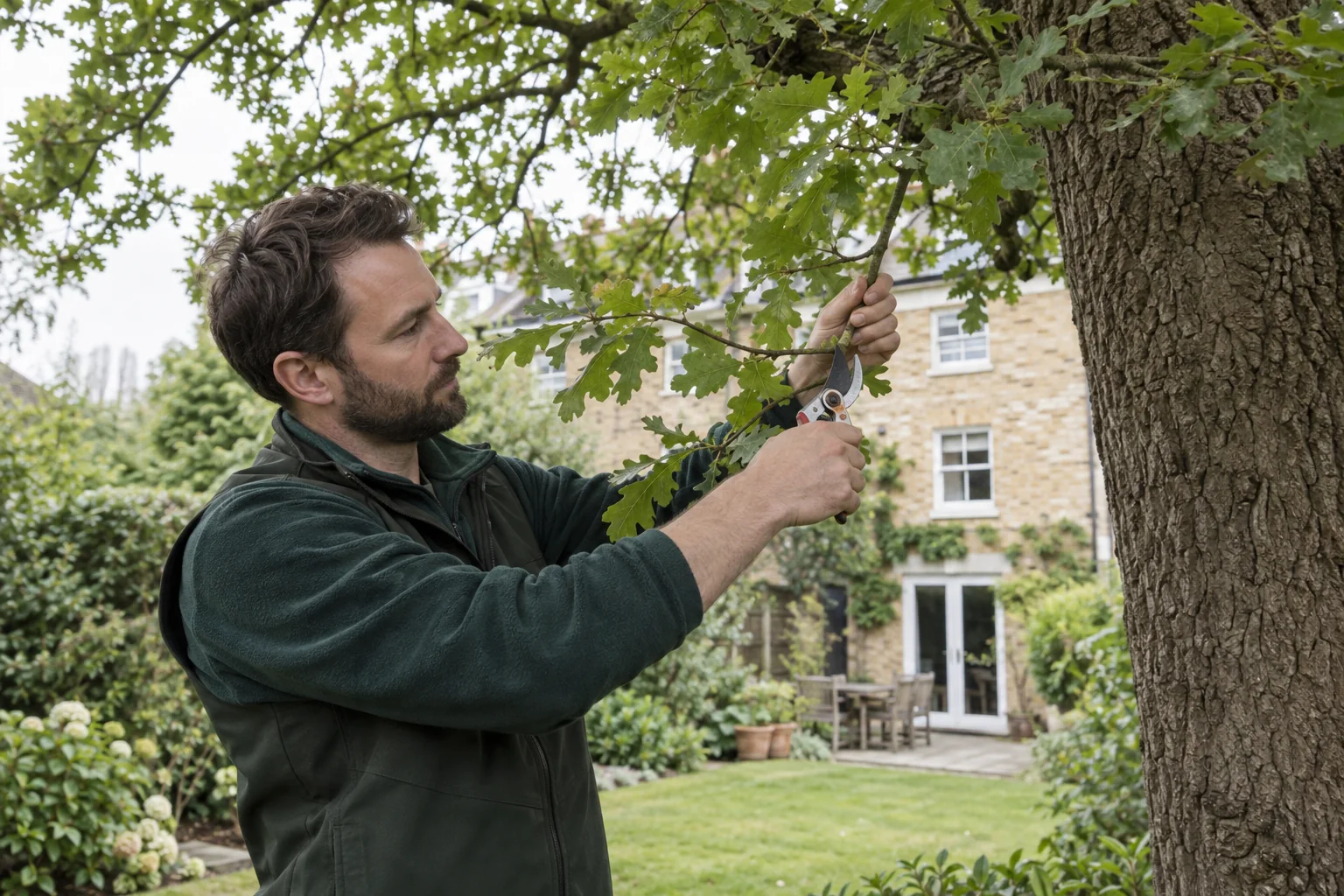
A request to reduce the crown for builders’ access should identify the actual route and clearance needed. The arborist can consider whether suitable cuts support it and what that would mean for the retained tree. Read the pruning information before treating a general reduction as a convenient way to solve every construction constraint.
Soil around a retained tree can be affected by storage and vehicle movements without any obvious immediate crown change. Agree relevant restrictions with the people carrying out the wider project. A tree protection recommendation is useful only if the contractor receiving deliveries or choosing a storage place also knows where the limits are.
Preparing for the visit in Acton
Provide drawings or marked photographs showing excavation, proposed structures and material storage. Avoid trial digging near the trunk to obtain a better photograph. Ask garden contractors to leave potentially affected areas undisturbed until the tree considerations and any relevant permissions have been resolved.
Do the address checks before fixing a project sequence
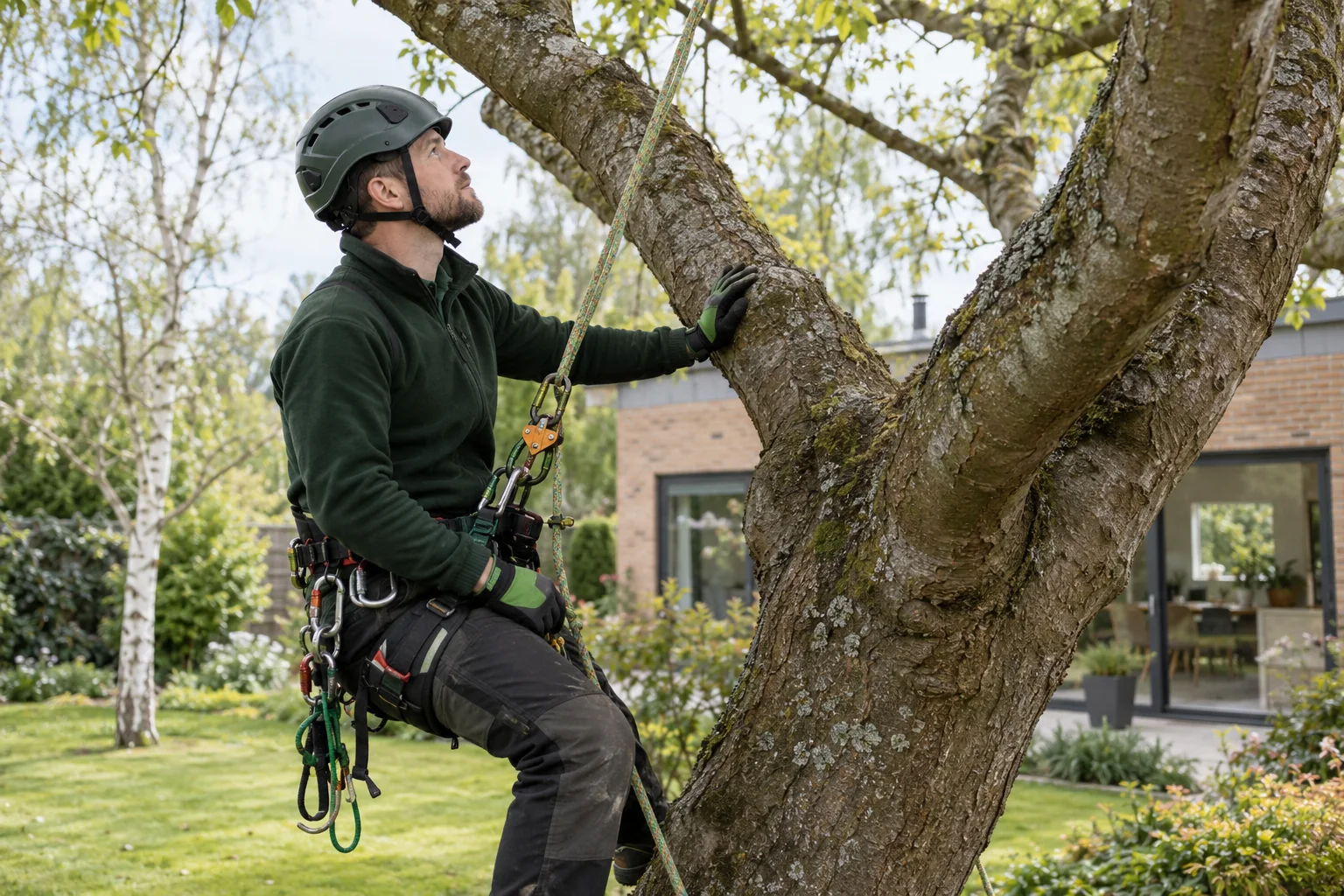
Establish the protection position for the tree and relevant property address before treating cutting as an automatic first step of the redesign. Agree who makes any necessary submission and keep the final specification aligned with the response. A garden contractor’s programme does not itself establish authority for tree work. If the proposal changes during design, ask whether the existing position still applies. Give the tree contractor relevant wildlife observations and leave room for the necessary assessment, rather than assuming a convenient project start date guarantees that all operations can proceed.
Separate the cost of practical tree work from any specialist advice, protection plan or later ground preparation required by the wider project. Ask the quote to identify access assumptions and the treatment of arisings. The designer and following contractor should know the limits of the tree operation before agreeing their own work. Record what has been completed and any areas that must remain protected. A useful project handover explains remaining constraints; it does not describe the site as fully prepared merely because a particular crown or stem operation has finished.
| Decision to make | Information to provide | What to clarify |
|---|---|---|
| A garden project planned around retained trees | Views of an established tree beside a proposed garden renovation and the feature that prompted the enquiry | The intended result and the limits of the recommended operation |
| Pruning or removal | Tree condition, previous work and the reason for the request | How the recommendation addresses protecting the tree while changing nearby surfaces |
| Work method and access | Gate measurements, route photographs and fixed obstacles | Equipment, handling arrangements and protection included in the scope |
| Permission position | Exact property address, tree reference and any existing records | Who confirms the applicable requirements before work proceeds |
| Completion and follow-up | Whether timber stays and what use follows the operation | Clearance, remaining ground work and any recommended review |
Define what removal would actually prepare
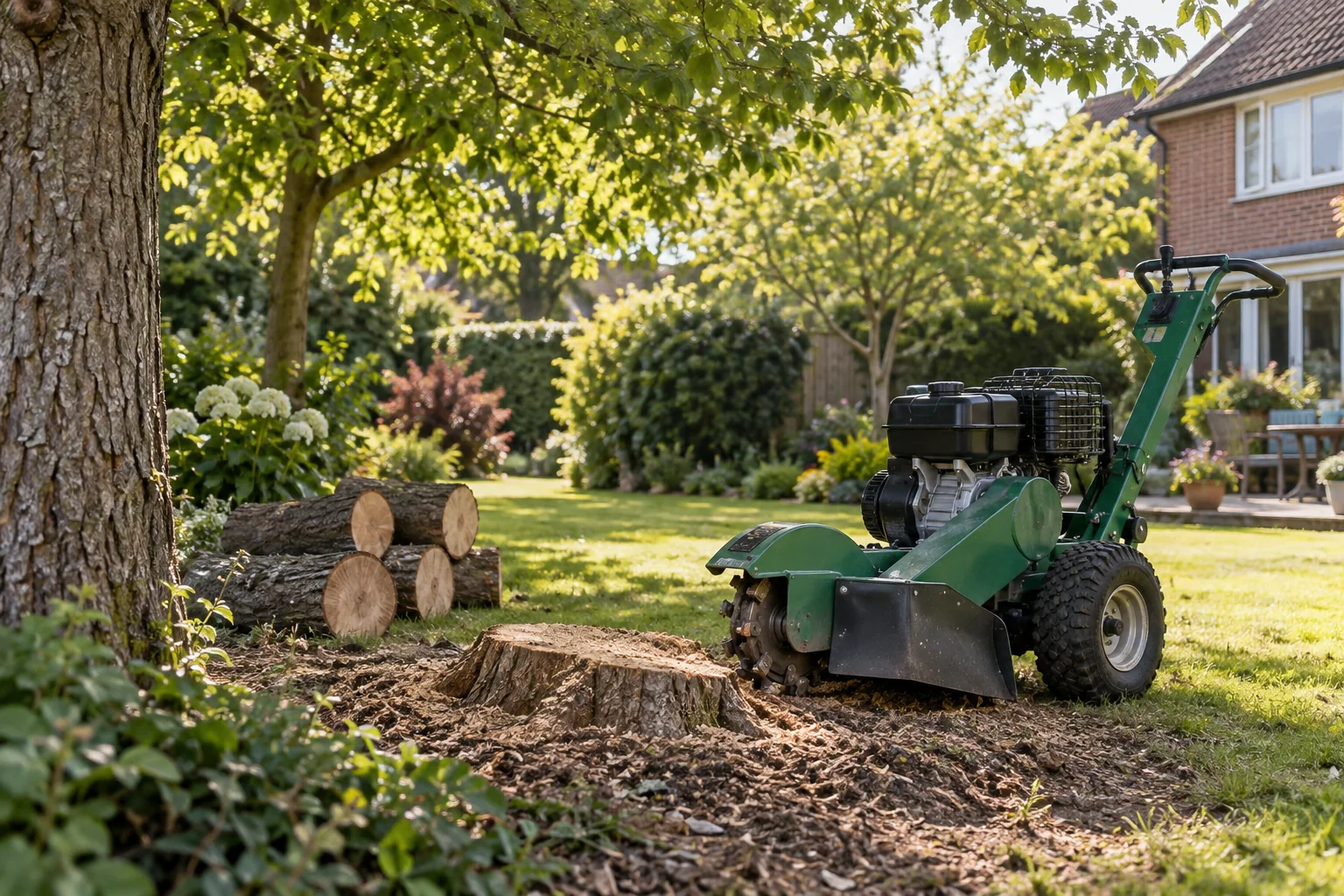
Where tree removal becomes the chosen option, ask what the operation leaves below ground and what the next task needs. Stump grinding may be separately specified, while deeper excavation or preparation for a structure can belong to another scope. A cleared canopy is not proof that the ground is ready for every type of project.
Share the intended sequence between contractors and identify who can resolve a disagreement about access or ground conditions. If advice changes, update the garden programme before someone begins dependent work. Keep any permission-related records with the final tree specification so the project does not proceed on an obsolete proposal.
Discuss the next step for your Acton property
Start with the Acton enquiry information and explain the result you want, the tree concern and the access available. For a garden project planned around retained trees, the Tree Surgery London homepage gives the wider introduction to the service. For an address outside Acton, the guides for Ealing and Shepherd’s Bush provide related local enquiry routes; use the actual property address when arranging attendance.
Availability, the final operation and the quotation should be confirmed for the individual Acton property, with protecting the tree while changing nearby surfaces explained before the work date is agreed.
Local permission checks for Acton
For Acton, begin with the precise site address rather than assuming that every local enquiry belongs to the same authority. Acton Town Centre's conservation-area information is published by Ealing, while Hammersmith and Fulham's own consultation material includes East Acton Station and nearby streets. These official examples show why a district or station name cannot substitute for a boundary check. The tree's location, rather than the contractor's base, determines the relevant planning authority.
Ealing lists several distinct Acton conservation areas, including Acton Green, Acton Park and Mill Hill Park. Their boundaries are not interchangeable, and the council has also reviewed designations. Find the current map for the property and check for a separate TPO. If an enquiry concerns a rear garden, add a marked aerial or sketch so the intended tree is unambiguous. A quotation should then distinguish cutting work, access arrangements and any stump operation, allowing the owner to authorise the actual proposal rather than a vague area-wide description.
Questions about tree work in Acton
Should tree advice come before a garden redesign?
Early advice is useful where the design changes ground around a retained tree. Share the intended excavation, levels and structures so tree protection is considered while the layout can still be adjusted.
Can building materials be stored beneath a retained crown?
Do not treat that space as automatically available. The tree’s rooting environment may need protection from storage and traffic; ask for project-specific advice and communicate any agreed restrictions to the garden contractor.
Does pruning protect a tree from nearby excavation?
Reducing the canopy is not a substitute for planning around roots. The ground works and tree condition need their own assessment, with the purpose of any proposed pruning explained separately from construction protection.
Is the canopy edge a reliable root boundary?
The visible outline does not define every below-ground consideration. Avoid setting excavation limits by eye from the branches, and obtain the level of arboricultural advice appropriate to the proposed garden or building work.
What should the Acton project drawings show?
Mark the tree, intended structures, excavations, finished levels and access or storage areas. Even a clear sketch can improve the initial discussion, though a formal project may require a more detailed assessment and plan.
Can the tree quotation replace a construction assessment?
A price for practical tree work does not automatically provide the arboricultural information needed for a development decision. Explain the project purpose so the organiser can distinguish operations from any separate professional reporting requirement.
What if the garden contractor proposes a change beside a retained tree?
Pass the revised design to the relevant tree adviser before disturbing the ground. A different trench, level or storage arrangement may affect advice based on the earlier proposal. Keep the updated agreement with the project information so the person carrying out the work does not follow an obsolete drawing.