LONDON TREE CARE / Shepherd's Bush
Tree Surgery Shepherd's Bush
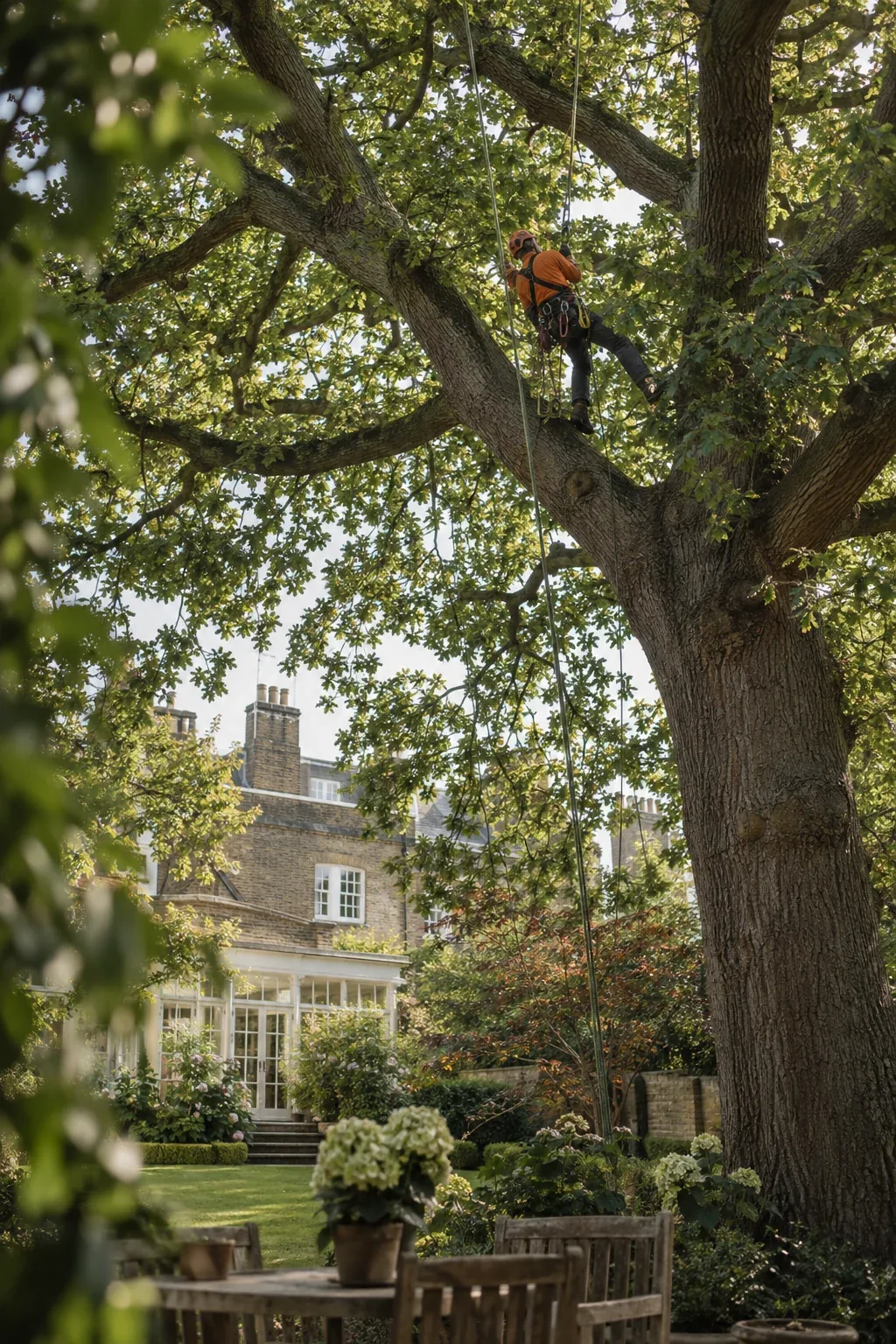
A request to remove a tree in Shepherd’s Bush may begin with frustration about size, leaves or an awkward garden layout. Those concerns deserve a clear discussion, but they do not establish that removal is the only workable option. Explain what makes the tree difficult to live with and what you would like to use the space for afterwards. Tree Surgery London serves Shepherd’s Bush enquiries and can help you frame the practical questions.
- A reasoned choice about retention or removal
- Separating an inconvenient canopy from an unretainable tree
- Practical preparation for a garden tree whose size has prompted a removal request
Home / London coverage / Shepherd's Bush
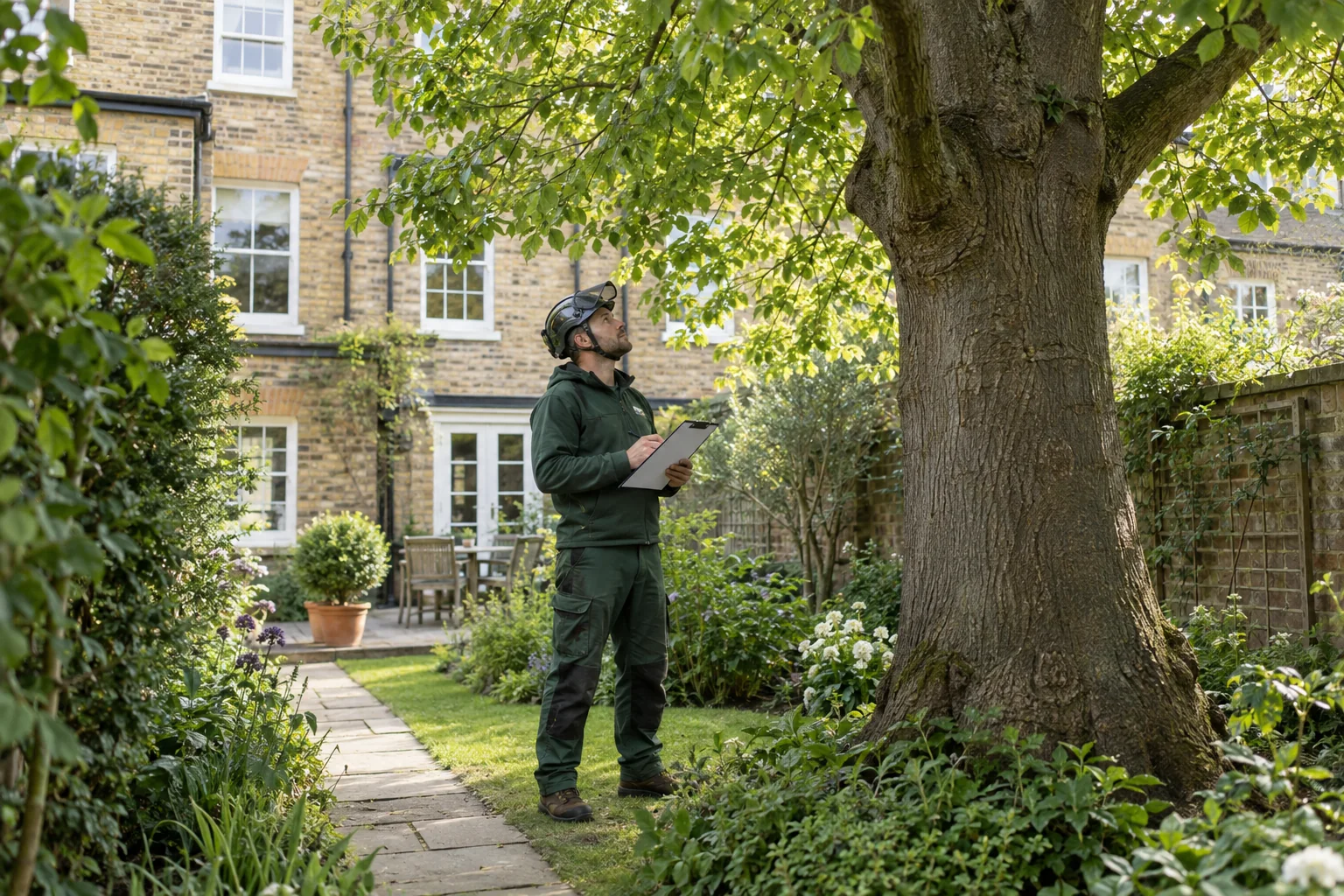
An assessment should consider condition, achievable pruning and site constraints before a final decision is made.
Compare a realistic retention option with removal, rather than comparing the existing tree with an imagined perfectly shaped version. Some crowns can be adjusted modestly; others have little scope for useful reduction without poor cuts. Ask how much improvement is feasible and how long it might last. A recommendation should make the limits clear, including the possibility that the preferred visual result is incompatible with a sustainable crown.
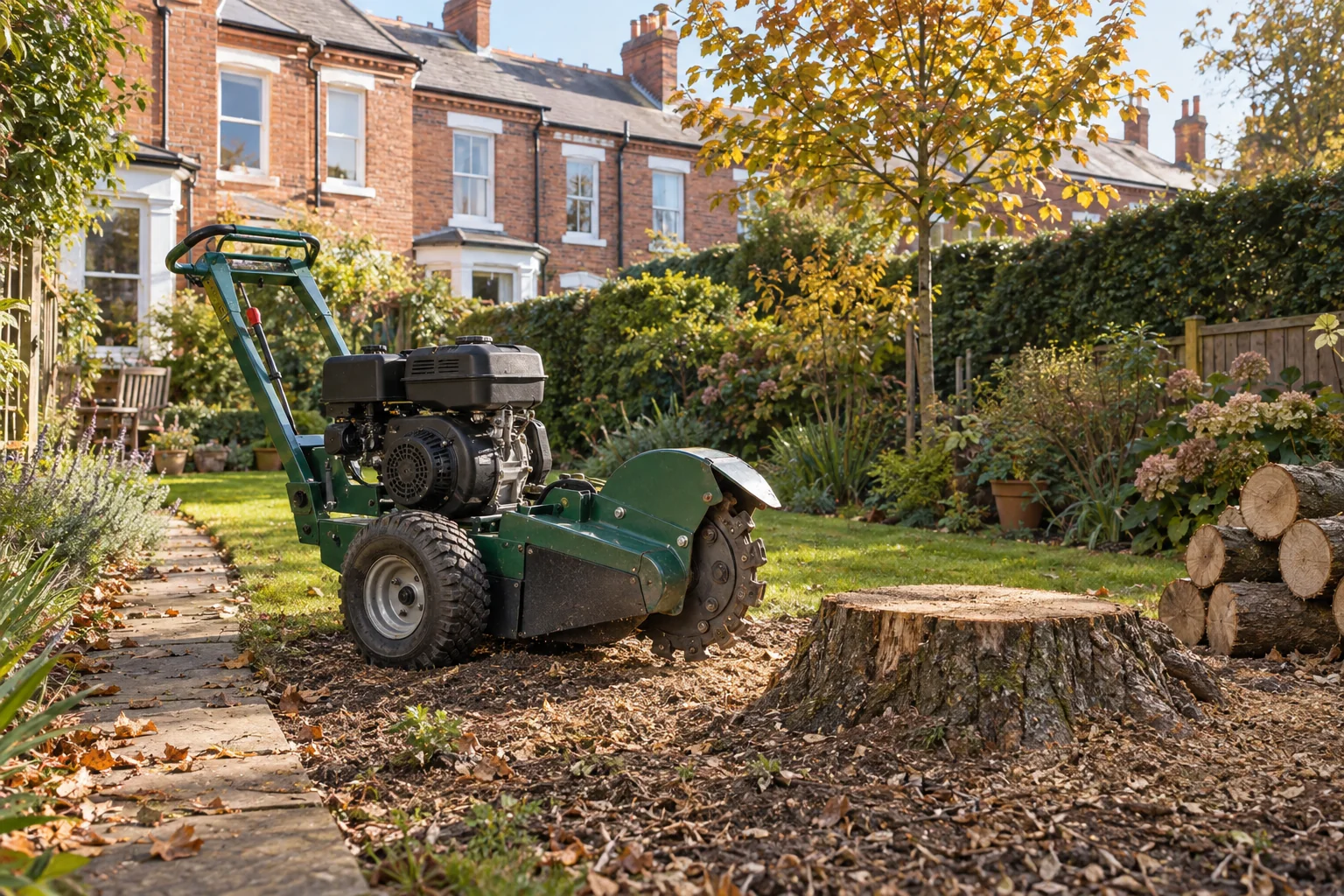
If removal is appropriate, discuss what happens below ground and what follows it. Leaving the stump, grinding it to an agreed depth and preparing a site for a different use are separate tasks. Roots will not disappear immediately because the stem is gone. A replacement planting or hard landscaping plan should take the remaining ground conditions into account rather than assuming the site will be ready for any use.
Test the reason behind a removal request
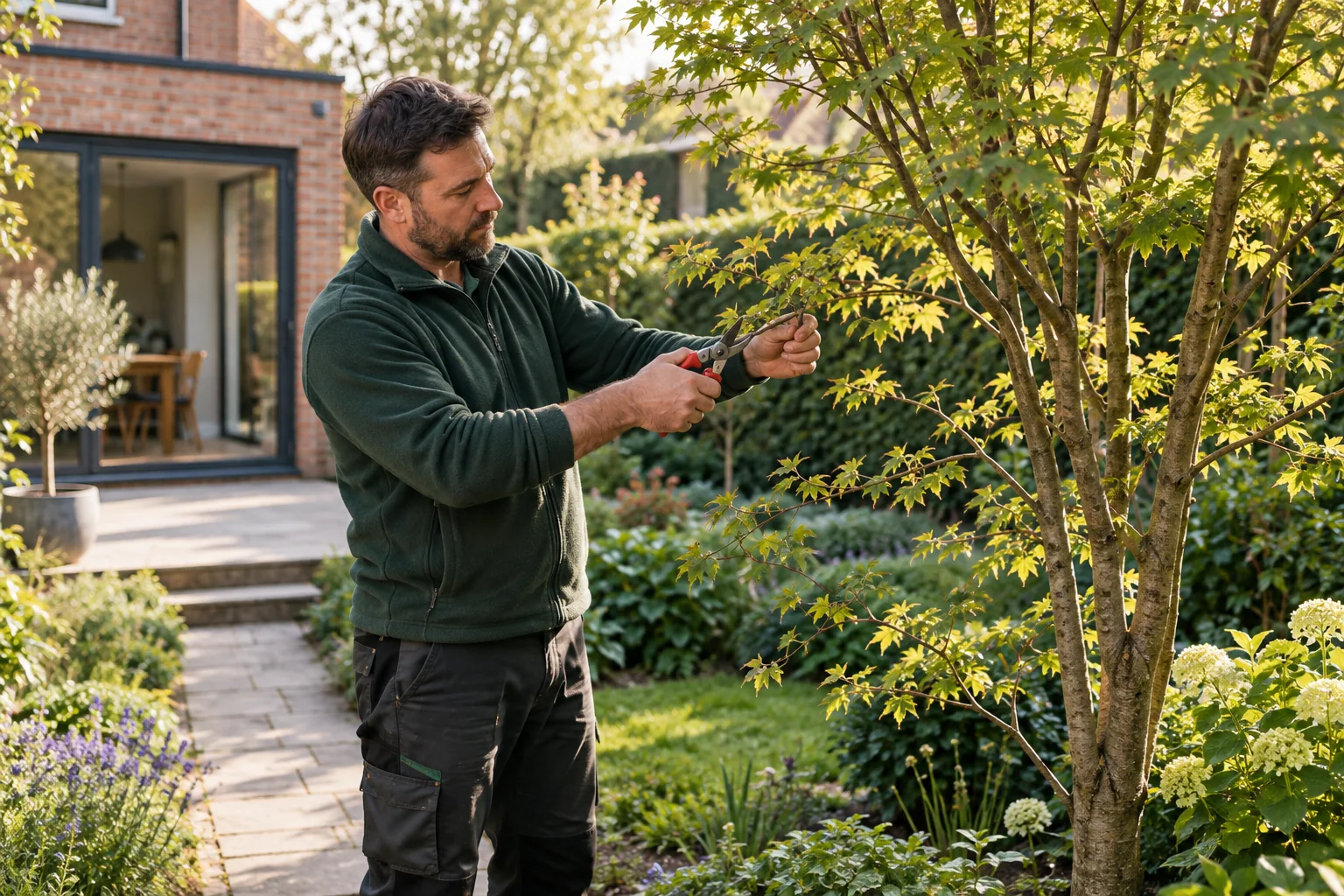
Describe how the tree affects the garden in everyday terms. A blocked route, an unmanageable low branch and a wish to redesign the whole space lead to different comparisons. Ask the arborist which concerns could be addressed while retaining the tree and which would remain. This is more informative than choosing removal before the practical alternatives have been examined.
The crown pruning information helps clarify what a retention option actually involves. Compare a feasible result with the existing tree, including future maintenance implications. Do not use a drawing of an ideal small canopy as evidence that the actual tree can be turned into that shape through suitable cuts.
Understand the condition recommendation
A condition concern should have its own assessment rather than become an extra justification added to a garden preference. Give the assessor any history of damage, previous work and changes around the roots. The tree care guide offers useful background for deciding whether a written inspection or another level of investigation is needed.
If the tree can reasonably remain but does not suit the owner’s plans, keep that distinction clear. If findings support removal, ask what features led to the recommendation and what work is proposed. A written scope that explains the decision is easier to understand later than a general note saying the tree was too big.
| Decision to make | Information to provide | What to clarify |
|---|---|---|
| A reasoned choice about retention or removal | Views of a garden tree whose size has prompted a removal request and the feature that prompted the enquiry | The intended result and the limits of the recommended operation |
| Pruning or removal | Tree condition, previous work and the reason for the request | How the recommendation addresses separating an inconvenient canopy from an unretainable tree |
| Work method and access | Gate measurements, route photographs and fixed obstacles | Equipment, handling arrangements and protection included in the scope |
| Permission position | Exact property address, tree reference and any existing records | Who confirms the applicable requirements before work proceeds |
| Completion and follow-up | Whether timber stays and what use follows the operation | Clearance, remaining ground work and any recommended review |
Preparing for the visit in Shepherd's Bush
Write down the main reason for removal and whether a smaller intervention would solve it. Show the proposed use of the space after the tree has gone. Identify underground services or structures where known, while avoiding unsupported assumptions about their route.
Price the next use of the space honestly
A removal quotation should explain access, protection and treatment of timber, with stump work stated where included. Tell the contractor what is intended for the cleared area. The method and depth of stump treatment can matter to the next task, but should not be assumed to include preparing a base or removing every lateral root.
Ask what condition the ground will be left in and who handles any further garden preparation. Retained logs, chips or grindings need an agreed place if they are to stay. Compare complete scopes rather than a low headline price that leaves the essential next step unaddressed or depends on access you cannot provide.
Give the final decision a documented basis
Before choosing a date, confirm the tree’s protection status for the full property address and agree who will resolve any required process. A wish to change the garden does not settle those requirements. Retain the actual relevant record and compare it with the chosen operation, particularly if the discussion moves from pruning to removal. A neighbour’s recollection of earlier work is not a substitute for that check. The contractor should also consider relevant wildlife constraints when planning the proposed operation and explain any effect on the programme.
Compare the total practical outcomes of retention and removal, including access, handling, clearance and any follow-on ground task. A cheap stem-removal quote may leave work essential to your garden plan outside its scope. Equally, a more extensive pruning proposal is not necessarily better than a proportionate one. Ask for the inclusions and limits to be clear before accepting. Keep the decision, completed operation and relevant advice together, so future property records explain why the tree was retained or removed rather than leaving only an invoice with an unexplained service name.
Discuss the next step for your Shepherd's Bush property
Start with the Shepherd’s Bush enquiry information and explain the result you want, the tree concern and the access available. For a reasoned choice about retention or removal, the Tree Surgery London homepage gives the wider introduction to the service. For an address outside Shepherd’s Bush, the guides for Hammersmith and Acton provide related local enquiry routes; use the actual property address when arranging attendance.
Availability, the final operation and the quotation should be confirmed for the individual Shepherd’s Bush property, with separating an inconvenient canopy from an unretainable tree explained before the work date is agreed.
Local permission checks for Shepherd's Bush
Tree work in Shepherd's Bush is administered through Hammersmith and Fulham where the property lies within that borough. Its conservation guidance provides the starting point for checking whether a TPO application or conservation-area notification is needed. Establish that position before promising a maintenance date, including when the work appears to be a repeat of earlier pruning. An old invoice can help describe previous work but does not establish the current permission position.
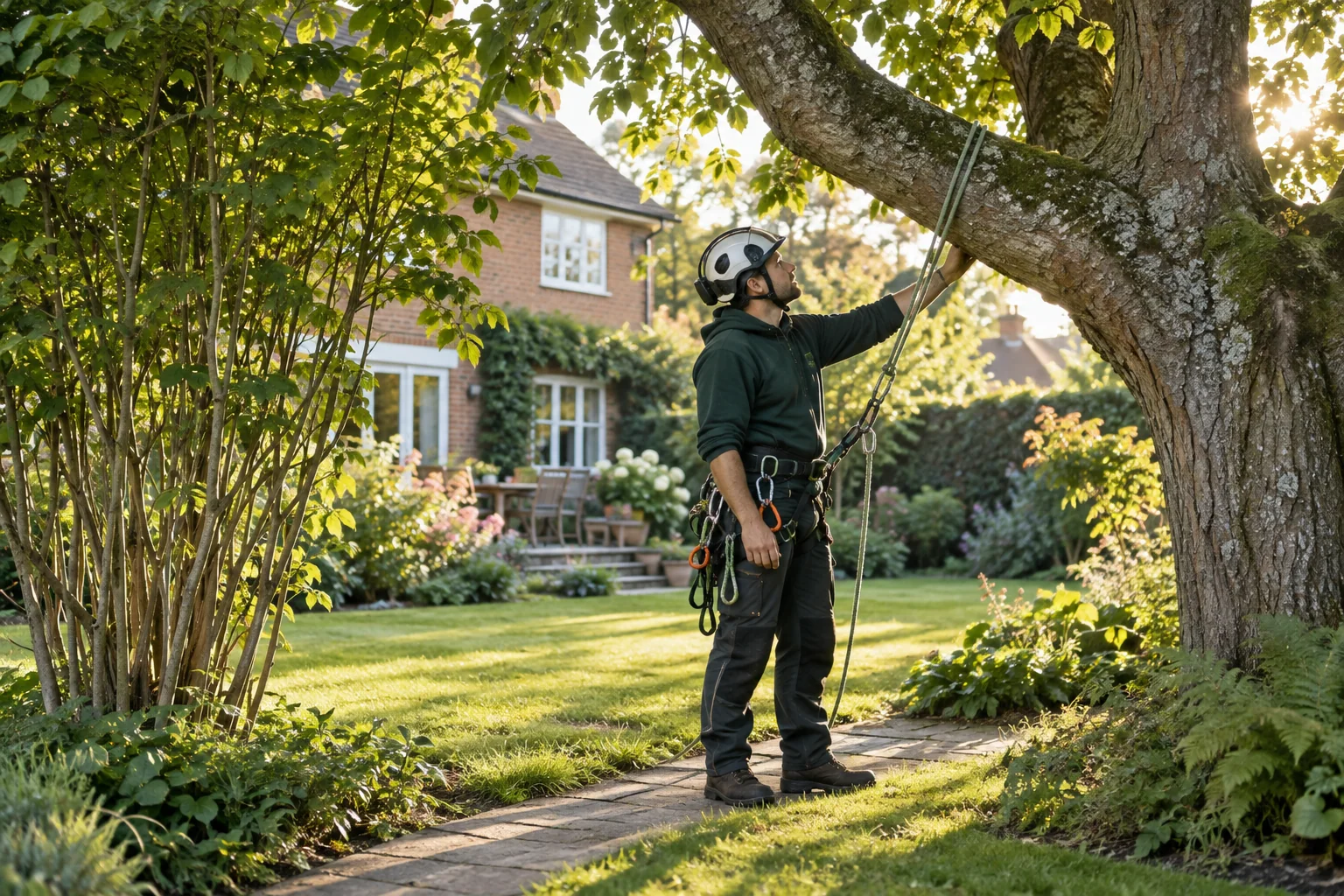
For a garden enquiry, the equipment route deserves a separate set of photographs. Show the narrowest opening, steps, tight turns and any shared passage; do not assume a machine can reach a tree simply because a person can. If branches must be carried through an occupied area, explain the proposed handling route and discuss protection of surfaces. These are site questions to resolve on a visit, rather than claims about every property in the district. They also help explain why two apparently similar trees can produce different quotations.
Questions about tree work in Shepherd's Bush
Is inconvenience enough to decide that a tree should be removed?
Explain the inconvenience and compare realistic alternatives before deciding. The arborist can discuss condition and achievable pruning, while the owner considers how each option fits the intended use of the garden.
What is a fair comparison between retention and removal?
Compare a feasible pruning result with the complete removal scope, including stump and ground implications. An imagined perfectly shaped tree is not a useful retention option if the actual branching cannot support it.
Does felling include the stump automatically?
A stem cut near ground level can leave the stump in place. Ask whether grinding or other stump work is included, what its limits are and what condition the area will be left in.
Can a removed tree site immediately become a new patio?
Remaining roots, ground condition and the requirements of the patio design still need consideration. Clarify what the tree contractor will complete and what the landscaping contractor requires before treating the area as ready.
What should I say when requesting a removal quotation?
State the reason for removal, show the whole tree and explain access and the next use of the space. Also disclose known services or structures, rather than leaving those questions until equipment arrives.
Could a smaller intervention solve my Shepherd’s Bush enquiry?
It may, depending on the problem and tree condition. Ask the recommendation to explain what a limited operation would achieve and what it would leave unresolved so your decision is based on a practical result.
What should I ask if the retained tree needs future attention?
Ask what future management is envisaged and why, including what observation would guide the decision. An option involving repeat work should be understood before comparison with removal, but a possible review should not be mistaken for an unavoidable commitment to identical pruning at a fixed interval.