LONDON TREE CARE / Richmond
Tree Surgery Richmond
A crown should be assessed as a connected structure. Removing foliage from one part changes how the remaining branches share exposure and space. When enquiring about a Richmond tree, begin with the objective rather than a percentage chosen without advice. Tree Surgery London accepts requests across Richmond and can help you explain concerns about size, light, condition or interference with buildings.
- Consider the whole branch framework
- Make reduction objectives explicit
- Discuss the tree’s expected response
Home / London coverage / Richmond
A thoughtful specification will consider whether pruning is appropriate, what the retained crown should achieve and how the tree’s response will be managed. The wider Tree Surgery London service covers enquiries about appropriate tree management, while this guide explains how to consider the whole tree before choosing a reduction.
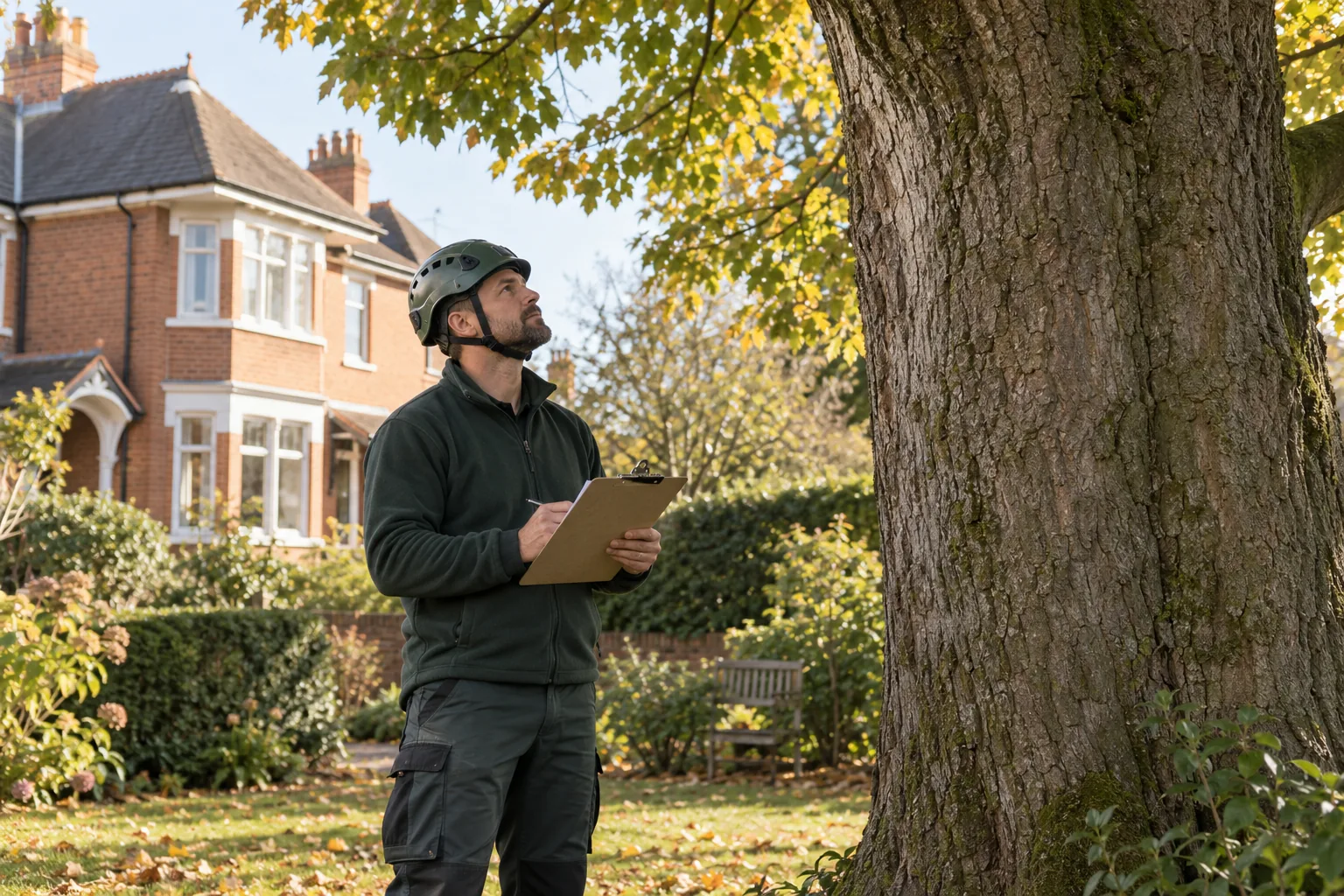
Read previous cuts and the present branch framework
Begin with what you can actually see rather than deciding which operation the tree needs; show the whole tree as well as the reported feature, because a close-up alone can conceal its position within the crown.
For this enquiry, useful starting evidence would include the branch framework, previous pruning points and any changes in density across different parts of the canopy.
A remote conversation should make clear the limits of the information available; the condition of a retained tree needs to be considered together with the space, buildings and routes within its potential reach. Use the tree care service information to prepare assessment questions; a site inspection should be used where the available evidence does not resolve the concern.
Choose a reduction the retained crown can support
A sensible pruning discussion here would focus on an achievable final crown shape and suitable cutting points rather than a severe reduction specified only by percentage.
A written pruning proposal should show what will remain after the cuts; the aim is that two different quotations are not being compared as though they described exactly the same operation.
Taking more foliage off does not automatically produce a more durable improvement; a realistic plan recognises that the tree will continue to develop and may require reassessment as circumstances change. Use the pruning service overview to compare the terminology; allow the actual tree and the desired outcome to determine what is appropriate.
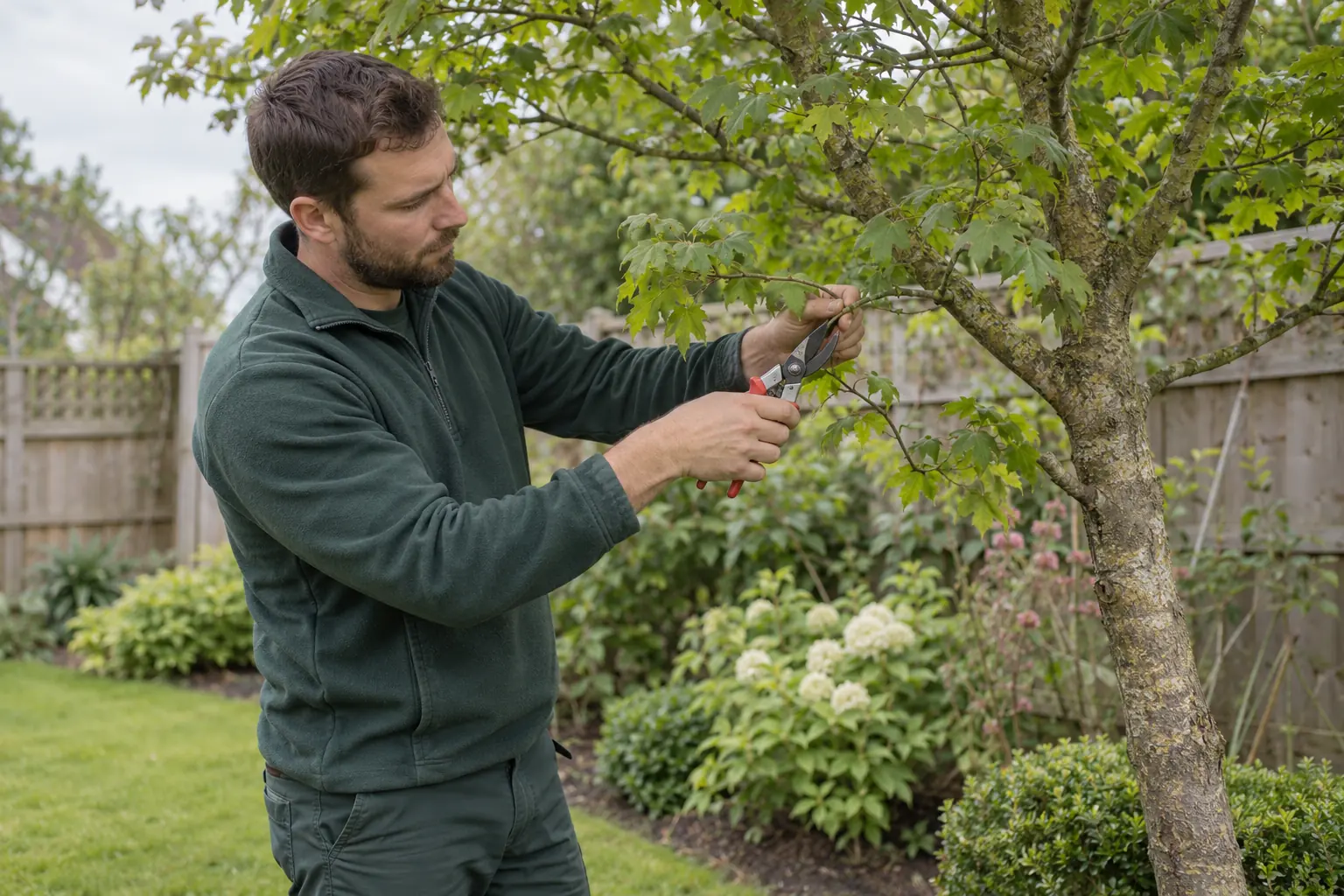
Compare the extent and implications of reductions
Compare the written scope before comparing the total price; the aim is that a lower figure is not being accepted for an operation that leaves important parts of the requested work undone.
The difficulty of protecting structures or managing shared access can influence the proposal; explain the full site conditions before treating a preliminary estimate as a confirmed price for the visit.
For this particular brief, the scope should explain its response to a broad crown where a request for a large reduction needs to be tested against the tree’s condition and structure, rather than substitute an unrelated standard operation.
Match protection checks to the proposed crown dimensions
Before agreeing a start date, establish the relevant authority and the tree’s protection position; an online map or previous conversation may not establish the requirements for the operation now being proposed.
Where an application or notification is required, describe the proposed work clearly; check the decision and conditions before assuming that a quotation amounts to permission to proceed.
The property-specific planning question is how the proposed work addresses a broad crown where a request for a large reduction needs to be tested against the tree’s condition and structure without getting ahead of the checks required for that address.
| Planning decision | Information to provide | What to agree |
|---|---|---|
| The reported concern | The branch framework, previous pruning points and any changes in density across different parts of the canopy | An assessment and a defined management objective |
| The retained crown | An achievable final crown shape and suitable cutting points rather than a severe reduction specified only by percentage | An understandable pruning scope, if work is appropriate |
| The working route | The space available for controlled handling when long branches cannot be placed directly on the ground | Method, protection and workable site separation |
| The finished space | Avoiding unnecessary disturbance beneath the spread of a retained tree during any associated garden work | Stump, material and reinstatement responsibilities |
Examine retention before choosing a different outcome
A felling proposal needs a clear explanation of why that outcome is appropriate; avoid treating a large canopy or an inconvenient position as a complete assessment on its own.
A removal method must account for the work space and the objects within reach; do not assume that specialist lifting equipment will always be either necessary or possible on the property.
The ground-related part of this decision is avoiding unnecessary disturbance beneath the spread of a retained tree during any associated garden work. Read the sectional removal guidance when reviewing a felling proposal; make sure the proposed material handling fits the access described in the enquiry.
Find room for handling long branches
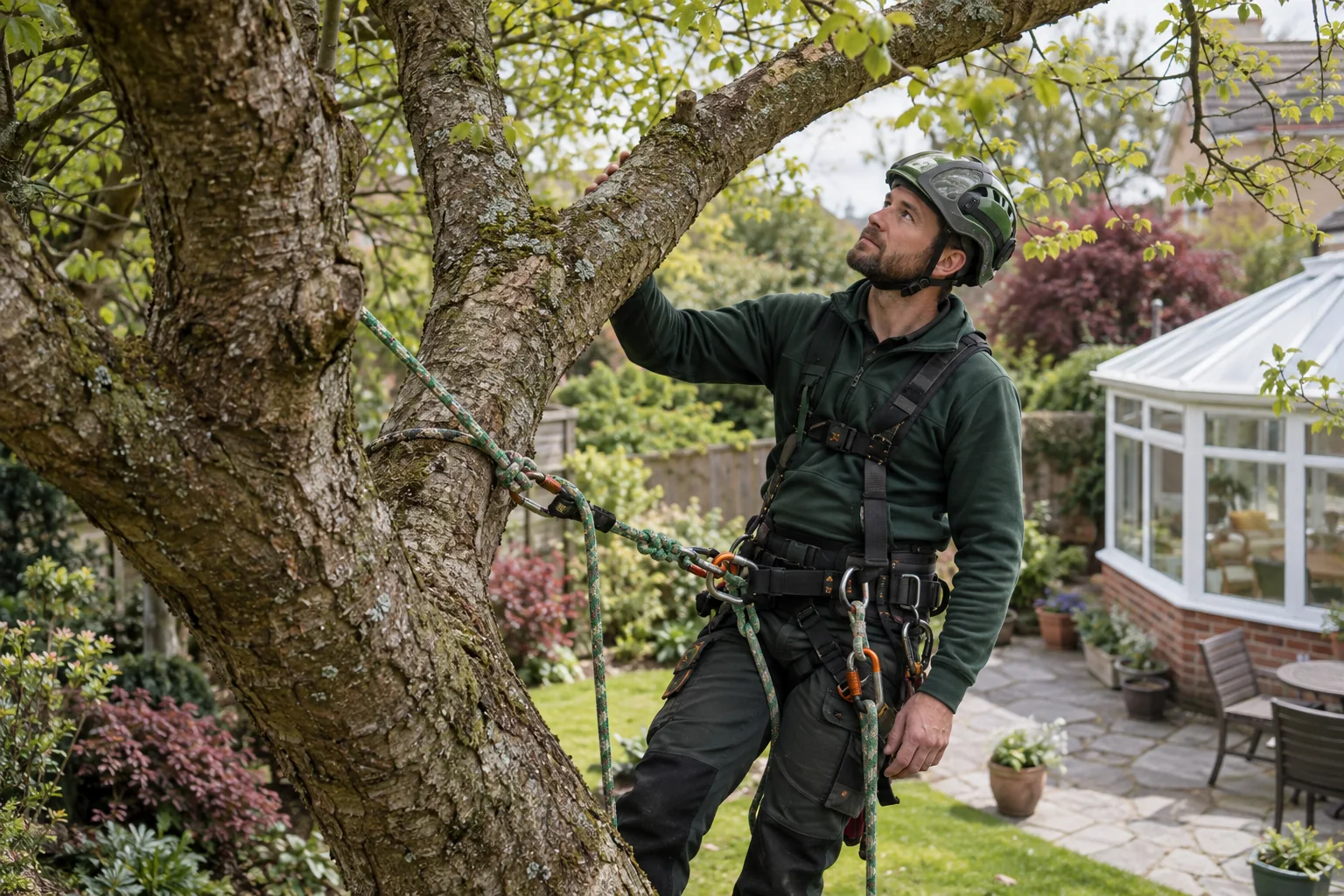
At the planning stage, pay particular attention to the space available for controlled handling when long branches cannot be placed directly on the ground.
Access information should cover the entire journey between the work area and collection point; use clear measurements rather than an estimate based on whether a person can comfortably walk through.
The contractor needs a workable separation between the operation and occupied space; necessary household or business movements can be coordinated without improvising a route through the work.
Avoid disturbing ground beneath retained trees
For the space left at ground level, consider avoiding unnecessary disturbance beneath the spread of a retained tree during any associated garden work.
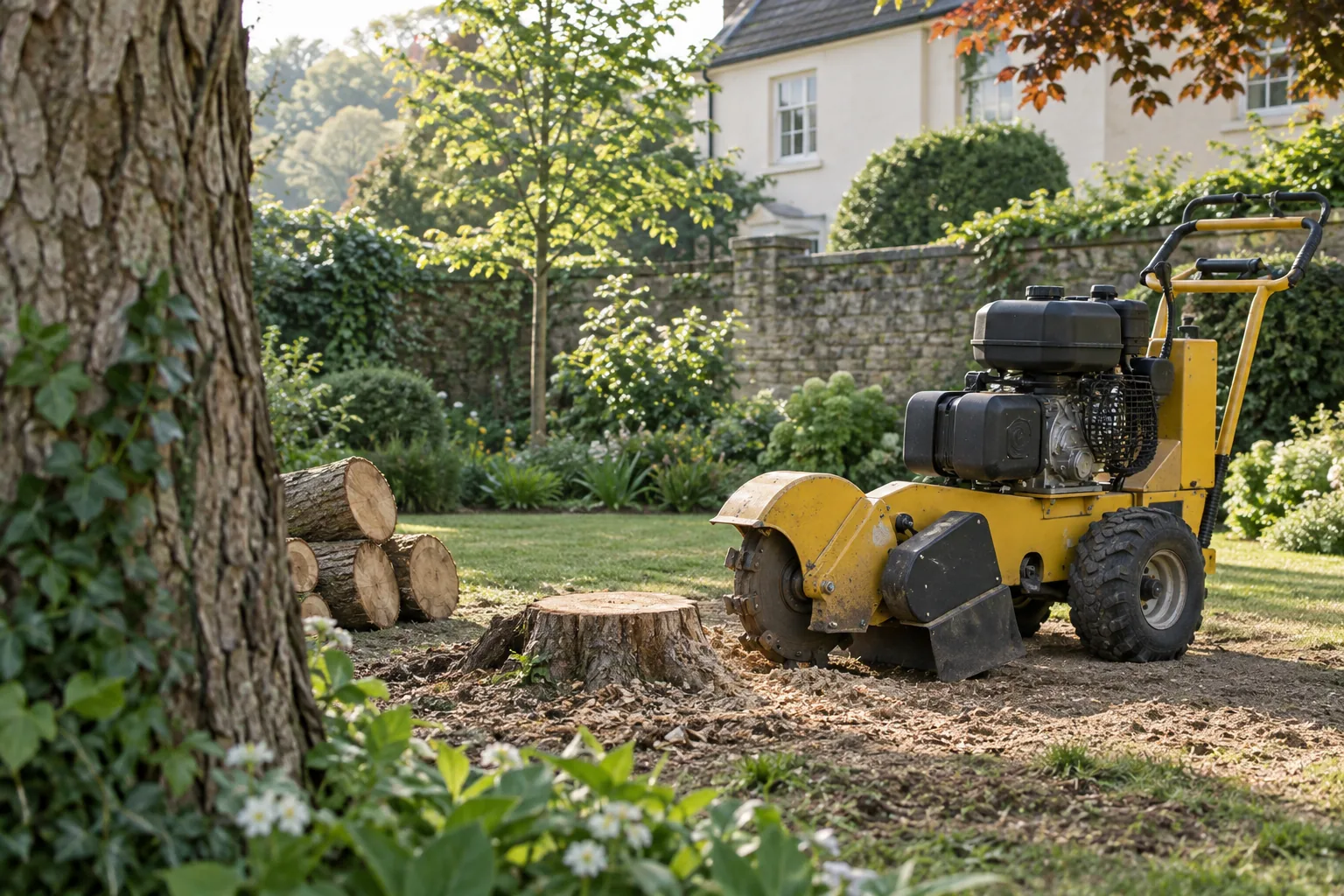
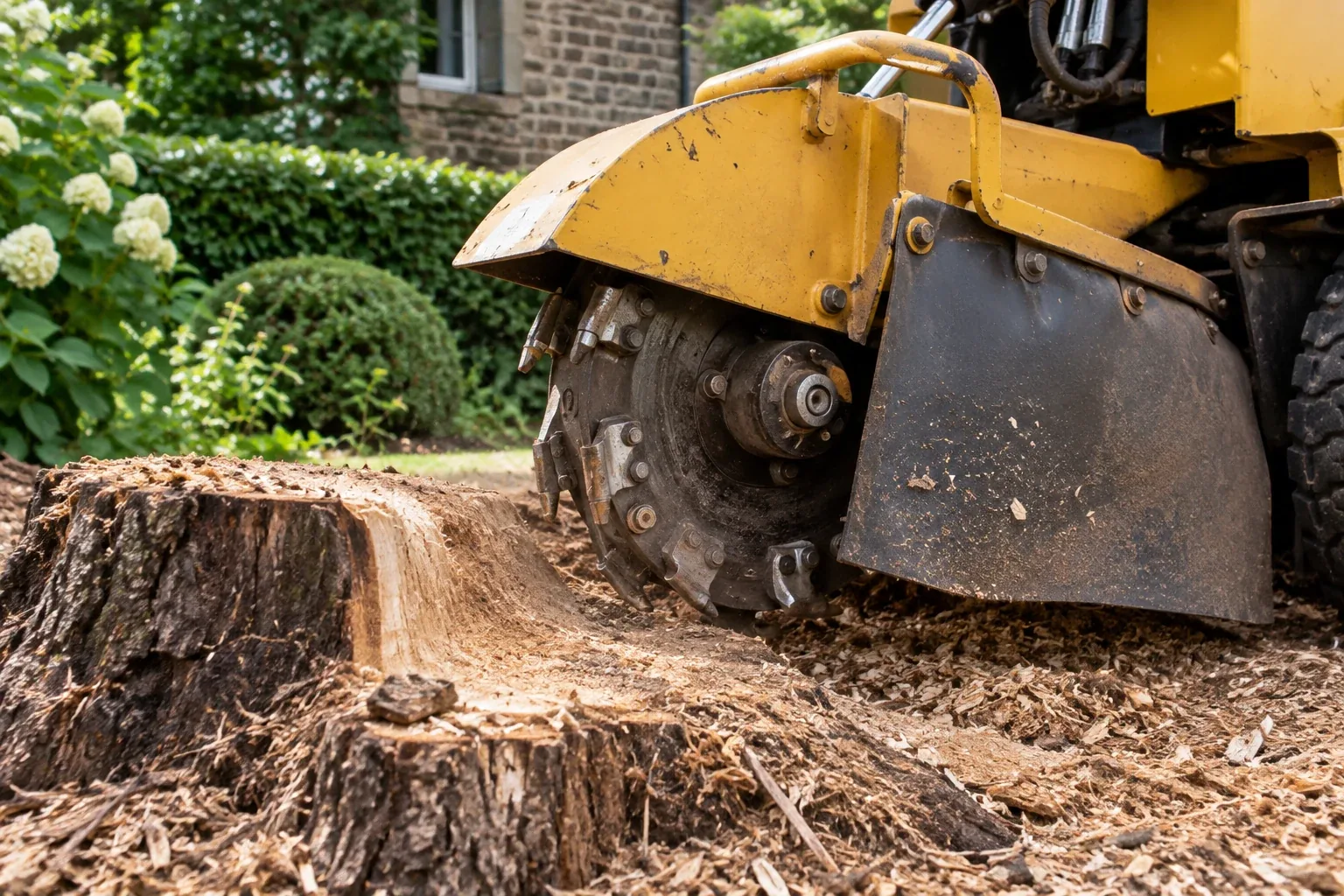
Discuss what the ground will be used for before selecting a stump treatment; make clear whether the work includes removing grindings, bringing in suitable soil or restoring a finished surface.
If another contractor will complete the garden work, establish the handover condition; retained roots and the condition of the surrounding soil should be discussed honestly before the job is accepted. Read the guide to stump grinding before agreeing the finished ground condition; the exact position and intended future use should be checked at the property.
Watch the response at earlier pruning points
A useful follow-up for this property would consider the development of regrowth from previous cuts and whether the original management objective still applies.
The retained tree should have a realistic management plan beyond the day of pruning; remember that a tree remains a living structure whose growth and surroundings can change over time.
An ongoing record is most helpful when it shows dates and the part of the tree concerned; any immediate concern about instability should lead to keeping people clear and seeking appropriate advice.
Agree handling of material from the broad canopy
Material handling deserves a separate line in the job specification; identify an accessible storage position if any wood is to be kept rather than collected with the other arisings.
The size and location of any retained pieces should be agreed in advance; do not assume that splitting, seasoning or moving it again later is included in a standard tree-work quotation.
The completion check should include the development of regrowth from previous cuts and whether the original management objective still applies.
Arrange an informed Richmond enquiry
Use the details in this guide to describe a broad crown where a request for a large reduction needs to be tested against the tree’s condition and structure. Explain who can attend or provide access at the property; mention documents or photographs that will help the provider understand the concern. The enquiry can be considered with a suitable provider through Tree Surgery London; the provider establishes what assessment and scope are appropriate for the particular request.
For another property nearby, the guides to tree work in Putney and Twickenham tree surgery offer separate practical starting points. The nearby guides should not replace a check of the actual address and tree; the ownership position and applicable permissions should be established for the tree concerned.
Local permission checks for Richmond
Richmond's protected-tree guidance asks applicants to be specific about the proposed work and recommends a professional specification. For a Richmond property within that authority, this is a useful starting point: describe the objective, identify the tree and explain the extent of pruning sought before submitting an application. A vague request to trim a tree can leave both the council and contractor uncertain about what is intended.
Check whether the tree is covered by a TPO, lies in a conservation area or is affected by a relevant planning condition. Where the address uses Richmond as a broader location description, verify the actual council boundary first. Keep photographs of the complete crown and the feature causing concern, such as a particular branch position, so the assessment is based on observable conditions. Once the required permission position is clear, confirm access, the handling of branches and any proposed work near roots. The agreed date should follow those checks, with the quotation and decision notice describing the same operation.
Questions about tree work in Richmond
Is a larger reduction better value because it lasts longer?
A heavier cut is not automatically a better long-term choice. The response depends on the tree and the cuts made; severe work can create further management issues. Compare proposals by the outcome and future implications, not just the amount removed.
Should previous pruning determine the next visit?
Old cuts are useful evidence, but they are not an automatic instruction to repeat the operation. Explain when earlier work took place and how the tree responded. Current structure, condition and objectives should guide the next decision.
What should I send with a Richmond tree-work enquiry?
Begin with a short explanation of the desired result and clear site photographs; alongside any existing tree report or protection correspondence that may affect the proposed operation and its timing.
How should I check tree protection at my Richmond address?
Use the exact property details to identify the relevant planning authority; any uncertainty should be clarified before a start date is treated as fixed or equipment is expected on site.
What affects the quotation for tree surgery in Richmond?
Quotations should account for the agreed crown work or removal and the practical site constraints; any preliminary estimate should be reviewed if inspection reveals information that changes the agreed method.
What should be agreed about clear-up at the Richmond property?
The finish should distinguish removal of cut material from soil replacement or surface reinstatement; this matters especially where the space will be handed to another trade or returned to ordinary household use immediately afterwards.