LONDON TREE CARE / Streatham
Tree Surgery Streatham
A new symptom deserves a clear description before a treatment is suggested. For a Streatham tree enquiry, record what changed and when: sparse leaves, a dead branch, cracking, unexpected movement or a change around the base. None of those observations gives a complete diagnosis on its own. Tree Surgery London accepts Streatham enquiries for assessment and appropriate tree work. Photographs can support the first discussion, but the condition and surroundings of the individual tree may require a site inspection before pruning or removal can be recommended.
- Record when symptoms appeared
- Keep observation separate from diagnosis
- Use a safe position for photographs

Home / London coverage / Streatham
The wider Tree Surgery London service covers enquiries about appropriate tree management, while this guide explains how to understand changes in a tree’s condition.
Record symptoms before deciding on treatment
An initial description should separate an observable change from an assumed diagnosis; explain how the property is used beneath the canopy, since the significance of a feature depends partly on what could be affected.
For this enquiry, useful starting evidence would include the timing and extent of the change, including photographs that show both affected and apparently unaffected growth.
The visible crown is only part of the evidence a provider may need; an operation should not be selected solely because it appears to offer the quickest response to the concern described. The tree care and assessment guide gives background to this discussion; avoid treating a service description as a diagnosis of a particular tree.
Photograph safely without approaching suspect growth
At the planning stage, pay particular attention to safe observation positions that avoid walking beneath a suspect branch just to obtain a closer photograph.
Measure the route that equipment and material would actually use; identify any door, gate or shared passage that must remain available to occupants during the day.
Before work begins, establish who will keep ordinary site users away from the working area; allow the provider to change the arrangement if the inspected conditions require a different method.
| Planning decision | Information to provide | What to agree |
|---|---|---|
| The reported concern | The timing and extent of the change, including photographs that show both affected and apparently unaffected growth | An assessment and a defined management objective |
| The retained crown | Treatment justified by the assessment rather than removing living crown simply because one symptom has been reported | An understandable pruning scope, if work is appropriate |
| The working route | Safe observation positions that avoid walking beneath a suspect branch just to obtain a closer photograph | Method, protection and workable site separation |
| The finished space | Recent digging, changes to soil level or surface works that may be relevant to the tree’s condition | Stump, material and reinstatement responsibilities |
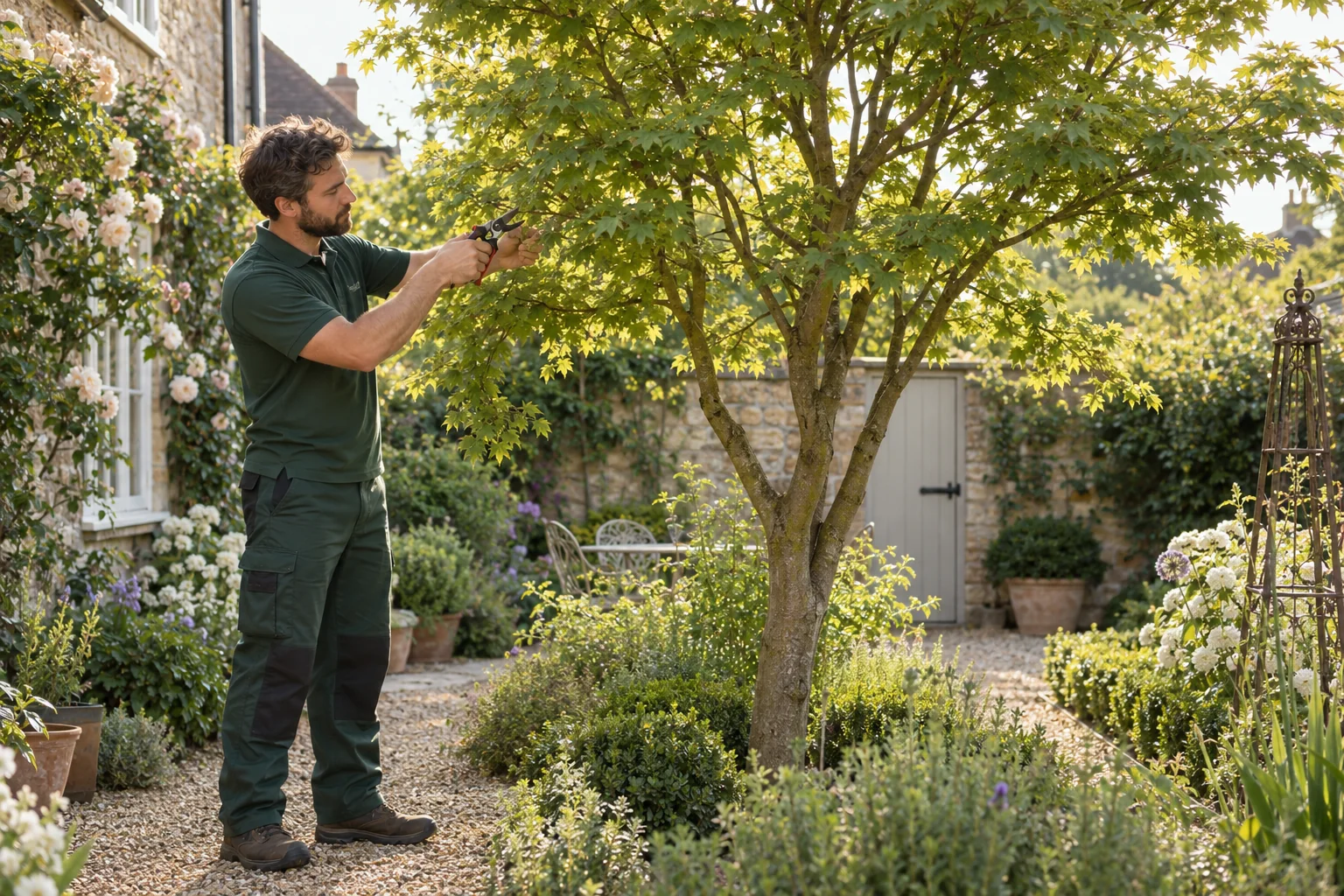
Prune only for an assessed purpose
A sensible pruning discussion here would focus on treatment justified by the assessment rather than removing living crown simply because one symptom has been reported.
Ask the provider to describe the intended retained crown in terms you can recognise; any dimensions or limitations should be explained before the work date rather than negotiated beneath the tree.
A proposed reduction should account for the response of the retained tree; a realistic plan recognises that the tree will continue to develop and may require reassessment as circumstances change. The tree pruning guide distinguishes the main crown treatments; the conversation stays focused on a recognisable retained crown rather than an undefined cutback.
Avoid turning a symptom into an automatic felling decision
Removal should be considered against the reason for the enquiry and any realistic retention option; make sure the owner understands which alternatives were considered and why they may not meet the objective.
The size of pieces and the handling method should follow the assessed surroundings; the agreed scope should say how the resulting timber is to be reduced, retained or removed from site.
The ground-related part of this decision is recent digging, changes to soil level or surface works that may be relevant to the tree’s condition. The tree removal and felling guide explains the operational context; avoid assuming a method from a photograph of a different property.
Check protection without losing sight of the reported change
Check tree protection using the full property address and the identity of the tree; any existing decision, application reference or written advice should be supplied so the current position can be checked accurately.
Any protection-related correspondence should be read alongside the current tree-work specification; check the decision and conditions before assuming that a quotation amounts to permission to proceed.
The property-specific planning question is how the proposed work addresses a tree showing a change in foliage or branch condition where the cause has not yet been established without getting ahead of the checks required for that address.
Price the operation supported by the assessment
A useful quotation identifies the tree, operation and finish rather than offering only a general day rate; the tree’s dimensions, condition and surrounding constraints should be considered alongside the amount of cutting required.
Restricted working room can change the method and labour needed for a modest-looking tree; ask which assumptions would need reviewing if the actual conditions differ from those described at enquiry stage.
For this particular brief, the scope should explain its response to a tree showing a change in foliage or branch condition where the cause has not yet been established, rather than substitute an unrelated standard operation.
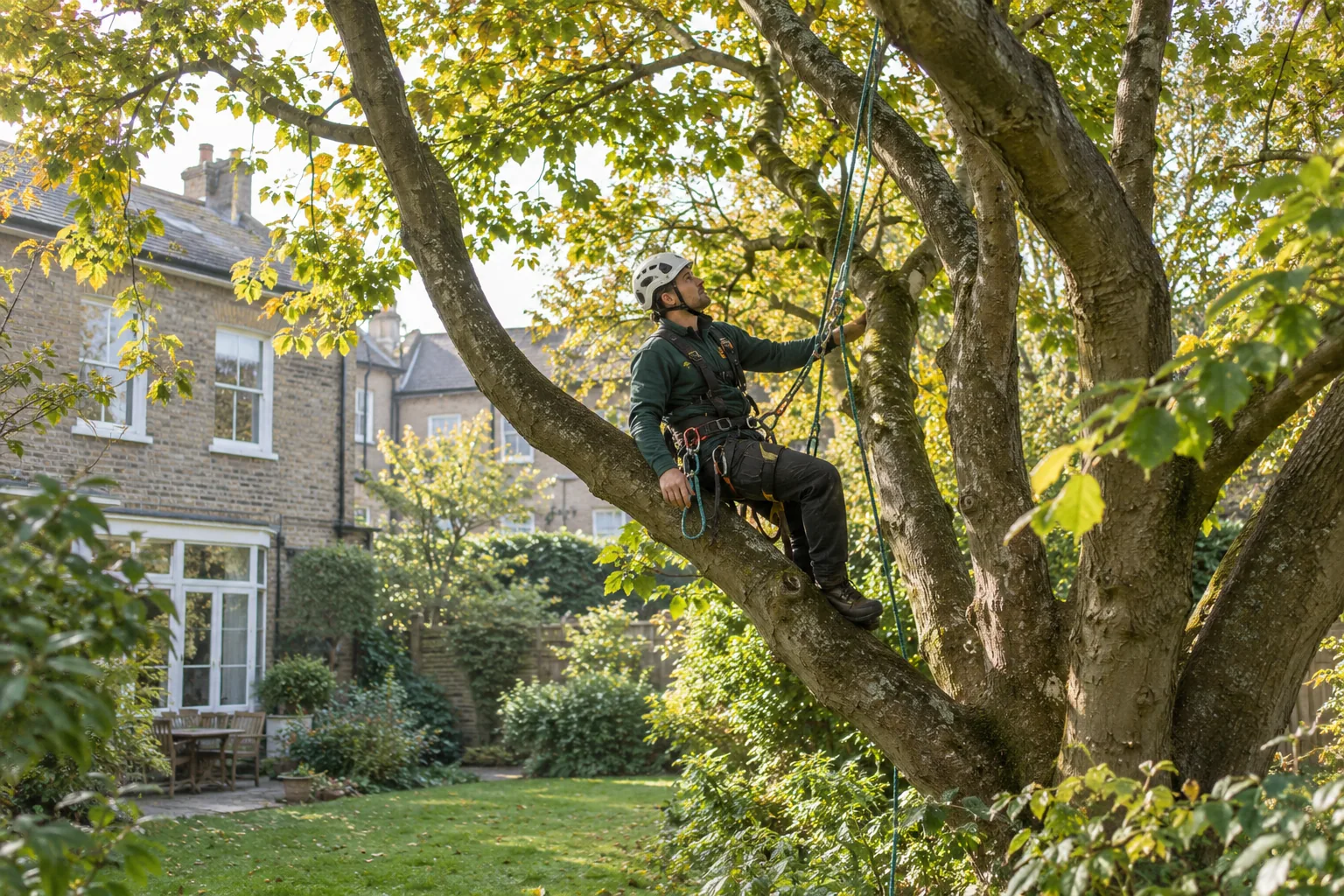
Consider ground changes alongside the crown concern
For the space left at ground level, consider recent digging, changes to soil level or surface works that may be relevant to the tree’s condition.
A stump-grinding specification should identify the intended depth and finish; avoid assuming that every accessible root will be removed as part of a routine machine operation.
A level surface on the day is not a guarantee against later settlement; ask what is included in the preparation and who will deal with any further soil or reinstatement work. The stump grinding overview explains the service boundaries; access, grindings and reinstatement are not left as unspoken assumptions.
Know which further changes should prompt review
A useful follow-up for this property would consider any further change in the identified symptom and the review interval recommended after assessment.
Ask what changes should prompt another assessment after the agreed work; avoid assuming that removal of the current obstruction has settled every future tree-care decision.
Useful aftercare includes noticing a change and reporting it accurately; the limits of visual observation should be recognised rather than treated as a substitute for competent assessment.
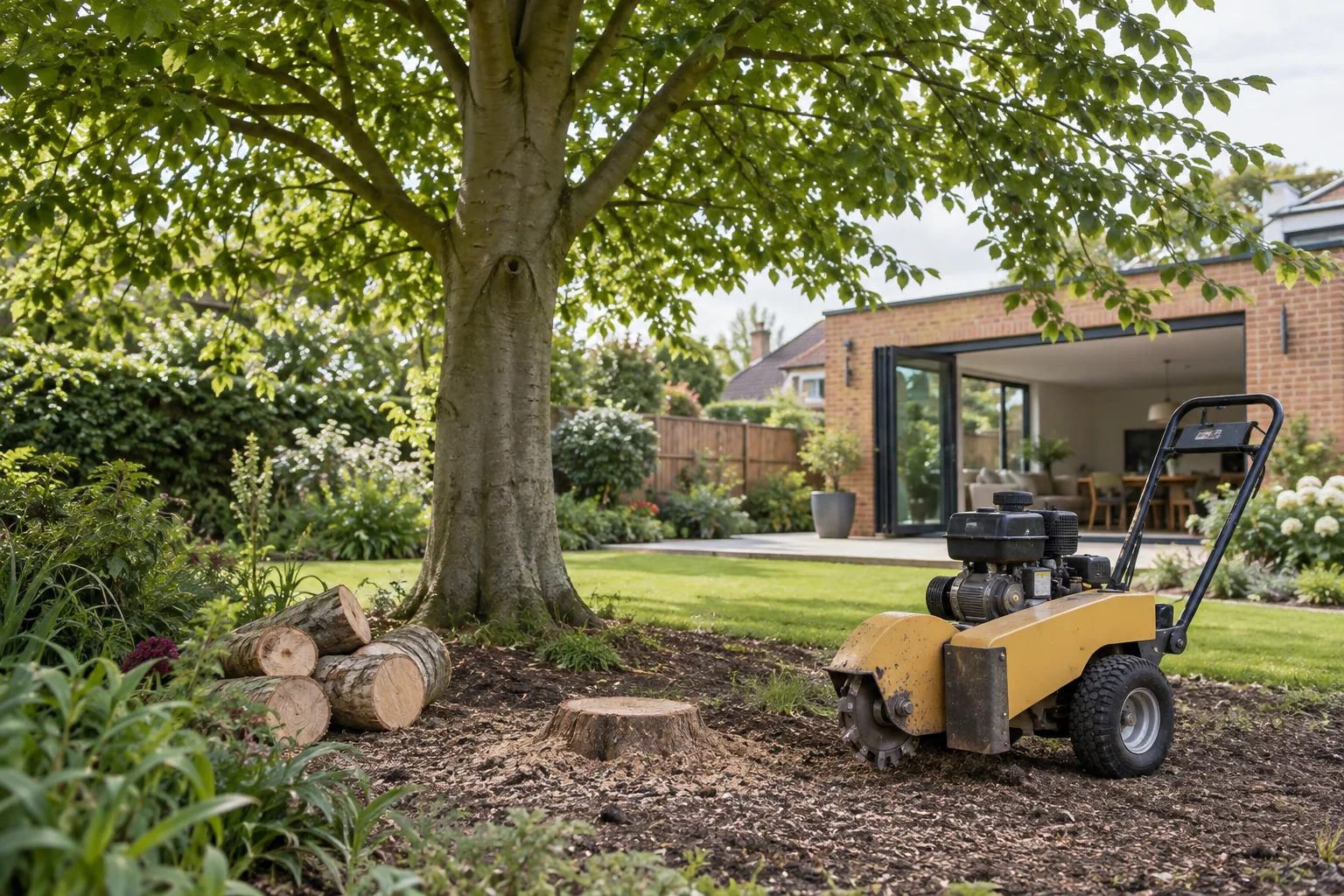
Include clear-up in the condition-related scope
Decide what should happen to branches, chip and larger timber before the work begins; the final clear-up should be described in relation to the surfaces and planted areas affected by the operation.
Ask how retained material will be left if it is not all being removed; a piece that can be handled by the contractor may still be too heavy for the owner to move afterwards.
The completion check should include any further change in the identified symptom and the review interval recommended after assessment.
Arrange an informed Streatham enquiry
Use the details in this guide to describe a tree showing a change in foliage or branch condition where the cause has not yet been established. Include the full property address and a reliable contact number; do not assume the description of another garden explains the conditions at this address. Tree Surgery London can receive the details and discuss a suitable next step; avoid treating this general guide as a confirmed specification for a tree that has not been assessed.
For another property nearby, the guides to tree work in Brixton and Croydon tree surgery offer separate practical starting points. A second property still requires its own condition and access checks; do not transfer a quotation or recommendation from a tree with different surroundings.
Local permission checks for Streatham
Streatham should not be assigned to one planning authority without checking the address. Lambeth covers the centre and publishes information about Streatham Vale Park, while Wandsworth has a Streatham Park conservation area and properties in Furzedown. Merton's own records also include Streatham Vale addresses. These are practical examples of why a district name or SW16 postcode is insufficient to choose a tree-application route.
Confirm the authority for the land where the trunk stands, then use that council's current TPO and conservation mapping. If the tree lies across a garden boundary, establish its ownership before asking for a work specification. Explain any access needed from adjoining plots and keep that agreement distinct from statutory permission. An arborist can then assess the actual concern, such as a damaged limb or conflict with a specific structure, without attributing a standard problem to the whole district. Include photographs of the full crown and ground-level constraints so the quotation reflects both the proposed operation and a feasible handling route.

Questions about tree work in Streatham
Does sparse foliage mean a tree needs felling?
Sparse foliage has several possible explanations and is not, by itself, a removal decision. Describe the pattern, timing and other changes around the tree. An appropriate assessment should consider the evidence before a management option is selected.
Should I get closer to photograph a cracked branch?
Keep clear if a branch may be unstable. A wider image taken from a safe location is preferable to approaching a suspected hazard. Tell the provider about the crack and any immediate risk to occupied space when making contact.
What should I send with a Streatham tree-work enquiry?
Send the full address and photographs that show the tree in relation to the property; making clear if there is a damaged branch or other concern that could affect the use of the surrounding area.
How should I check tree protection at my Streatham address?
Establish the responsible authority rather than relying on the district name alone; any uncertainty should be clarified before a start date is treated as fixed or equipment is expected on site.
What affects the quotation for tree surgery in Streatham?
The total depends on what is to be done and the resources needed to do it appropriately; provide accurate route dimensions and describe features that will require protection before a price is finalised.
What should be agreed about clear-up at the Streatham property?
Agree how each kind of arising will be handled rather than using an undefined tidy-up instruction; check whether any further garden preparation is required before planting, turf or a new surface is installed.