LONDON TREE CARE / Brixton
Tree Surgery Brixton
A tree can provide welcome screening and still make a garden difficult to use. Start a Brixton enquiry with the space you want to improve: a seating area, a vegetable bed, an upstairs window or the route to a shed. Those are different objectives, and cutting every branch back to the same outline rarely answers all of them. Tree Surgery London accepts enquiries across Brixton and can help you describe the issue before a suitable provider considers the work.
- Light without an indiscriminate cutback
- Privacy considered alongside clearance
- A usable garden as the starting point
Home / London coverage / Brixton
A useful conversation separates what the tree is doing from what you would like the garden to do. The wider Tree Surgery London service covers enquiries about appropriate tree management, while this guide concentrates on light, privacy and a usable garden.
Prune for light while retaining screening
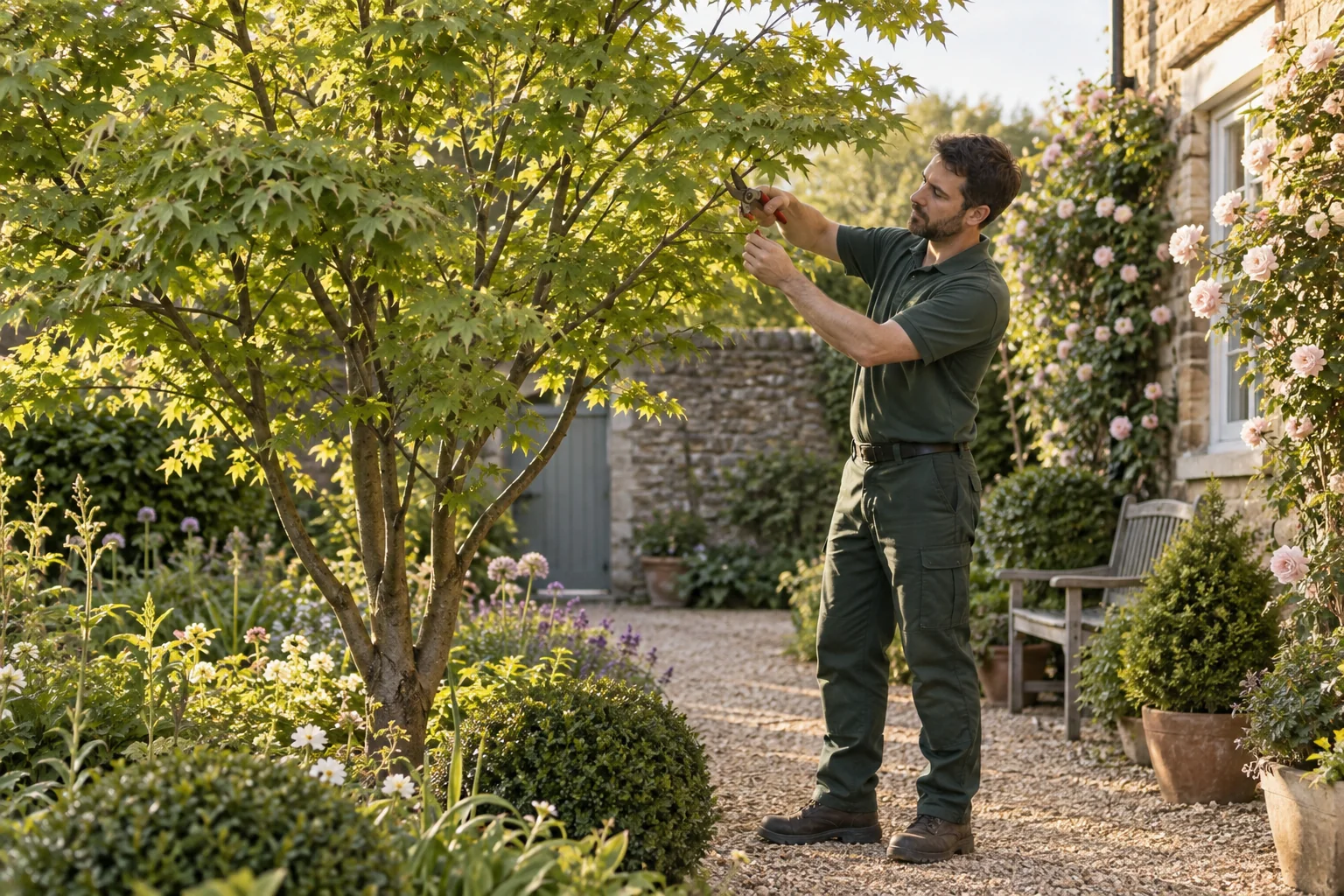
A sensible pruning discussion here would focus on selective treatment of the branches affecting the intended use of the garden, while checking how those branches contribute to the remaining crown.
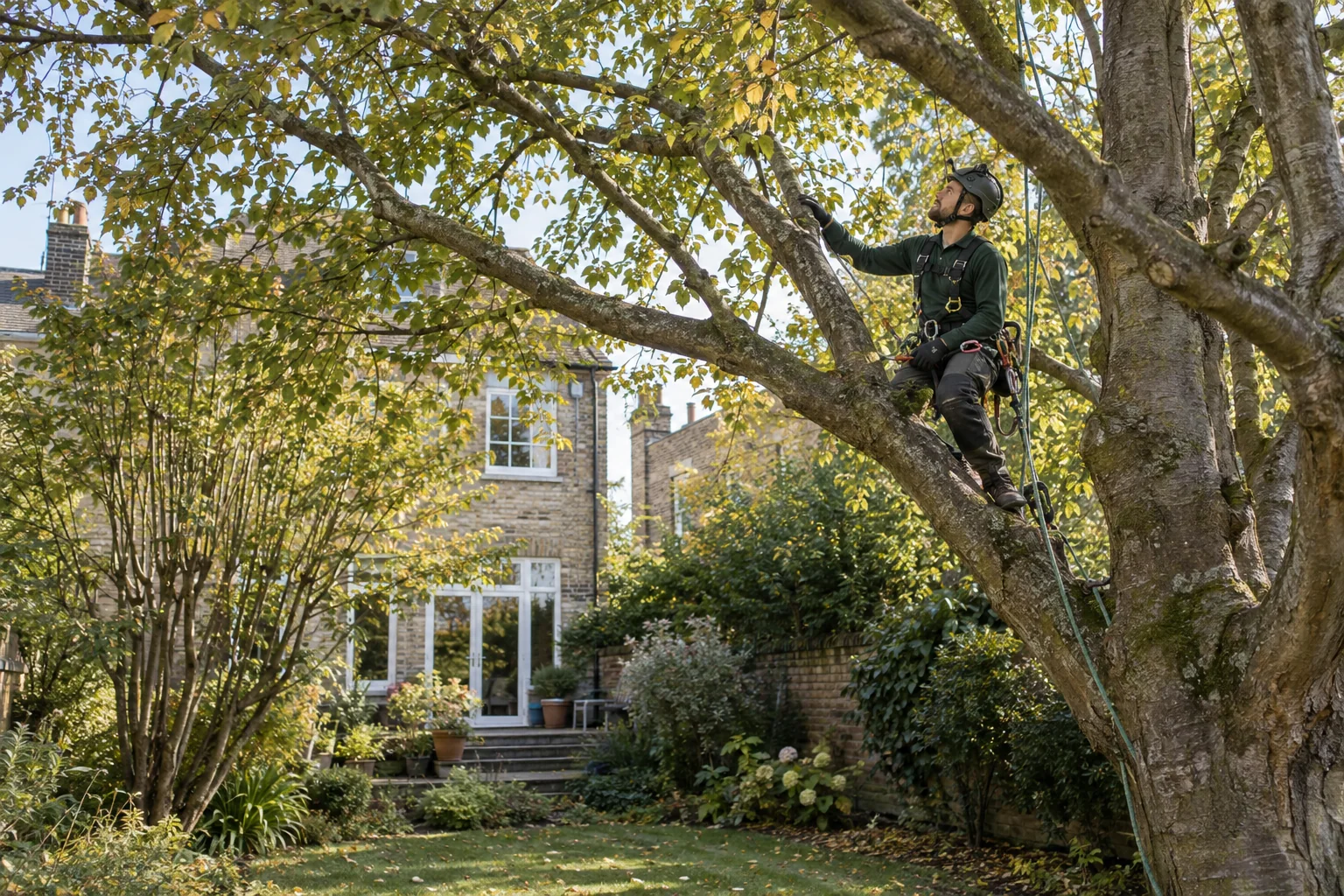
Ask the provider to describe the intended retained crown in terms you can recognise; include which part of the canopy is affected and how the proposed treatment relates to the original problem.
A proposed reduction should account for the response of the retained tree; future growth and the condition of existing branch attachments remain relevant after the initial clearance is achieved. The tree pruning guide distinguishes the main crown treatments; then ask how the selected approach relates to the result required at the property.
Inspect the canopy behind the shade concern
An initial description should separate an observable change from an assumed diagnosis; include dates, affected parts and any recent work around the tree so the history can be considered alongside its present appearance.
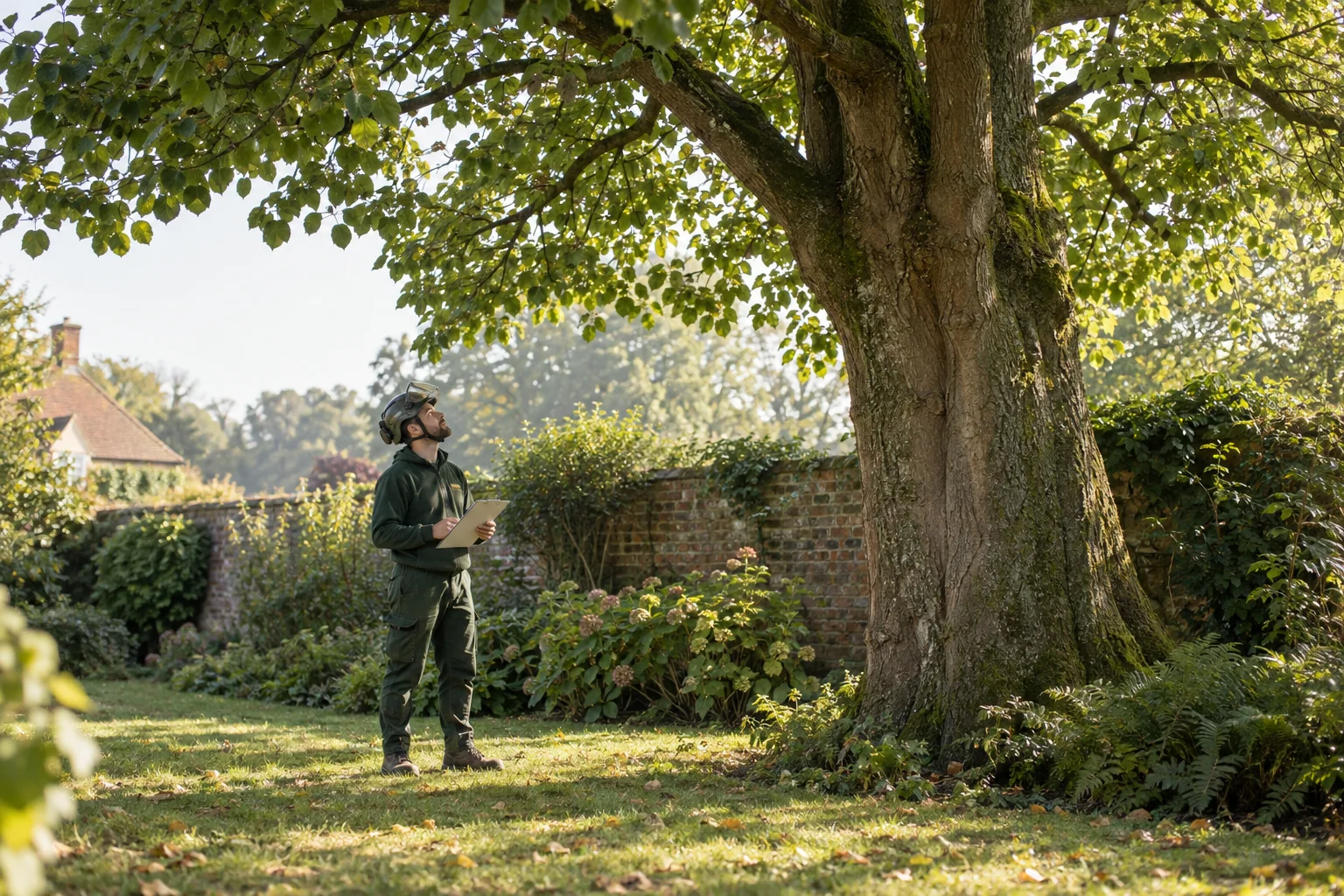
For this enquiry, useful starting evidence would include photographs from the shaded seating position, the whole crown and the point where the main stems divide.
The visible crown is only part of the evidence a provider may need; further assessment may be necessary where the reported symptom has more than one plausible explanation or its extent remains unclear. The tree care and assessment guide gives background to this discussion; keep the symptoms of the individual tree at the centre of the conversation.
Check restrictions on the tree providing screening
Check tree protection using the full property address and the identity of the tree; consult the official information about Tree Preservation Orders and conservation areas rather than relying on a neighbouring property’s history.
Any protection-related correspondence should be read alongside the current tree-work specification; the owner and provider can identify the same tree and understand what has and has not been authorised.
The property-specific planning question is how the proposed work addresses a garden where the owner wants more daylight without losing the foliage that screens an overlooked boundary without getting ahead of the checks required for that address.
Keep a household passage usable
At the planning stage, pay particular attention to a route through a side passage that may also carry bicycles, bins and everyday household traffic.
Measure the route that equipment and material would actually use; include narrow turns, steps, overhead obstructions and surfaces that may be unsuitable for the intended equipment.
Before work begins, establish who will keep ordinary site users away from the working area; a named site contact should be available to resolve an access problem rather than leaving it to an uninformed occupant.
| Planning decision | Information to provide | What to agree |
|---|---|---|
| The reported concern | Photographs from the shaded seating position, the whole crown and the point where the main stems divide | An assessment and a defined management objective |
| The retained crown | Selective treatment of the branches affecting the intended use of the garden, while checking how those branches contribute to the remaining crown | An understandable pruning scope, if work is appropriate |
| The working route | A route through a side passage that may also carry bicycles, bins and everyday household traffic | Method, protection and workable site separation |
| The finished space | Retaining an accessible area for new planting without assuming the stump must be removed from every part of the garden | Stump, material and reinstatement responsibilities |
Compare a garden-light objective with the quoted scope
A useful quotation identifies the tree, operation and finish rather than offering only a general day rate; include access arrangements, material handling, waste disposal and any stump treatment that is to form part of the visit.
Restricted working room can change the method and labour needed for a modest-looking tree; this matters especially where material must be moved in small sections or an occupied site requires carefully timed access.
For this particular brief, the scope should explain its response to a garden where the owner wants more daylight without losing the foliage that screens an overlooked boundary, rather than substitute an unrelated standard operation.
Test retention before sacrificing privacy
Removal should be considered against the reason for the enquiry and any realistic retention option; the condition, practical conflict and restrictions should be understood before the operation is arranged.
The size of pieces and the handling method should follow the assessed surroundings; the proposed approach should be explained after the contractor has checked access and the space available for material.
The ground-related part of this decision is retaining an accessible area for new planting without assuming the stump must be removed from every part of the garden. The tree removal and felling guide explains the operational context; the contractor is responsible for assessing the method appropriate to the actual site.
Choose a finish for the future planting space
For the space left at ground level, consider retaining an accessible area for new planting without assuming the stump must be removed from every part of the garden.
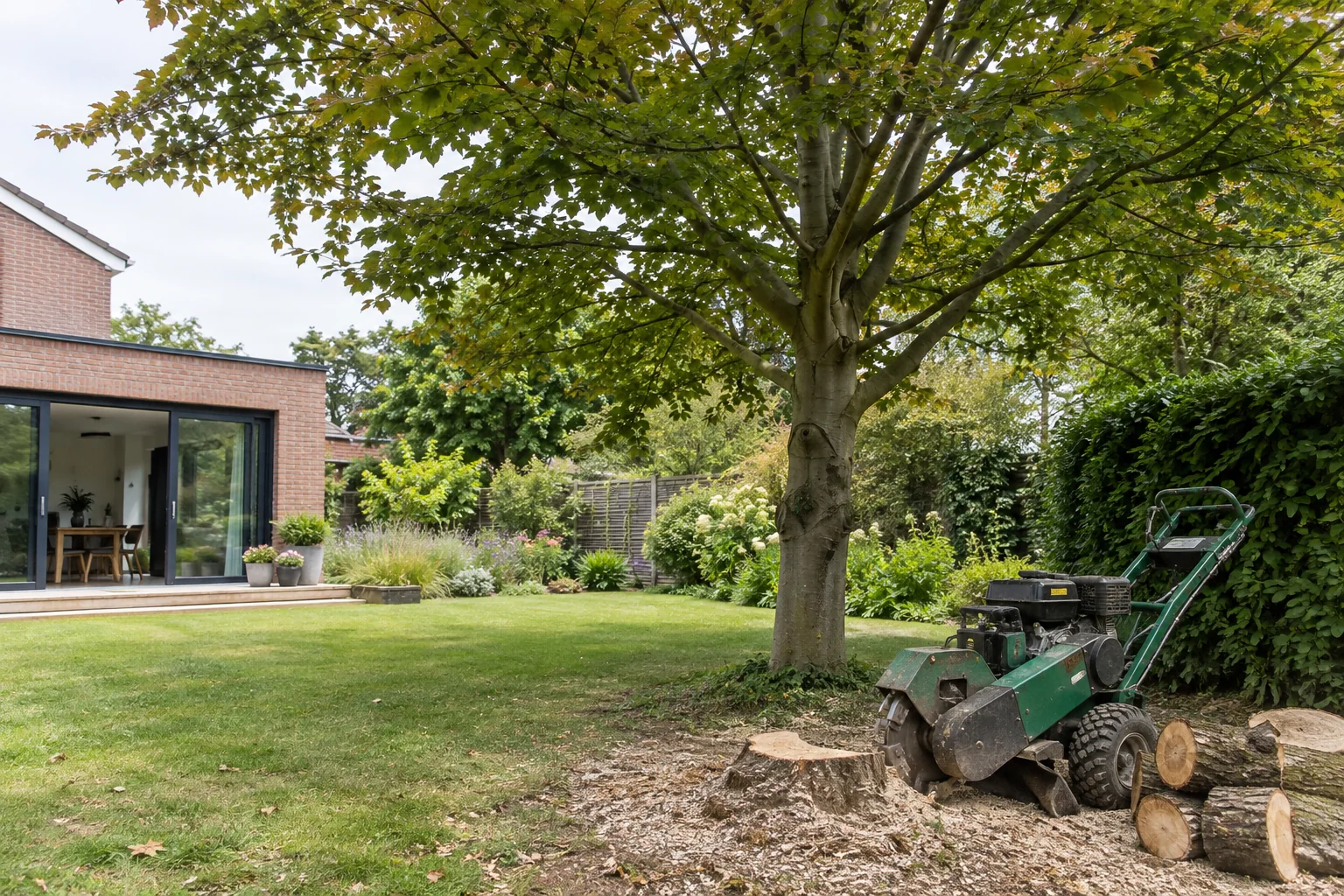
A stump-grinding specification should identify the intended depth and finish; preparing a planting position, returning an area to lawn and forming a new hard surface are different tasks.
A level surface on the day is not a guarantee against later settlement; confirm whether removal of roots or replacement of soil is included before accepting the quotation. The stump grinding overview explains the service boundaries; specify any further soil preparation that the owner expects after the machine work.
Agree where material from the screened garden goes
Decide what should happen to branches, chip and larger timber before the work begins; retaining logs for a future use is a different instruction from leaving a mixed pile of branches and foliage.
Ask how retained material will be left if it is not all being removed; discuss chip separately if it is intended for a garden use that requires suitable material.
The completion check should include whether the agreed pruning has improved the particular seating or growing area rather than simply made the tree look smaller.
Review the seating area rather than the silhouette
A useful follow-up for this property would consider whether the agreed pruning has improved the particular seating or growing area rather than simply made the tree look smaller.
Ask what changes should prompt another assessment after the agreed work; include a new crack, hanging growth or a noticeable change in condition that should not simply wait for a routine maintenance date.
Useful aftercare includes noticing a change and reporting it accurately; but do not climb, pull a suspect limb or excavate around roots in an attempt to test the tree yourself.
Arrange an informed Brixton enquiry
Use the details in this guide to describe a garden where the owner wants more daylight without losing the foliage that screens an overlooked boundary. Include the full property address and a reliable contact number; any restriction on appointment times or access should be made clear before a visit is arranged. Tree Surgery London can receive the details and discuss a suitable next step; the actual operation and price should be based on the tree and property rather than a generic area description.
For another property nearby, the guides to tree work in Clapham and Streatham tree surgery offer separate practical starting points. A second property still requires its own condition and access checks; site dimensions and tree protection cannot be inferred from the arrangements at another location.
Local permission checks for Brixton
Lambeth's private-tree guidance is relevant to a Brixton property within the borough and distinguishes those trees from ones maintained on public land. Begin by identifying the trunk location and ownership. A tree visible beside a private garden may stand on another plot or form part of an estate. The person raising the concern should establish who can arrange an inspection and who will authorise any resulting work.
For a privately controlled tree, check TPO and conservation-area protection while discussing the objective with an arborist. A concern about size, shading or a branch near a building does not establish that removal is the proportionate answer. Explain what has changed and what outcome is wanted, then compare the feasible options against the tree's condition. If an application is necessary, make the work schedule precise enough to match the intended operation. Include access restrictions and how wood and branches will be handled, so the permission enquiry and the quotation are based on the same practical proposal.

Questions about tree work in Brixton
Can pruning improve light without removing all privacy?
That may be possible, but explain which view needs screening and which area needs light. The useful outcome is a considered balance between retained foliage and targeted cuts. A photograph taken from the affected window or chair can communicate more than a request to reduce everything.
Should I clear the whole garden before a visit?
Clear enough space for a safe inspection and identify hazards, but do not cut vegetation that could conceal nests or destabilise hanging branches. Tell the person arranging the visit about pets, locked gates and household access so the inspection can be planned sensibly.
What should I send with a Brixton tree-work enquiry?
Send the full address and photographs that show the tree in relation to the property; then include the narrowest access measurement and say who can authorise work if that person will not attend the visit.
How should I check tree protection at my Brixton address?
Establish the responsible authority rather than relying on the district name alone; confirm the applicable application or notification requirements before agreeing that cutting can begin.
What affects the quotation for tree surgery in Brixton?
The total depends on what is to be done and the resources needed to do it appropriately; do not assume a standard price can cover every route, tree condition and material-handling arrangement.
What should be agreed about clear-up at the Brixton property?
Agree how each kind of arising will be handled rather than using an undefined tidy-up instruction; the final check can refer to a shared understanding instead of competing expectations about the same quotation.