LONDON TREE CARE / Camden
Tree Surgery Camden
Two quotations for tree work in Camden may describe substantially different results. One may offer selective branch removal, another a reduction, and a third a general trim without explaining the cuts. Before comparing totals, compare the work. Tree Surgery London takes Camden enquiries and can help you identify the information needed for a useful discussion. A quotation should make the tree, intended operation, access assumptions and clearance arrangements understandable to the person commissioning it.
- Comparable quotations with a clearly described outcome
- Comparing the proposed result rather than the shortest price
- Practical preparation for a tree for which several pruning quotations have been obtained

Home / London coverage / Camden
Ask for the proposed result to be described using the tree’s form and suitable pruning points. A percentage without a clear reference can mean different things to different readers. If the aim is clearance from a building, that aim should be stated directly. Where a broader crown reduction is proposed, the retained shape and amount of living crown should be considered along with the dimensions.
Check whether removal of waste, stump treatment, permission-related work or a written report is included. These may be separate services rather than omissions. Compare assumptions about access and equipment because a cheaper price based on unavailable access is not a dependable comparison. Clarifying the scope before accepting a quotation usually takes less effort than resolving incompatible expectations after cutting has begun.
Check that the same proposal has been approved and priced
Establish the tree’s protection position for the precise address and agree responsibility for any required authority process. Keep its relevant record alongside the quotation. If one contractor proposes a different operation, do not assume an earlier response for another scope covers it. The final instruction should use the same tree reference and practical description throughout. Wildlife observations are also useful site information for the contractor’s planning. A preferred diary date should remain subject to resolving the actual requirements rather than drive an unsuitable operation or an incomplete check.
The accepted price should be assessed against the scope you now understand, including access, collection and the treatment of material. If reporting, stump work or restoration is excluded, decide whether it is needed before accepting rather than discovering the gap afterwards. Ask what happens if findings during the visit require a change and who can approve that variation. Retain clarifications with the final quote. When the work is complete, a photograph and accurate description provide a better future maintenance record than a service label or the amount of waste removed.

Compare the work descriptions line by line
Write the objective once and supply it with the same photographs to each contractor. Then check whether the quotations actually respond to it. A price for selected branch removal may not be comparable with a price for reduction of the entire crown. Ask for differences to be explained before treating one total as better value than another.
The pruning explanation gives background to the service terms, but a useful quotation still needs to describe the particular tree and intended result. If a percentage appears, ask what it refers to and how the operation will leave a workable crown. Do not let a familiar label replace an understandable specification.
Preparing for the visit in Camden
Send each contractor the same photographs and the same written objective. Keep any inspection recommendation available so that it can be distinguished from personal preferences. Ask for unclear wording to be clarified in writing and retain the agreed version for the work day.

Check the evidence behind the recommendation
If a contractor proposes substantially more work than you requested, ask what finding supports it. There may be a good reason, but it should be clear whether the advice concerns condition, practical access or appearance. A separate tree assessment may be appropriate where the decision needs more evidence than a quotation visit can provide.
Conversely, a smaller operation should not be dismissed solely because it removes less material. Targeted work may respond more precisely to the problem. Ask what will remain unresolved and whether any future review has a purpose. The value of the recommendation lies in its suitability, not in the number of branches listed for cutting.
| Decision to make | Information to provide | What to clarify |
|---|---|---|
| Comparable quotations with a clearly described outcome | Views of a tree for which several pruning quotations have been obtained and the feature that prompted the enquiry | The intended result and the limits of the recommended operation |
| Pruning or removal | Tree condition, previous work and the reason for the request | How the recommendation addresses comparing the proposed result rather than the shortest price |
| Work method and access | Gate measurements, route photographs and fixed obstacles | Equipment, handling arrangements and protection included in the scope |
| Permission position | Exact property address, tree reference and any existing records | Who confirms the applicable requirements before work proceeds |
| Completion and follow-up | Whether timber stays and what use follows the operation | Clearance, remaining ground work and any recommended review |
Identify inclusions and assumptions
Compare access routes, collection arrangements and protection measures. A quote that relies on an unavailable neighbouring garden describes a different job from one based on the confirmed entrance. If removal is an option, separate the stem operation, retained timber and stump treatment so each can be understood on the same basis.
Ask about unclear exclusions before accepting, then keep the agreed version. Make sure the person meeting the crew can access that record and knows who approves variations. A brief written clarification now is more useful than trying to decide afterwards which interpretation of trim, tidy or clear had been intended.

Discuss the next step for your Camden property
Start with the Camden enquiry information and explain the result you want, the tree concern and the access available. For comparable quotations with a clearly described outcome, the Tree Surgery London homepage gives the wider introduction to the service. For an address outside Camden, the guides for Hampstead and Islington provide related local enquiry routes; use the actual property address when arranging attendance.
Availability, the final operation and the quotation should be confirmed for the individual Camden property, with comparing the proposed result rather than the shortest price explained before the work date is agreed.
Local permission checks for Camden
Camden's protected-tree guidance sets out an application route through the Planning Portal and describes a Section 211 notice for relevant trees in conservation areas. This makes tree identification an important part of preparing an enquiry. A rear-garden tree can be difficult to distinguish on an address alone, especially if more than one property overlooks it. Supply a sketch with the tree numbered and photographs that show both its crown and its position beside neighbouring features.
The council also explains that a TPO does not transfer maintenance responsibility to the authority. An owner still needs a sensible assessment of condition, even though cutting may require permission. Describe a concern as an observation, such as a damaged limb or a change in the crown, rather than declaring a tree unsafe from a photograph. An arborist can examine the evidence, discuss appropriate work and help define the proposal. Confirm the current permission requirements before setting a date, particularly where an earlier application covered a different operation.
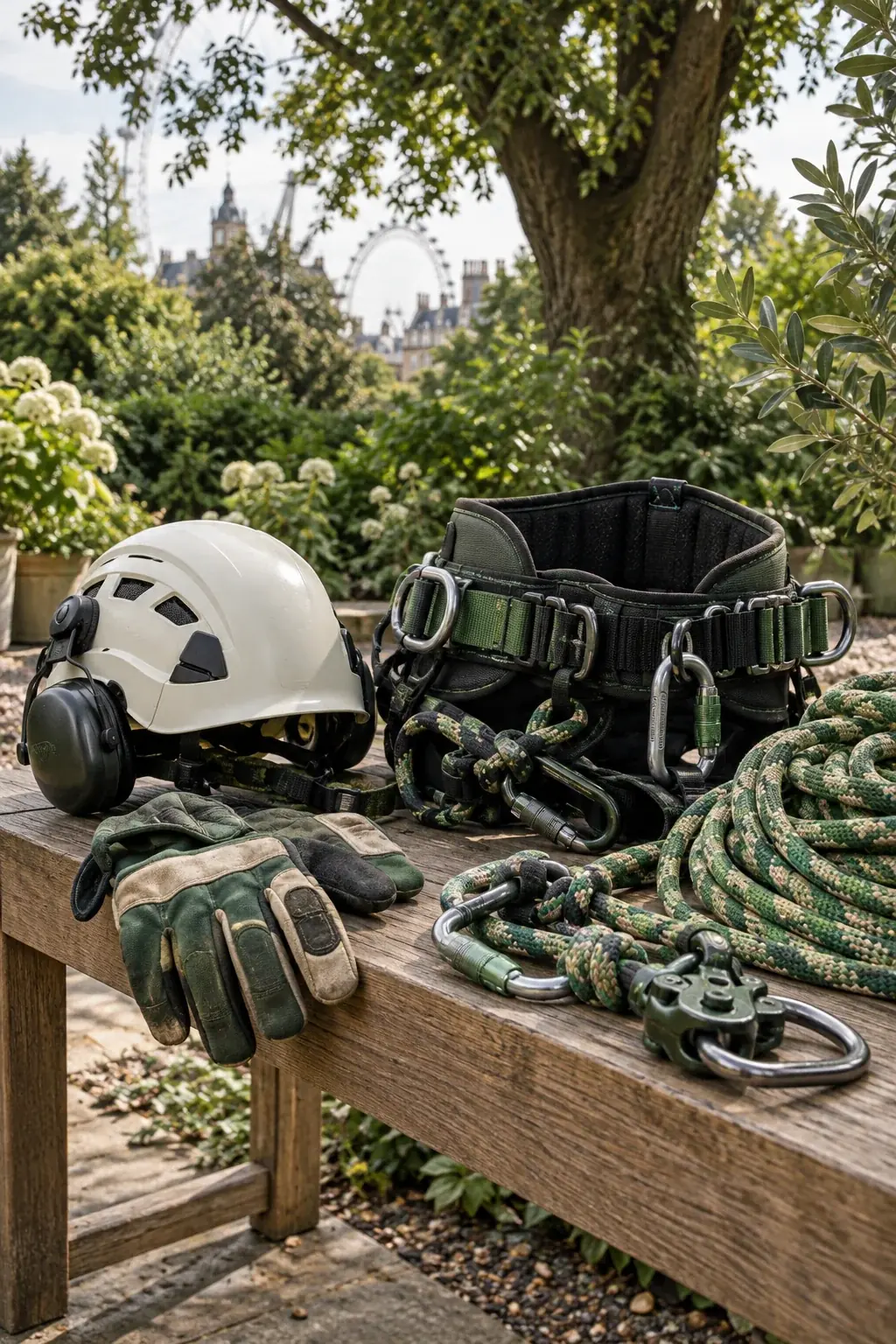
Questions about tree work in Camden
Why do my pruning quotations describe different operations?
The contractors may have interpreted the objective differently. Compare the intended finished tree, not only the service label, and ask each quotation to address the same practical concern and access information.
Is a reduction percentage sufficiently precise?
A percentage needs a clear reference and should not stand alone as the whole specification. Ask how the result is described through the crown dimensions, retained form and suitable pruning points.
Should stump treatment appear on a pruning quote?
Only if it is part of the agreed job; unrelated services need not be bundled together. What matters is that included operations, exclusions and clearance arrangements are explicit enough for a fair comparison.
How can I compare prices without arboricultural training?
Ask straightforward questions about the result, access assumptions and arisings. A useful explanation should make the differences understandable, so you can see whether the prices cover equivalent operations and practical arrangements.
What if a Camden quotation says only trim?
Request clarification before accepting it. Identify the tree, objective and proposed operation, and ask how the finished result will be recognised; vague wording leaves too much room for conflicting expectations on the work day.
Should the accepted scope be available during attendance?
Keep the agreed version accessible to the person meeting the contractor. If that person differs from the approving client, make sure they know how to refer proposed variations rather than improvising new instructions.
Can a provisional price be treated as a complete specification?
Check the wording and ask what information remains outstanding. A provisional figure based on photographs or assumed access may need confirmation before it describes an agreed job. Keep the final scope and any clarification together, particularly where an earlier estimate involved a different crown objective or handling route.