LONDON TREE CARE / Marylebone
Tree Surgery Marylebone
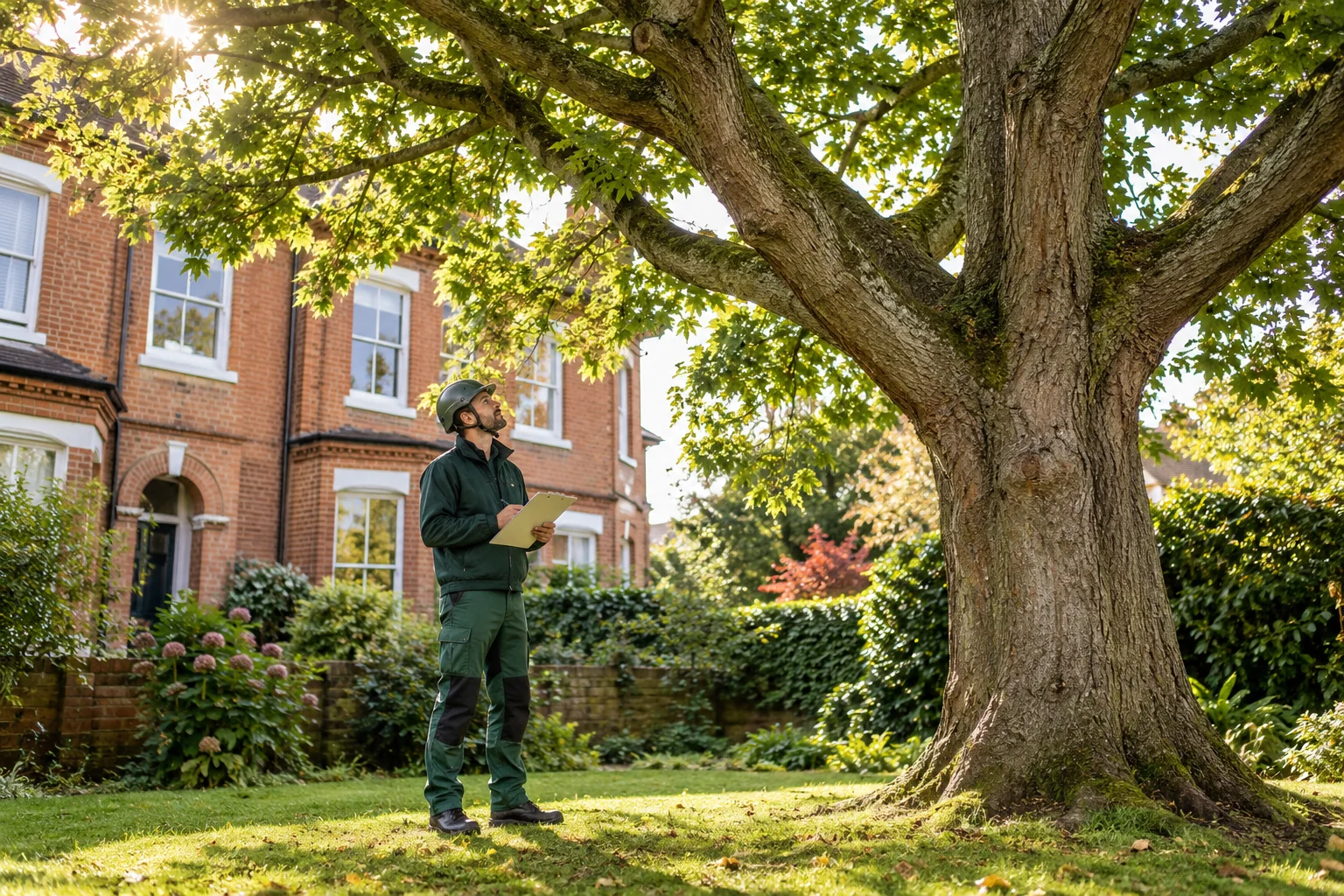
A change in a Marylebone tree’s appearance is a reason to gather observations, not a reason to choose a diagnosis from an online photograph. Sparse leaves, dead twigs or a new mark on the stem can have different explanations. Record when you first noticed the change and whether it has progressed. Tree Surgery London welcomes Marylebone enquiries and can discuss the appropriate next step.
- An inspection brief that distinguishes symptoms from conclusions
- Recording observations without diagnosing from a photograph
- Practical preparation for an established tree with a recent change in leaf cover
Home / London coverage / Marylebone
Explain what you can see and what occupies the space around the tree, leaving conclusions about condition to an appropriate assessment.
Photograph the whole crown, the base of the trunk and the detail that concerns you. Include older photographs if they show a meaningful comparison. Note changes in watering, nearby excavation, soil levels or building activity, because the tree’s surroundings can help explain its response. A symptom visible this month may follow an event that happened much earlier.
Ask what the inspection will cover and what form of advice you will receive. A visit to price routine pruning is not automatically a documented tree risk assessment or a specialist diagnostic investigation. If a written report is needed for a managing agent, insurer or another adviser, state that before booking. The required level of investigation depends on the question being asked and the findings available.
Build an observation record rather than a diagnosis
Describe the affected part of the tree, the first date you noticed it and how it has changed. Use wider photographs to locate each close detail. A note saying leaves are sparse on one side carries more information than a confident disease name selected from an unrelated image. Include direct observations and keep unverified explanations clearly separate.
The tree condition guide helps frame the type of attendance you need. If another adviser requires a report, explain the decision it must inform. That can affect scope and deliverables, whereas a contractor asked only to price a known pruning operation may not have been commissioned for diagnostic work.
Connect symptoms with the site history
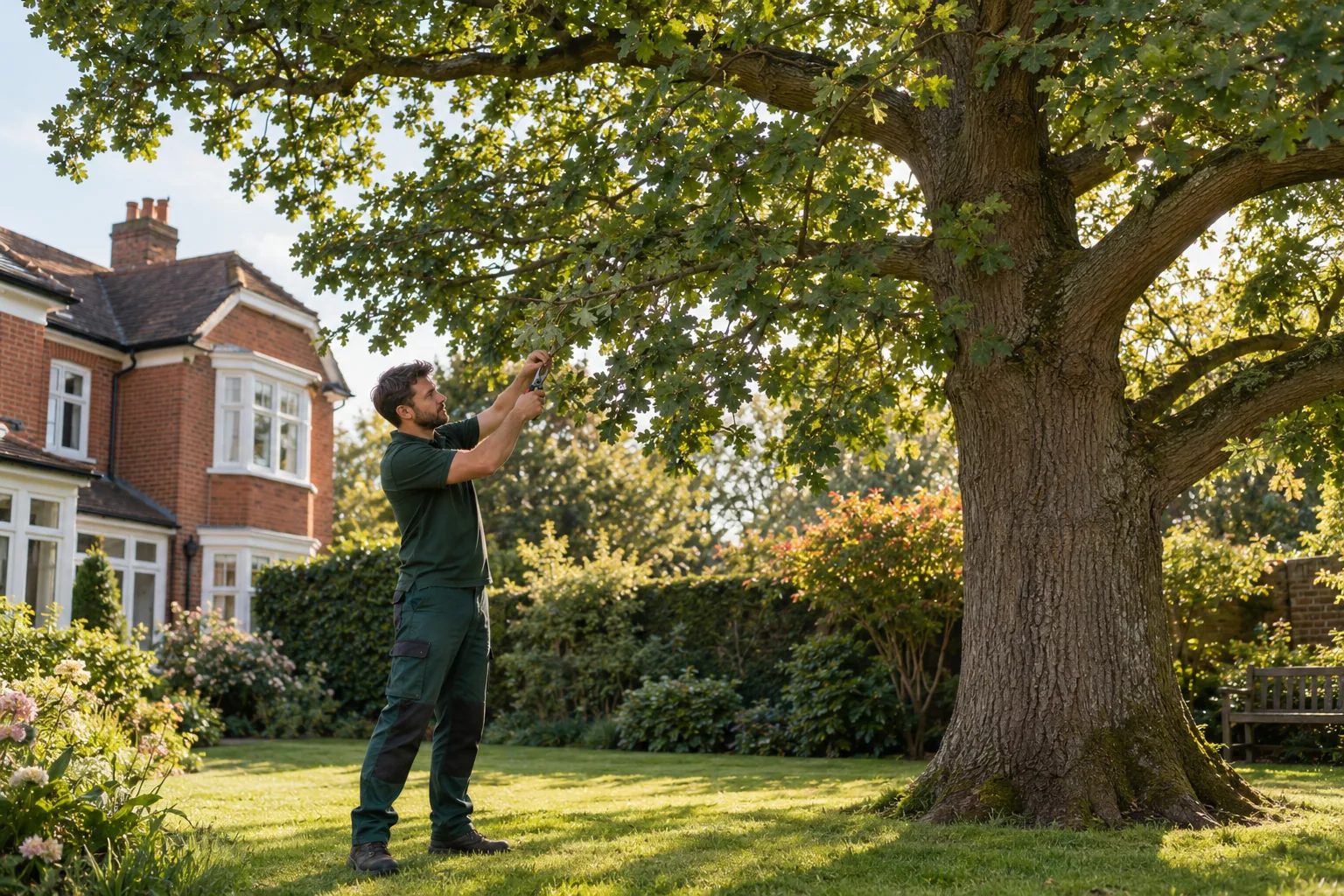
Mention changes to nearby ground, recent building work and substantial past pruning. Their timing may be relevant even where the tree appeared normal immediately afterwards. Keep earlier photographs that show the same crown or stem feature. The assessor can then compare evidence rather than rely on memory about how the tree used to look.
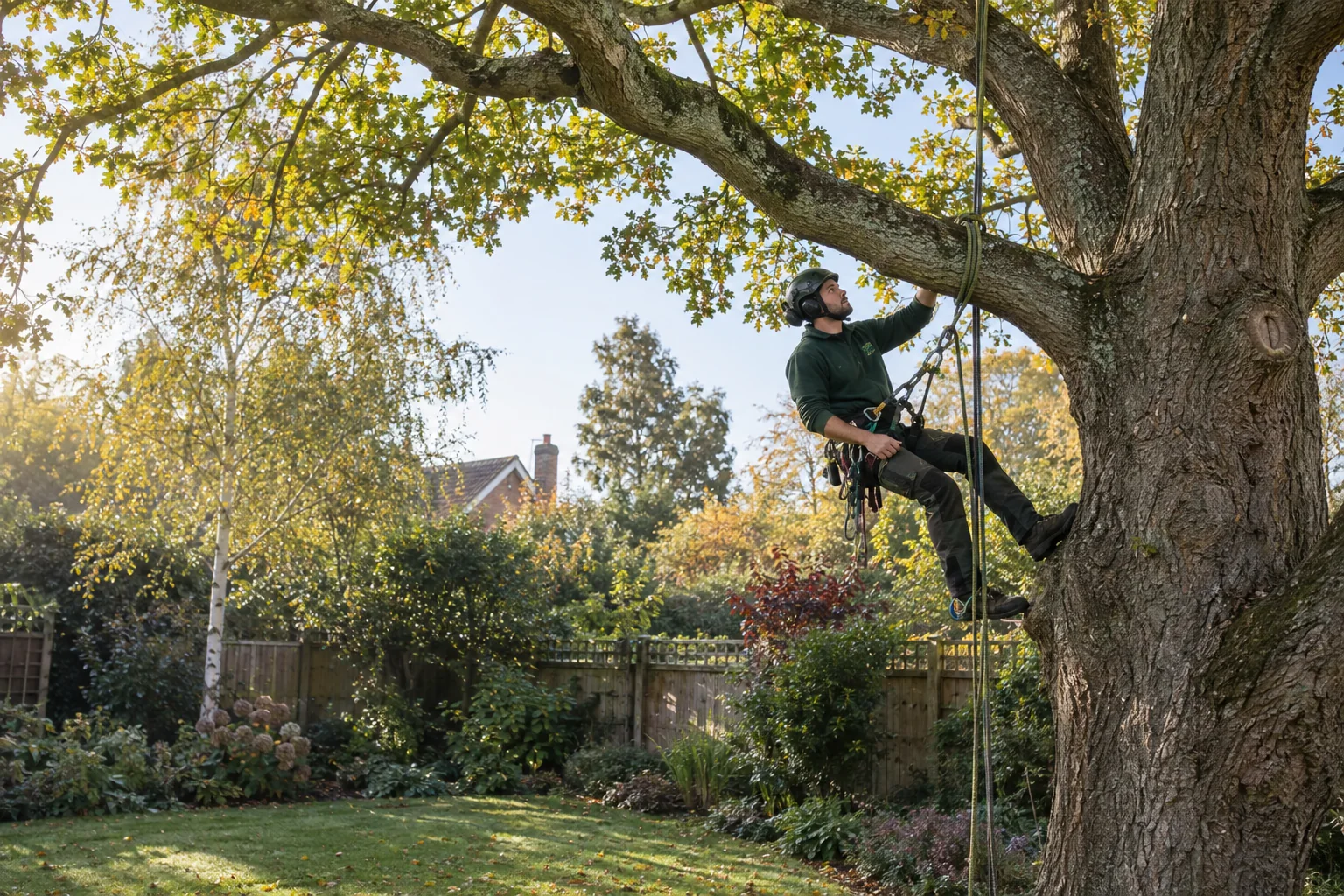
Do not strip bark, excavate roots or climb to expose a feature for the visit. Those actions can create a new problem or remove information. If the eventual recommendation includes selective pruning, ask how that operation relates to the findings rather than treating removal of a visible symptom as proof that its cause is resolved.
| Decision to make | Information to provide | What to clarify |
|---|---|---|
| An inspection brief that distinguishes symptoms from conclusions | Views of an established tree with a recent change in leaf cover and the feature that prompted the enquiry | The intended result and the limits of the recommended operation |
| Pruning or removal | Tree condition, previous work and the reason for the request | How the recommendation addresses recording observations without diagnosing from a photograph |
| Work method and access | Gate measurements, route photographs and fixed obstacles | Equipment, handling arrangements and protection included in the scope |
| Permission position | Exact property address, tree reference and any existing records | Who confirms the applicable requirements before work proceeds |
| Completion and follow-up | Whether timber stays and what use follows the operation | Clearance, remaining ground work and any recommended review |
Preparing for the visit in Marylebone
Create a short timeline of the change and list any previous advice. Keep people away from an area beneath a visibly unstable or damaged part while arranging prompt professional guidance. Avoid removing bark, cutting roots or climbing for a closer view, as those actions can add injury and obscure useful evidence.
Choose a documented next step rather than an assumed remedy
A condition concern does not remove the need to establish the tree’s protection position. Check the exact address and specimen with the relevant authority, agree who handles any required procedure and keep the response with the eventual specification. Avoid treating a visual symptom as proof of an exemption or of a particular legal category. If further assessment changes the proposed operation, compare the revised scope with the applicable record. The contractor should consider relevant wildlife constraints as part of deciding how and when any recommended practical work can proceed.
Ask the quote to distinguish the assessment deliverable from subsequent tree operations. Reporting, specialist investigation, pruning and removal may have different scopes and should not be conflated in a broad price to sort the tree out. Clarify what information remains uncertain and what additional work would need separate agreement. After a decision, keep the observation timeline, findings and completed scope together. That record is useful even if no cutting is advised, because the next professional can understand the earlier question, the evidence available and the purpose of any monitoring rather than begin with an isolated symptom photograph.
Understand the outcome before choosing an operation
The useful result of an assessment can be a recommendation for work, further investigation or observation. Ask what is known, what remains uncertain and what the next step is intended to establish. A monitoring recommendation should give you a purpose and relevant change to report, rather than leave you with an unexplained instruction to wait.
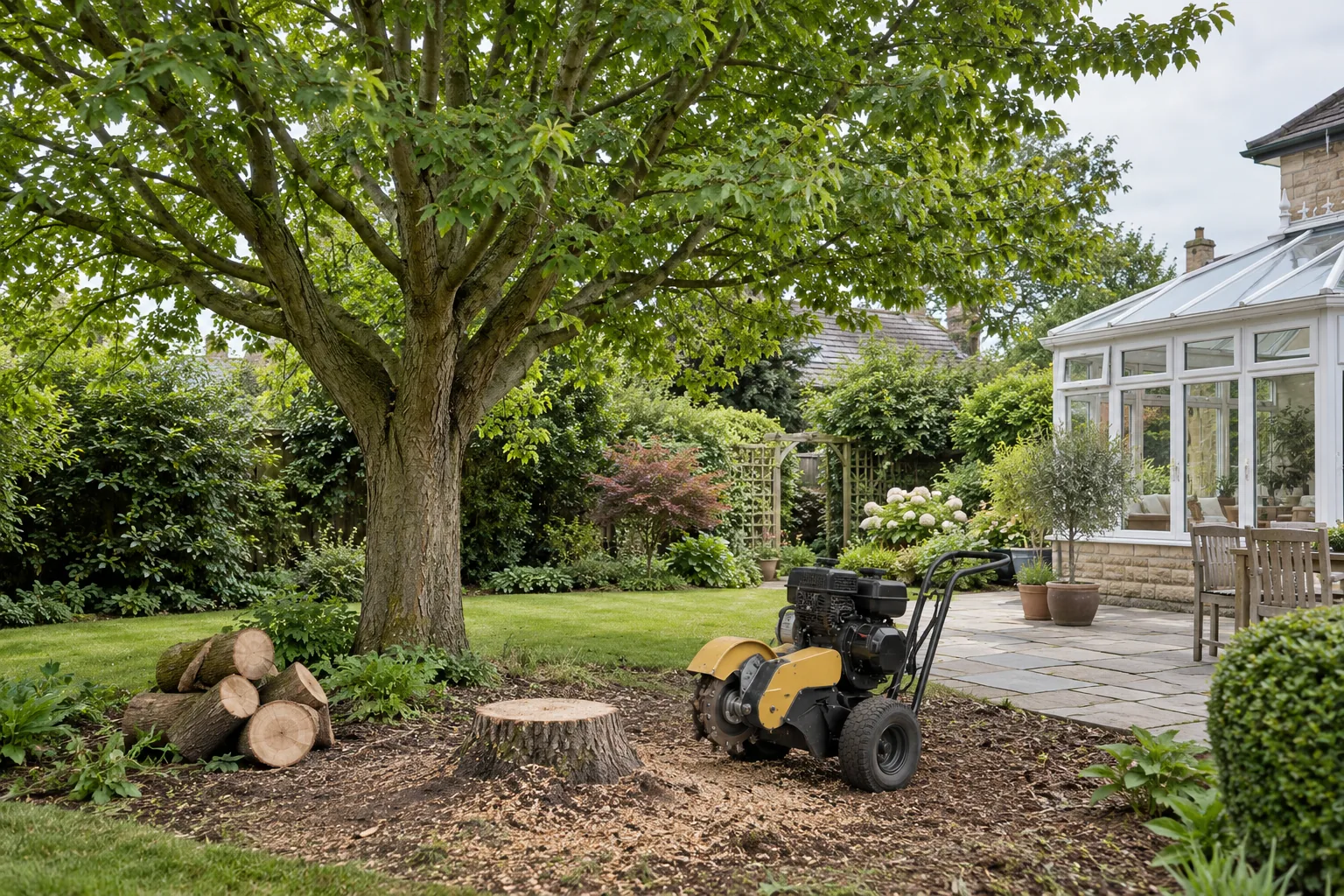
If tree removal is recommended, request a clear practical scope and explanation. Include access, clearance and the stump decision. Retain the assessment with the completed work record so a future adviser can see both the original concern and the operation that followed it.
Discuss the next step for your Marylebone property
Start with the Marylebone enquiry information and explain the result you want, the tree concern and the access available. For an inspection brief that distinguishes symptoms from conclusions, the Tree Surgery London homepage gives the wider introduction to the service. For an address outside Marylebone, the guides for Paddington and Westminster provide related local enquiry routes; use the actual property address when arranging attendance.
Availability, the final operation and the quotation should be confirmed for the individual Marylebone property, with recording observations without diagnosing from a photograph explained before the work date is agreed.
Local permission checks for Marylebone
Marylebone tree enquiries should distinguish a private garden or managed courtyard from a tree maintained by Westminster. The council publishes separate information for publicly managed trees and privately owned ones. Identifying responsibility early directs a report to the right person and avoids obtaining a private quotation for work that the enquirer cannot commission. Include the exact location of the trunk when a tree is seen from several properties.
For private work, Westminster advises checking TPOs, conservation areas and relevant planning conditions. The desired outcome should also be concrete. If branches interfere with a particular building elevation, show that relationship in photographs rather than describing the entire tree as too large. A proposed operation may need to respect the species, existing form and previous pruning points as well as any permission. Ask what will be retained, how material will be moved and whether follow-up management is likely. Those details make the decision useful even when the assessment concludes that major cutting would be inappropriate.
Questions about tree work in Marylebone
Can a photograph identify why my tree has sparse leaves?
It can document the symptom but cannot establish every cause. Include the whole crown and relevant history, then ask what inspection or further investigation is needed to support a useful recommendation.
What should a tree-change timeline include?
Record when the symptom was first noticed, how it has progressed and any nearby work or major pruning. Keep observations separate from guesses, and attach older photographs where they show a meaningful comparison.
Is a quotation visit the same as a written assessment?
Not automatically; the purpose and deliverable need agreement. If another party requires a report, explain their question before booking so the scope can be matched to the decision the report must inform.
Should I remove damaged bark to photograph beneath it?
Leave the feature undisturbed and take safe external photographs. Removing bark or climbing for a closer view can injure the tree, create risk and change the evidence an assessor would otherwise examine.
What surrounding changes are worth mentioning in Marylebone?
Tell the adviser about known excavation, alterations to soil level or other work near the tree. A delayed response is possible, so relevant history should not be limited to events from the previous week.
What if no cutting is recommended after inspection?
Ask what the findings mean and whether monitoring or another investigation has a purpose. Useful advice can identify observations and review triggers without treating pruning as the inevitable outcome of every tree enquiry.
Can a previous report be passed on without explanation?
Supply the complete document, its date and the purpose for which it was obtained. Explain any known change since the inspection. A later professional needs that context to assess its relevance; an isolated recommendation copied from an old report can lose qualifications and should not automatically become a current work instruction.