LONDON TREE CARE / Kensington
Tree Surgery Kensington
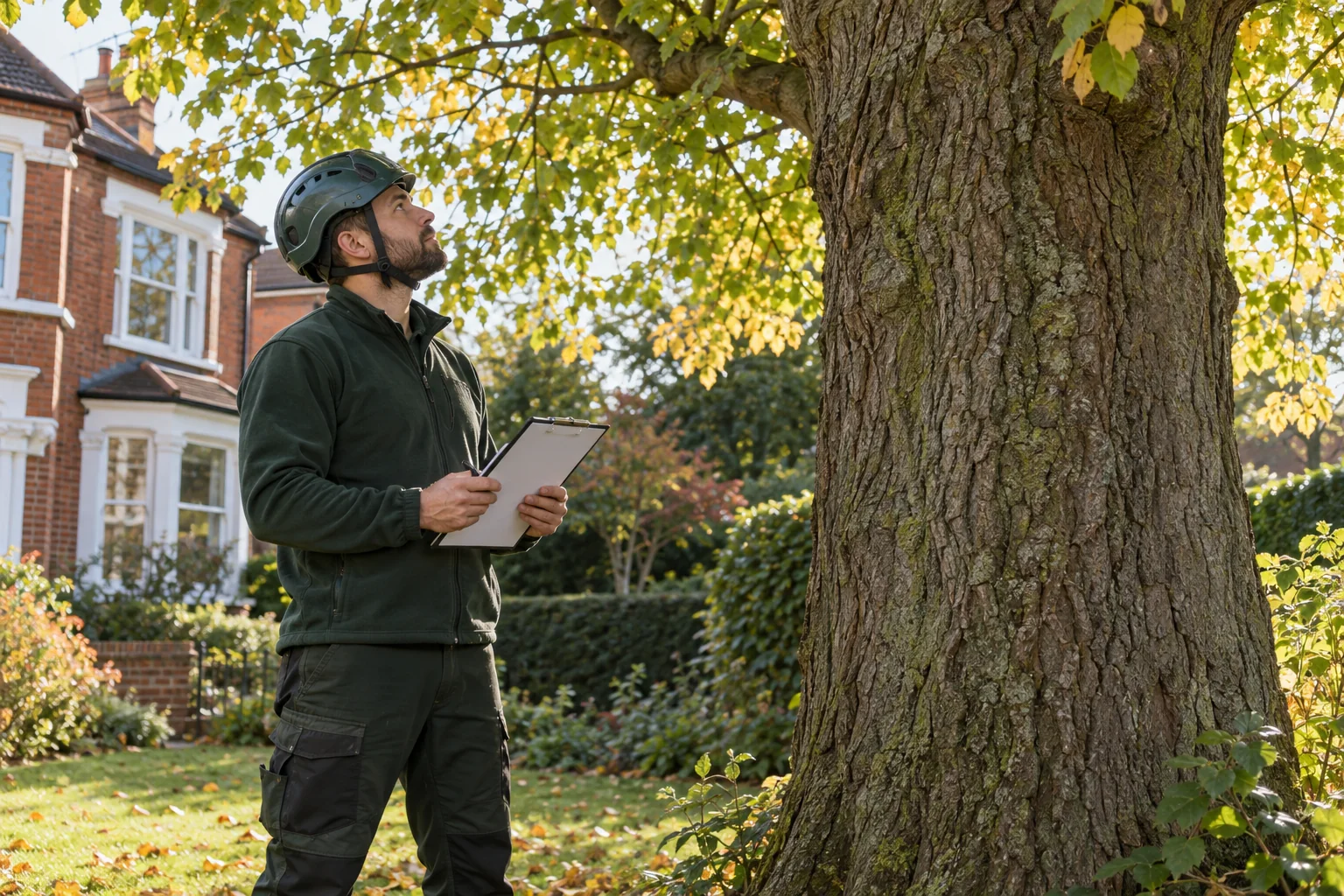
Branches near a Kensington property can raise questions about windows, roofs and access for maintenance. A photograph can show the distance between a limb and a wall, but it cannot establish whether roots or branches are responsible for damage. Start by separating a practical clearance request from a concern about structural movement. Tree Surgery London takes enquiries across Kensington; explain the location of the tree and the outcome you need.
- A defensible clearance specification around a building
- Distinguishing branch clearance from a wider reduction
- Practical preparation for a spreading crown beside a residential elevation
Home / London coverage / Kensington
The work specification should identify what can be achieved through arboriculture and what may require advice from another qualified professional.
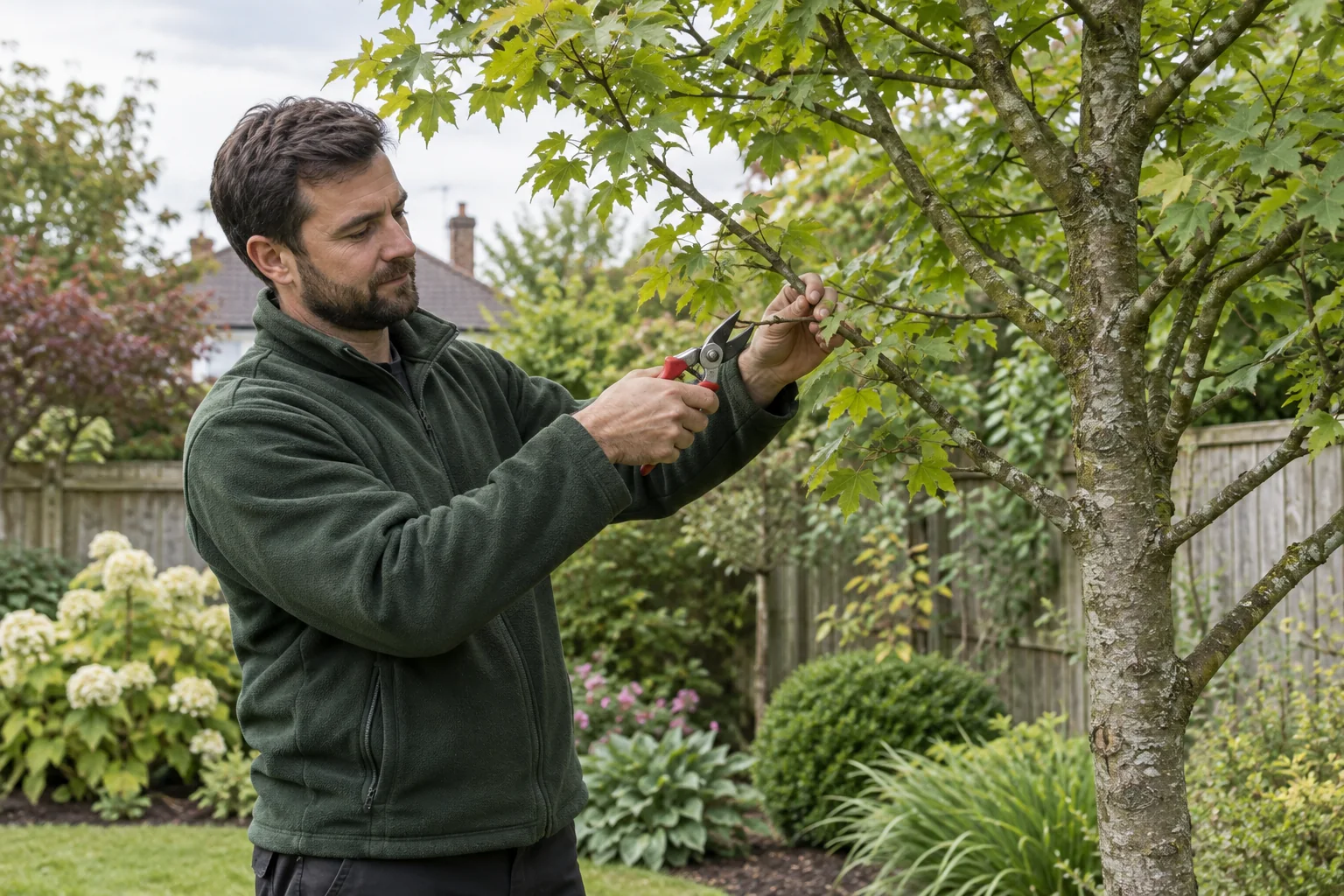
Look at the whole route of a branch rather than only its tip. A long limb may have suitable pruning points further back, while an indiscriminate cut at the desired distance could leave a poor wound or an awkward stub. Ask the arborist to describe the intended clearance in a way that can be checked once the work is complete.
Where a building defect is involved, retain photographs, survey correspondence and any previous reports. Tree work should not be presented as a guaranteed remedy for cracking, damp or subsidence without relevant evidence. An arboricultural inspection can contribute information about the tree; a building diagnosis is a separate question. Give each adviser the same background so that recommendations do not conflict.
Separate clearance from a building diagnosis
Give the arborist a precise view of the branch and the feature it approaches. A gutter, window or roof light has different access and maintenance requirements. Explain whether contact has occurred or whether you want preventative clearance. That distinction helps the contractor understand the brief without implying that the tree is responsible for a defect which has not been investigated.
The pruning guidance describes the purpose of different crown operations. Use it to ask how a recommended cut creates the intended space and how much live crown would remain. A wider reduction should have its own justification; it should not be added automatically because one branch is close to an elevation.
Confirm the records and exclusions before attendance
A tree beside a building still needs its own protection check for the exact address and specimen. Agree responsibility for establishing the applicable position and keep the relevant authority response available. A building survey or an owner’s approval should not be mistaken for permission under a separate tree-protection process. If the assessed condition leads to a different operation, check the updated scope before booking. Explain known wildlife observations as part of the site information without trying to make your own legal determination about how the work may proceed.
Read the quotation for the limits as well as the inclusions. Building repairs, diagnostic investigations and practical tree cutting can be separate tasks, and the tree contractor should not be assumed responsible for every part of a property problem. Clarify protection for roof features, access through the property and disposal of material. Where another adviser will use the completed-work record, retain the operation date and photographs. Those documents should describe what was actually done rather than suggest that a successful pruning operation confirms an untested explanation for the original defect.
| Decision to make | Information to provide | What to clarify |
|---|---|---|
| A defensible clearance specification around a building | Views of a spreading crown beside a residential elevation and the feature that prompted the enquiry | The intended result and the limits of the recommended operation |
| Pruning or removal | Tree condition, previous work and the reason for the request | How the recommendation addresses distinguishing branch clearance from a wider reduction |
| Work method and access | Gate measurements, route photographs and fixed obstacles | Equipment, handling arrangements and protection included in the scope |
| Permission position | Exact property address, tree reference and any existing records | Who confirms the applicable requirements before work proceeds |
| Completion and follow-up | Whether timber stays and what use follows the operation | Clearance, remaining ground work and any recommended review |
Preparing for the visit in Kensington
Tell the organiser about balconies, roof lights and occupied rooms beside the proposed work zone. A neighbour may need advance notice if access or protection is required on their side. Agree who will arrange any separate building survey and keep that responsibility distinct from the tree work quotation.
Keep property evidence together
Where a surveyor or insurer is involved, retain their actual findings and explain which question needs answering. Informal comments can lose important qualifications when repeated between advisers. A tree inspection should be scoped to provide the relevant arboricultural information, with any further testing or written reporting identified rather than assumed to be part of a routine price visit.
Read the tree condition overview before requesting an assessment, then provide dated photographs and a short history. Do not excavate beside the building or cut a root to see whether it is implicated. Those actions can add damage and leave the next professional with altered evidence instead of the original condition.

Plan protection around the elevation
Tell the contractor about balconies, fragile roof coverings, aerials and other features visible from the work area. Some details are difficult to judge from a ground photograph, so explain their position in words as well. The chosen work method needs to account for occupants and access to the building, not just the place where a branch lands.
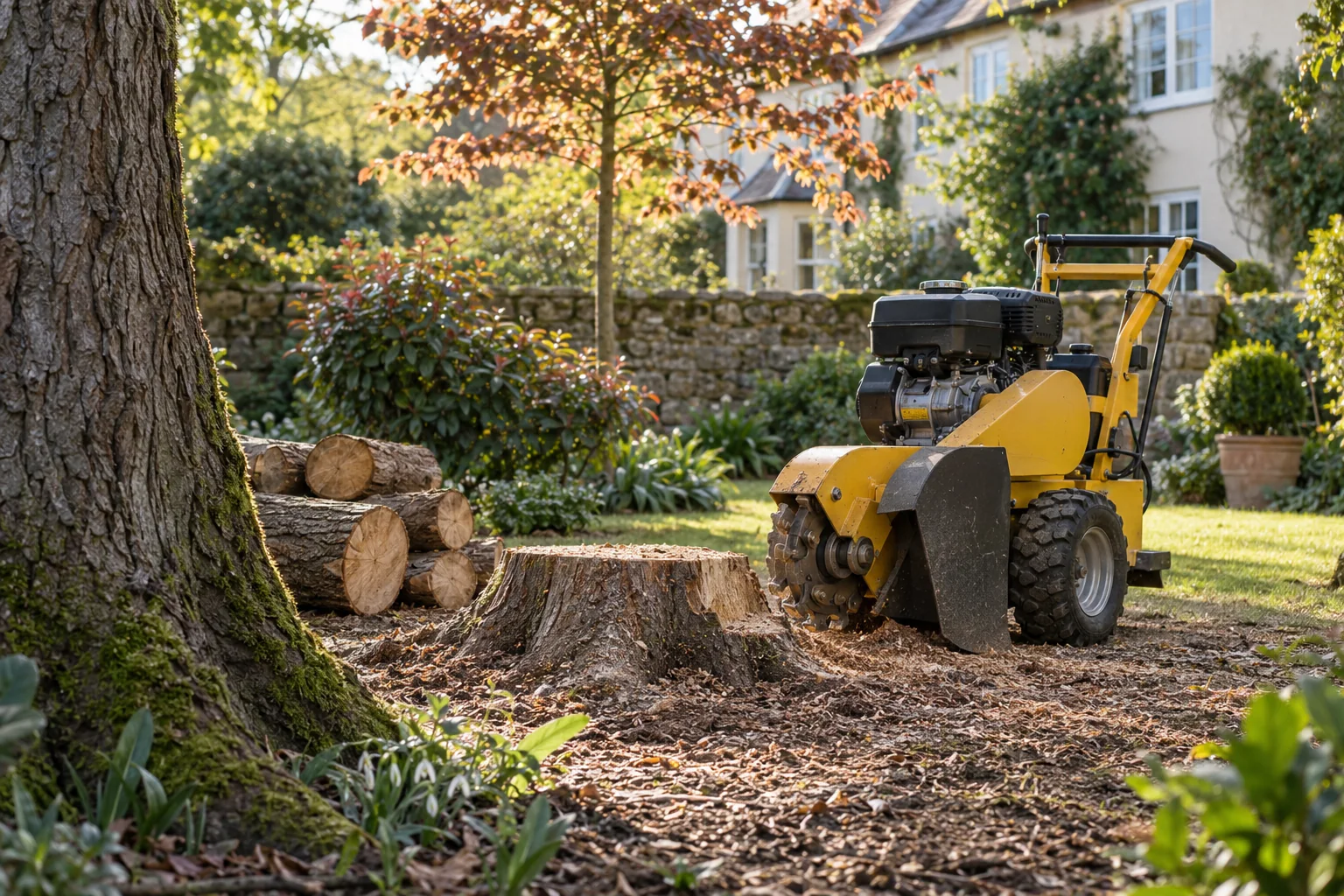
If taking down the tree is recommended, ask how that operation differs from the original clearance request and what happens to the stump. A decision made for a verified tree condition should be distinguished from a separate building remedy. Keep the accepted scope and any supporting report together for future property records.
Discuss the next step for your Kensington property
Start with the Kensington enquiry information and explain the result you want, the tree concern and the access available. For a defensible clearance specification around a building, the Tree Surgery London homepage gives the wider introduction to the service. For an address outside Kensington, the guides for Chelsea and Notting Hill provide related local enquiry routes; use the actual property address when arranging attendance.
Availability, the final operation and the quotation should be confirmed for the individual Kensington property, with distinguishing branch clearance from a wider reduction explained before the work date is agreed.
Local permission checks for Kensington
Planning tree work in Kensington requires care when the garden is also part of a building project. The Royal Borough explains that protected trees include their roots: permission for a branch operation should not be taken to authorise root cutting for paving, drainage or excavation. Show any proposed digging, storage areas and equipment route when discussing the tree, rather than treating those activities as unrelated details.
A tree that stands inside a conservation area may be controlled even when the owner cannot find an individual TPO reference. Check the current boundary and ask the planning authority to resolve uncertainty before arranging a cutting date. For an application, number the trees consistently across the photographs, sketch and work schedule. Record which branches conflict with the building and what clearance is sought. This allows a professional to assess whether selective pruning can meet the objective while retaining the tree's structure, rather than assuming a larger reduction offers a better result.
Questions about tree work in Kensington
Does a branch touching a roof mean the tree must go?
Contact alone does not decide the whole-tree recommendation. An assessment can consider the branch, tree condition and realistic clearance options, while any roof damage needs the appropriate separate building advice.
Can tree work be guaranteed to stop cracking?
A tree operation should not be offered as a guaranteed answer to a building defect without relevant evidence. Retain survey findings and ask how the arboricultural advice relates to the building investigation.
How should clearance beside windows be described?
Identify the window or elevation, explain the practical problem and ask for the intended result to be recorded. The specification should also account for suitable branch cuts rather than a desired distance alone.
Who checks whether the tree is protected?
Agree who will establish the protection position for the precise property and tree. Keep the relevant record with the specification, and do not assume the answer is settled by work previously carried out nearby.
Should a neighbour be involved in the site visit?
Where access, protection or ownership affects the neighbour, resolve the necessary agreement early. Their involvement may help clarify the setting, but the contractor should not be asked to adjudicate a property dispute.
What photographs help with a Kensington building-clearance enquiry?
Include the whole tree, the relevant elevation and the access route. A close view of a branch against a wall is useful detail, but it cannot show the complete structure or establish the cause of damage.
Can the tree contractor carry out related building repairs?
Do not assume those repairs are included in a tree-work appointment. Identify who is responsible for the roof, elevation or other property task and coordinate the sequence where necessary. The accepted quotation should distinguish cutting, protection and clearance from work requiring a separate trade or building assessment.