LONDON TREE CARE / Fulham
Tree Surgery Fulham
A straightforward looking tree job in Fulham can involve careful handling if the garden has a narrow entrance. Tree dimensions matter, but so do the route for people and materials, steps, corners and the place where arisings can be processed. Describe these before requesting a firm price. Tree Surgery London accepts Fulham enquiries for pruning, removal and stump work, with the approach determined by the tree and the property.
- A practical work plan that respects the access route
- Moving branches through limited pedestrian access
- Practical preparation for a rear garden reached through a narrow side passage

Home / London coverage / Fulham
Good access information helps establish what equipment can be used and avoids a quotation based on a route that is not available.
Measure the narrowest opening with gates fully open and include any change in level. A straight passage and one with a sharp corner can present very different handling problems even when their widths match. Send photographs looking both towards and away from the tree. If the only route crosses the home, raise that at the beginning rather than leaving it for the work day.
A restricted route does not by itself prove that machinery or a crane is necessary. Branches may be cut into manageable sections, and the lifting or lowering method must suit the actual site. Ask how material will move from the work area to the collection point. Protection for floors, gates and walls should be described alongside the tree operation.
Photograph the journey from garden to collection
Take a sequence of images showing the tree, the first exit, each turn and the final collection point. Include gates fully open and explain anything normally stored along the route. A passage can appear generous in a single photograph while narrowing sharply just outside the frame. Accurate information is more valuable than describing access as good or difficult without detail.
Where the job involves sectional tree removal, handling arrangements can influence how the material is cut and controlled. The contractor should choose the method, but the owner can prevent avoidable assumptions by explaining which routes are available and who has authority to permit their use.

Distinguish a smaller crown from simpler handling
A tree close to the house may need only selected clearance rather than a general reduction. Describe the obstruction independently of the access problem: the best pruning operation and the easiest way to carry branches are separate decisions. Ask for the final crown objective to appear in the quotation alongside any restrictions that affect carrying or equipment.
The guide to pruning operations gives useful language for that discussion. If poor growth or a new defect has also been noticed, explain it as a condition concern rather than requesting extra cutting just in case. The tree care service information sets out the broader assessment questions.
Preparing for the visit in Fulham
Check that the agreed entrance will remain available for the whole visit. Arrange access permissions for a shared passage and mention bins, bicycles or stored items that reduce the usable width. Keep children and pets away from the handling route, not simply away from the base of the tree.
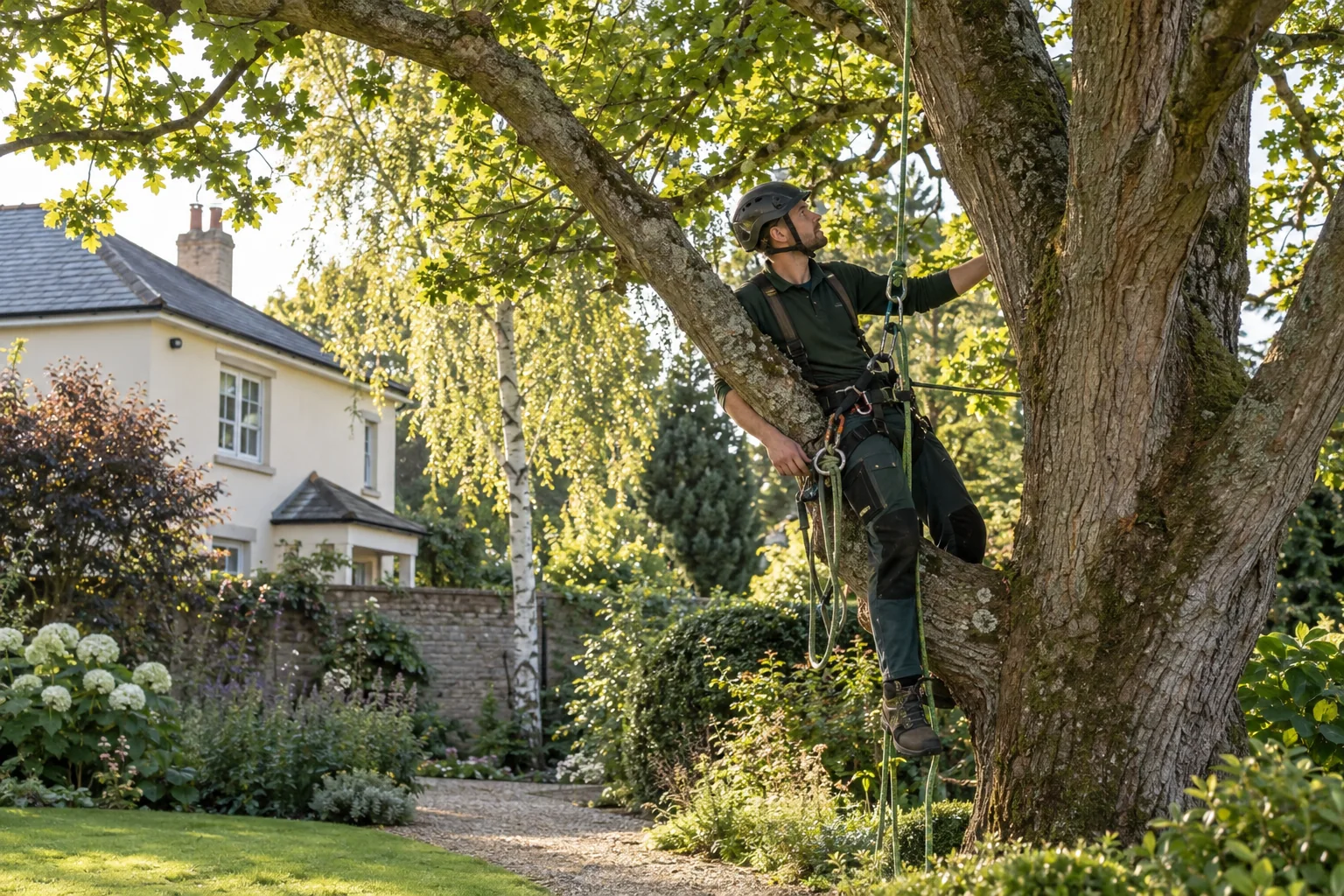
Allow the confirmed route to shape the booking
Keep access arrangements open while any protection checks are resolved. Confirm the relevant planning authority and the status of the particular tree using the full property address. An earlier visit to another garden does not establish the answer for this specimen. Agree who handles required submissions and where the written response will be held. If access changes the proposed operation, review the final specification against the applicable record before attendance. The contractor should also consider wildlife constraints for the actual tree and work date, rather than a general assumption about the season.
A useful quote makes narrow-route handling and protection understandable. Ask whether carrying distances, shared access controls and collection are included, and identify any arrangement that remains provisional. Do not accept an attractive total while leaving the only practical exit unconfirmed. If the site cannot be prepared as planned, tell the organiser before the appointment so the method can be reconsidered. Keep completion and variation records with the photographs of the route; they can help explain future maintenance requirements without requiring the next contractor to reconstruct the entire access history.
Get the site ready without changing the agreed method
Confirm what the household will move and what the contractor expects to protect. Do not remove a fence panel or dismantle a gate unless that arrangement has been agreed and the necessary authority is clear. An improvised opening may introduce a new hazard or leave an incomplete property repair outside the accepted job.
Discuss collection and finishing details before the visit, including whether small timber or chips will remain. The route must stay usable until the operation is complete, so avoid arranging deliveries that block it halfway through the day. Keep a named contact available if an unexpected restriction makes the planned method unsuitable.
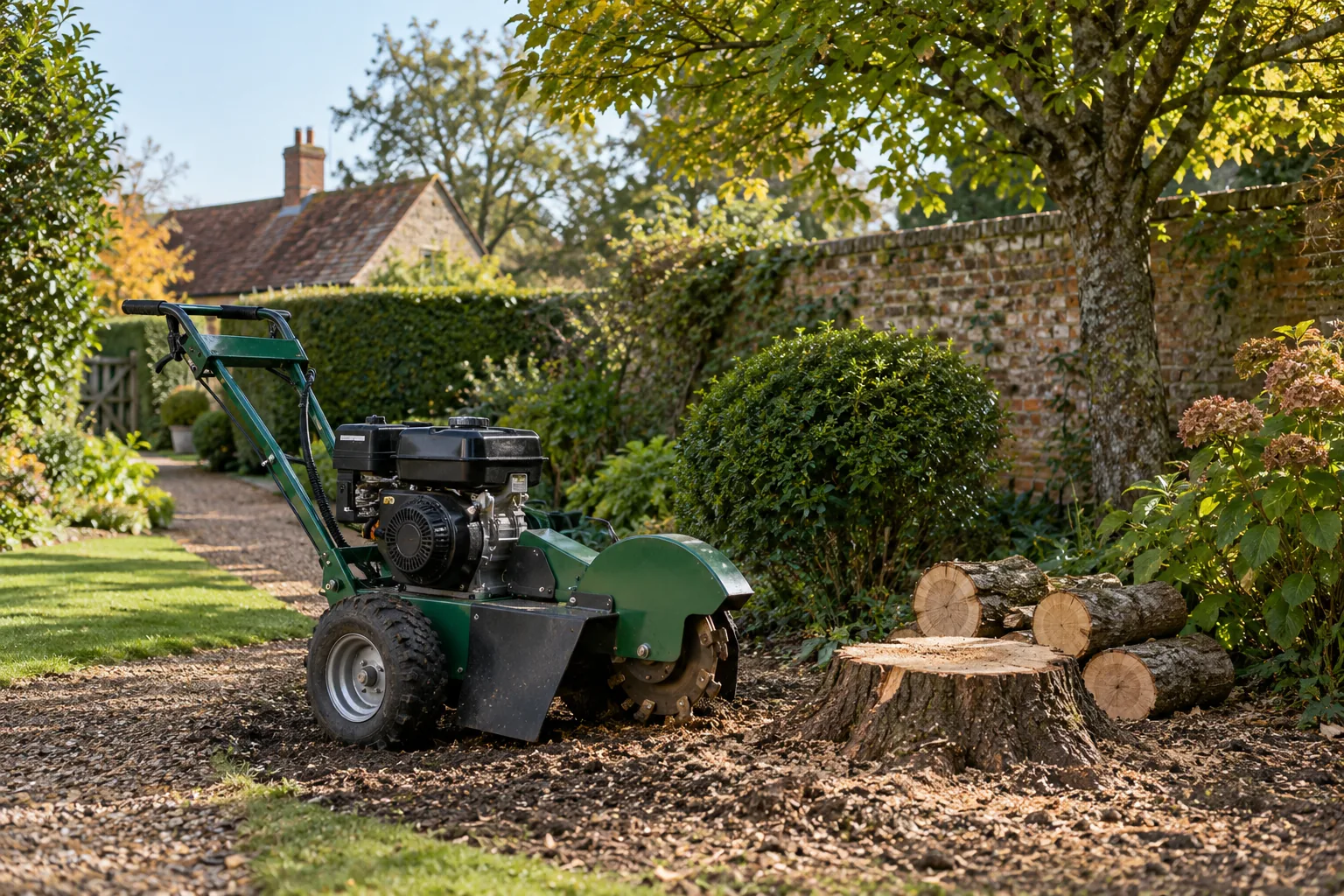
Discuss the next step for your Fulham property
Start with the Fulham enquiry information and explain the result you want, the tree concern and the access available. For a practical work plan that respects the access route, the Tree Surgery London homepage gives the wider introduction to the service. For an address outside Fulham, the guides for Chelsea and Hammersmith provide related local enquiry routes; use the actual property address when arranging attendance.
Availability, the final operation and the quotation should be confirmed for the individual Fulham property, with moving branches through limited pedestrian access explained before the work date is agreed.
| Decision to make | Information to provide | What to clarify |
|---|---|---|
| A practical work plan that respects the access route | Views of a rear garden reached through a narrow side passage and the feature that prompted the enquiry | The intended result and the limits of the recommended operation |
| Pruning or removal | Tree condition, previous work and the reason for the request | How the recommendation addresses moving branches through limited pedestrian access |
| Work method and access | Gate measurements, route photographs and fixed obstacles | Equipment, handling arrangements and protection included in the scope |
| Permission position | Exact property address, tree reference and any existing records | Who confirms the applicable requirements before work proceeds |
| Completion and follow-up | Whether timber stays and what use follows the operation | Clearance, remaining ground work and any recommended review |
Local permission checks for Fulham
Fulham falls within Hammersmith and Fulham's planning authority, whose guidance distinguishes consent for TPO trees from notification for trees in conservation areas. These are useful checks at the quotation stage, because an available appointment is not evidence that the proposed work is authorised. Use the property's exact address and current council mapping to establish which process applies. The relevant tree may be at the rear of a neighbouring plot rather than within the applicant's garden.
Discuss the route for branches and machinery separately from the tree-work permission. A contractor may need access across shared land, while a vehicle or work zone on the highway can involve another approval. Do not assume either is included in a tree decision. Give the arborist photographs of gates, changes of level and the place where material can be loaded. A clearly described access arrangement helps the quotation reflect the handling involved and gives neighbours a specific plan to consider.
Questions about tree work in Fulham
Is the gate width enough to price rear-garden access?
Include turns, overhead restrictions and changes in level as well as the narrowest opening. A machine or carried timber may need a different route from a person walking through with hand tools.
Can branches be carried through the house?
Explain if that is the only available route before requesting a firm quotation. The contractor needs to assess feasibility, protection and handling; access through a building should never be assumed from a garden photograph.
Does difficult access always require a crane?
Equipment follows the assessed operation, tree and site. Restricted pedestrian access may change handling and section sizes, but it does not automatically establish that a crane is appropriate or available for the property.
What should happen to bicycles in a shared passage?
Arrange to remove items that narrow the agreed route, provided preparation is safe. Confirm permission to use shared space and tell other users how the passage will be controlled during the work.
Can a stump grinder fit through a side entrance?
That depends on the available machine and the entire route, not only the entrance. Supply measurements and photographs, then ask the contractor to confirm the proposed equipment and any resulting limits on stump treatment.
Why can similar Fulham trees have different quotations?
Tree structure is only part of the work. Longer carrying distances, tight corners, protection requirements and collection arrangements can change the labour and method even where the crowns appear similar from outside.
Should an alternative access route be kept available?
Mention a possible alternative early, with its ownership and restrictions, so the contractor can assess it if useful. Do not count it as a confirmed route until agreement is in place. An emergency change to access on arrival can alter protection, handling and the feasibility of the planned operation.