
TREE SURGERY LONDON / CONSIDERED OUTDOOR CARE
Tree Care Services in London
Tree care is a continuing management decision, not a promise that every tree should be cut each year. Healthy growth, the condition of the structure and the way a garden is used all matter. A useful care plan records changes, considers growing conditions and identifies when observation, practical work or a more specialised opinion would be worthwhile.
- Observe changes in crown, trunk and root area
- Choose proportionate maintenance
- Separate routine care from formal reports
What ongoing tree care can achieve
The aim is to manage a tree in relation to its condition and setting. A young tree may need attention to its developing framework, while an established tree may benefit from observation and limited intervention. Trees beside buildings, paths or regularly used seating areas present different management questions from those in a little-used corner of a large plot.
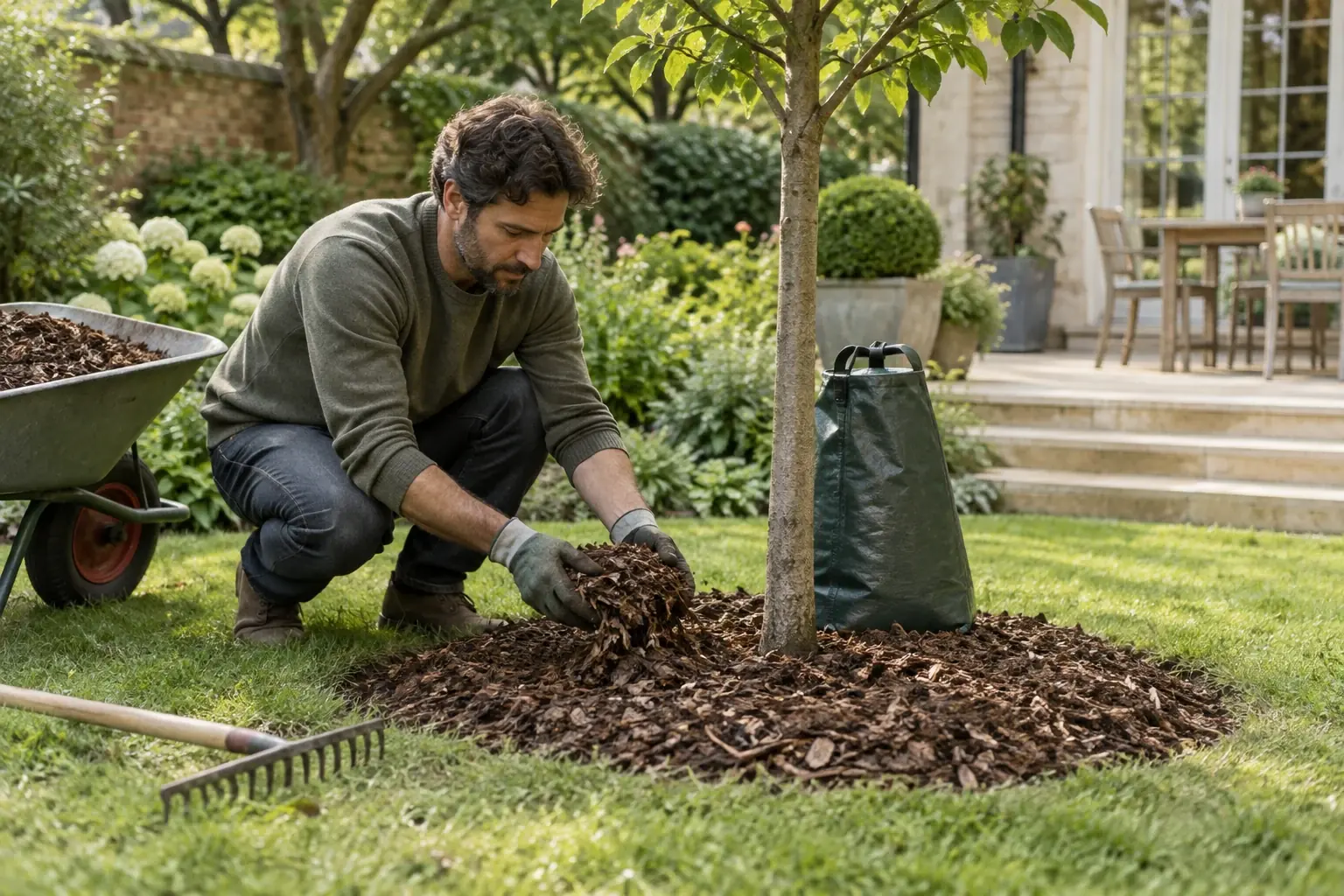
Care can involve appropriate pruning, protection of the ground, reviewing changes in condition and planning future work. It cannot guarantee that a tree will never shed a branch or develop a problem. Ask what a proposed visit will actually cover and what evidence or observations would trigger further investigation rather than repeated routine treatment.
Notice patterns rather than isolated symptoms
Changes in leaf cover, shoot growth or the appearance of the stem can have several causes. Weather, soil conditions, pests, disease and previous disturbance may produce overlapping signs. Record when a change first appeared and whether it affects the whole crown, one side or a particular branch.
Photographs taken from consistent positions can help show trends. A single close-up of a damaged leaf rarely explains the condition of an entire tree. Do not remove fungal growth, strip bark or dig around roots in an effort to reveal a diagnosis. If you have noticed a concern, describe it and seek appropriate advice before altering the evidence.
Observation, work or a separate report?
| Situation | Useful response | Scope to clarify |
|---|---|---|
| A change in foliage | Record timing and pattern | Whether a site assessment is needed |
| A specific clearance problem | Consider selective pruning | Which branches and intended clearance |
| A formal request from an insurer | Define the required report | Competence, investigation and recipient |
| Recent root-area disturbance | Explain the site history | Protection and any further advice |
The ground is part of the tree
Roots need suitable growing conditions and can be affected by excavation, changes in level, vehicle movements and heavy storage. Problems may develop after a garden project even when the trunk and branches were left untouched. Mention recent drainage works, paving, building access or prolonged waterlogging when discussing a decline in vitality.
Avoid assuming that the rooting area ends at the trunk or exactly at the edge of the canopy. Decisions about work near trees need site-specific consideration. If a garden redesign is planned, involve the relevant advice early in the landscaping discussion, before access routes or finished levels make protection more difficult.
Pruning as one part of a care plan
Selective tree pruning can address particular clearance or structural issues, but removing foliage is not a general treatment for every sign of stress. The species, condition and previous management influence what is appropriate. Cutting an already struggling tree simply to make it look tidier may not resolve the underlying cause.
Ask for the reason behind each proposed operation. If a tree has been reduced before, discuss the history and the condition of the retained framework. Where the intention is to manage a recurring issue, a clear record of previous work is more useful than a sequence of disconnected instructions to make the crown smaller again.

When a separate assessment is needed
A practical maintenance enquiry is not automatically a detailed risk assessment, planning survey or report suitable for an insurer. The required competence, investigation and documentation depend on the purpose. A third party may have specific requirements about who provides the opinion and what the report must contain.
Use the tree surgeon service to discuss the type of help you need, and state any formal requirement at the outset. Where decay, movement or another complex issue is suspected, further investigation may be recommended. Photographs and a general conversation should not be represented as proof of structural safety.
Clear warning signs require a cautious response
Fresh leaning, ground lifting around the base, a split limb or hanging branches can warrant urgent attention. Keep people out of the affected area rather than approaching to test whether the tree moves. The appropriate response depends on the circumstances, including nearby roads, electrical services and structures.
Other concerns may be less immediate but still deserve review. Repeated loss of branches, progressive crown thinning or changes at old wounds can form part of a developing picture. The useful question is what has changed and what needs checking, not whether the tree can be declared safe indefinitely after one visit.
Young trees and established specimens
Early decisions can influence the future framework of a young tree. Appropriate formative work differs from trying to correct a mature tree with large limbs. Growth habit, the available space and the intended use of the area should be considered before a new tree is repeatedly cut to fit an unsuitable position.
For established trees, preserving useful structure and avoiding unnecessary damage may be more important than producing a uniform outline. Older or habitat-rich trees can call for a particularly considered approach. Care does not have to mean making every tree look the same or removing every feature that appears untidy to a casual observer.
Permission and ecological constraints
Tree care work may still be controlled by a Tree Preservation Order, conservation-area rules or a planning condition. Routine maintenance is not a universal exemption. Check the exact proposal with the appropriate local authority and retain any written decision or specification.
Wildlife considerations remain relevant even where only limited work is planned. Active nests and protected roosts may affect the timing or method. A maintenance schedule should be flexible enough to respond to those constraints. It should not be used to justify proceeding automatically because a visit has taken place at the same time in previous years.
Agreeing a useful maintenance visit
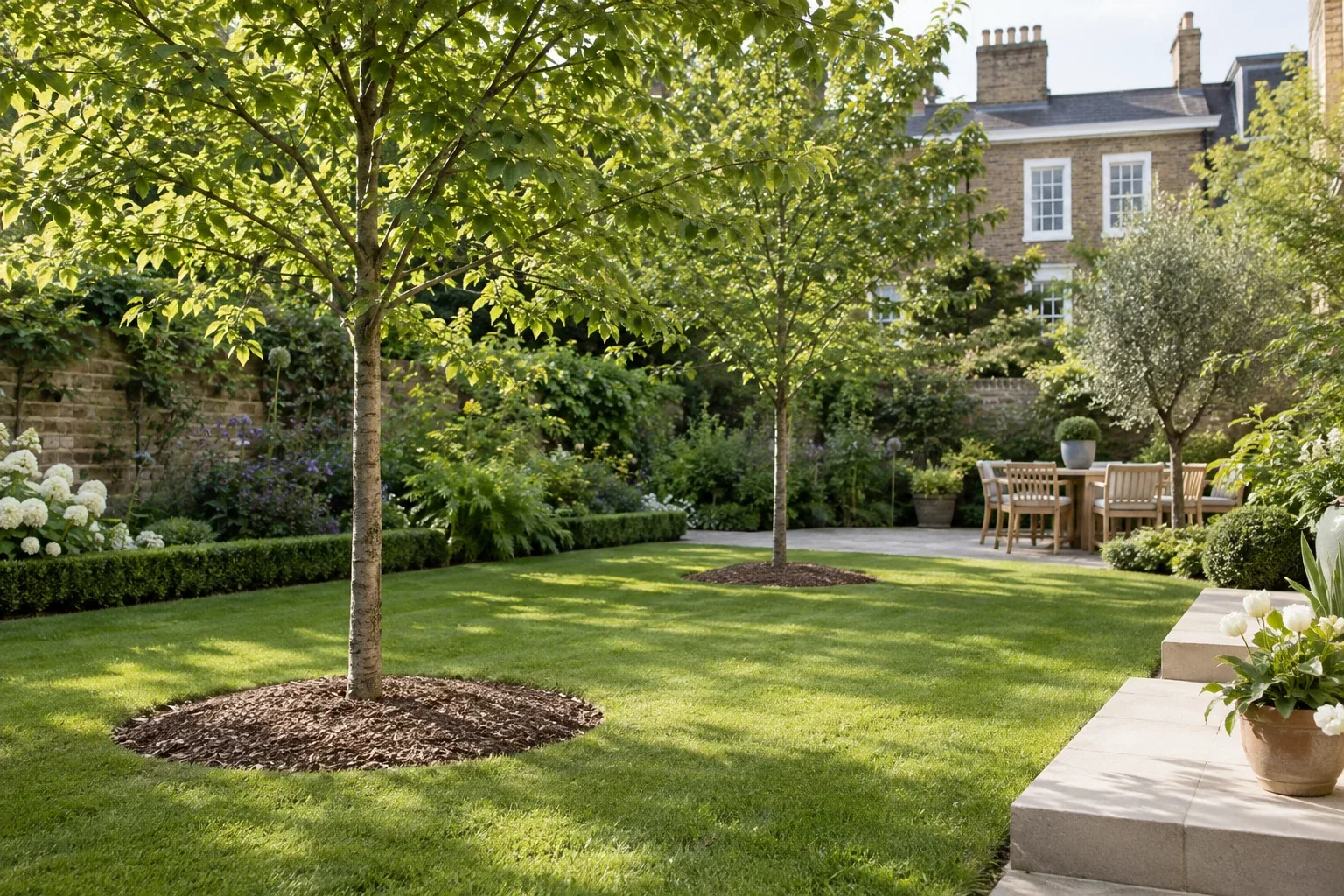
Identify the trees to be considered, the purpose of the visit and the work that may be authorised. If several people share responsibility for a garden, establish who can approve changes. Keep the quotation and any observations together so the next enquiry starts with a clear history.
Costs depend on the work and the level of advice required, rather than the label “tree care”. Make sure you understand whether the visit is for practical operations, general observations or a commissioned report. Where retention is no longer appropriate, tree felling is a separate decision with different planning and clearance requirements, not an automatic final stage of every care programme.
USEFUL ANSWERS
Questions about this service
How often should a garden tree be checked?
There is no single interval suitable for every tree and location. Condition, age, use of the surrounding area and previous findings influence the advice. Ask what should prompt an earlier review, such as storm damage or changes after ground works.
Does sparse foliage mean the tree needs pruning?
Not necessarily. Poor leaf cover can be associated with several growing conditions or health issues. Removing more foliage may not address the cause. Describe the pattern and history and ask whether investigation or changes around the roots would be more appropriate.
Can a tree recover after building work nearby?
The outcome depends on what changed and how the tree has been affected. Excavation, compaction and altered drainage can have consequences beyond visible branch damage. Explain the work undertaken and obtain advice before carrying out further changes in the root area.
Is a maintenance visit a formal tree survey?
Only if that scope has been specifically agreed. A report for planning, insurance or a property transaction may require a separately defined commission. Confirm the intended recipient, purpose and required documentation before arranging the visit.
Should all deadwood be removed?
The location and likely consequences matter. Deadwood over an occupied area presents a different question from material that can remain as habitat in a low-risk position. Discuss selective management rather than assuming an entirely bare, tidy crown is always the best outcome.
Can a care plan promise the tree will remain safe?
No assessment removes all future uncertainty. Trees and their surroundings change. A useful plan explains relevant observations, proposed actions and reasons to review the situation, rather than offering an unlimited guarantee about future condition.
A CLEAR NEXT STEP
Tell us about the work
Provide the history of the tree and any recent change to its surroundings. Discuss which observations need a visit, what further investigation may be appropriate and how any recommended management will be recorded.
Use the full property address when checking protection and arranging an assessment. See the local guidance for Hampstead trees and tree work in Greenwich.