LONDON TREE CARE / Lewisham
Tree Surgery Lewisham
A Lewisham enquiry may combine two requests: improve the shape of a tree and investigate a change in its appearance. Deal with the condition question before settling the cosmetic specification. Leaf loss, dieback or an unusual growth should be described accurately, with dates and photographs where possible. Tree Surgery London accepts Lewisham enquiries and can discuss the suitable type of visit.
- A tree-care decision that starts with condition
- Addressing a symptom before choosing cosmetic work
- Practical preparation for a garden tree with both maintenance needs and a health concern
Home / London coverage / Lewisham
Pruning is an operation, not a diagnosis, and removing visible symptoms does not necessarily address their cause.
List the changes you have observed and the parts of the tree affected. A whole-crown change and a single damaged limb can point to different lines of investigation. Mention recent excavation, alterations to ground levels or major pruning, even if those events were not immediately followed by symptoms. Useful history helps the assessor avoid treating the visible change as an isolated event.
Once the condition has been considered, discuss how the tree fits the garden. Clearance, removal of particular branches or a broader management plan may be appropriate, but the recommended amount of live crown removal should reflect the findings. If no practical intervention would help, ask what observation or follow-up is useful. A recommendation to monitor should explain what change would trigger further advice.
Begin with a description of the change
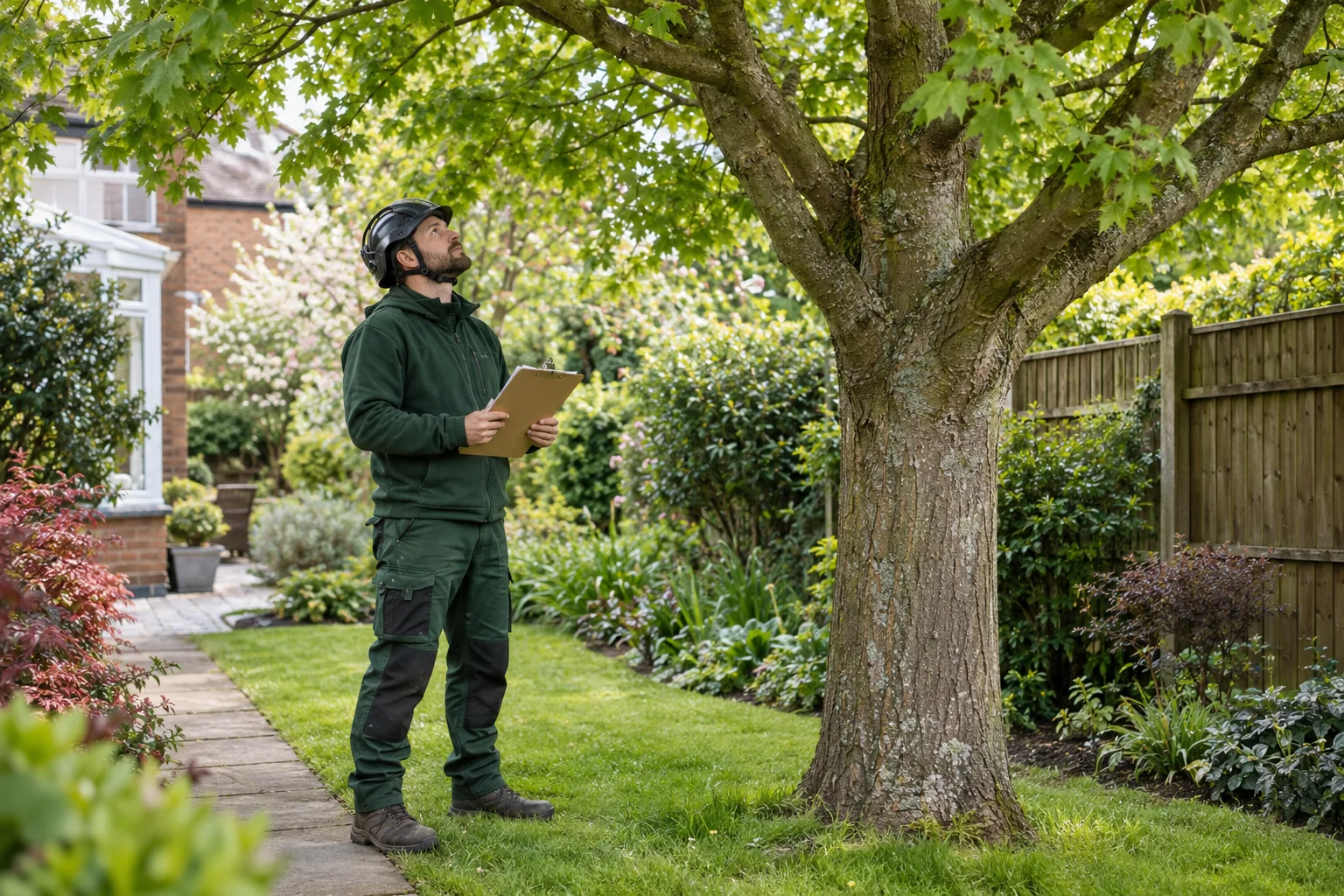
State which part of the crown has altered and whether the change is spreading. Include safe views of the whole tree and its base, with close detail where useful. A diagnosis chosen from a similar-looking leaf online can narrow the enquiry prematurely; the professional needs observations and context before deciding which explanation deserves investigation.
The tree care overview helps distinguish a symptom enquiry from routine maintenance. State whether written advice is needed by another party and provide earlier reports. A visit arranged only to price an operation should not be assumed to include every type of inspection or specialist investigation.
Assess pruning against the condition findings
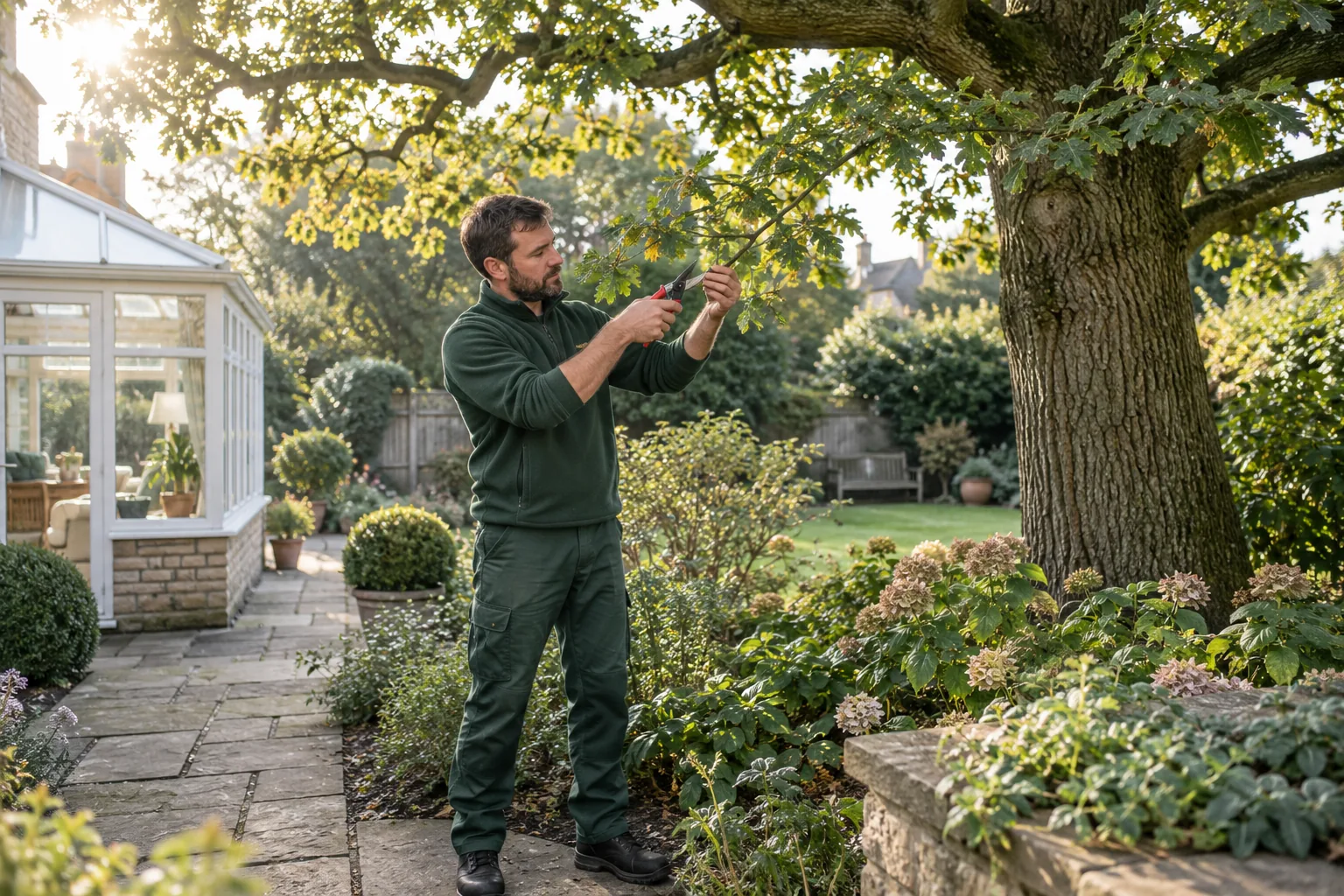
The owner may still want a neater outline or more clearance after the health question is considered. Ask how much live crown removal is appropriate and what purpose each proposed cut serves. The pruning guide gives background, but the actual specification needs to reflect the specimen rather than a standard visual result.
Removing a dead or discoloured part does not automatically address the cause of the symptom. Ask whether the recommendation includes further investigation, changes around the tree or observation of its response. Where monitoring is proposed, agree useful photographs and the kind of change that should prompt another contact instead of leaving the instruction undefined.
| Decision to make | Information to provide | What to clarify |
|---|---|---|
| A tree-care decision that starts with condition | Views of a garden tree with both maintenance needs and a health concern and the feature that prompted the enquiry | The intended result and the limits of the recommended operation |
| Pruning or removal | Tree condition, previous work and the reason for the request | How the recommendation addresses addressing a symptom before choosing cosmetic work |
| Work method and access | Gate measurements, route photographs and fixed obstacles | Equipment, handling arrangements and protection included in the scope |
| Permission position | Exact property address, tree reference and any existing records | Who confirms the applicable requirements before work proceeds |
| Completion and follow-up | Whether timber stays and what use follows the operation | Clearance, remaining ground work and any recommended review |
Preparing for the visit in Lewisham
Keep a dated photograph record and bring any previous report to the discussion. Avoid applying a treatment solely on the basis of an online identification. If a report is required for another party, state the purpose so that the visit can be scoped appropriately.
Keep the findings, permission position and operation consistent
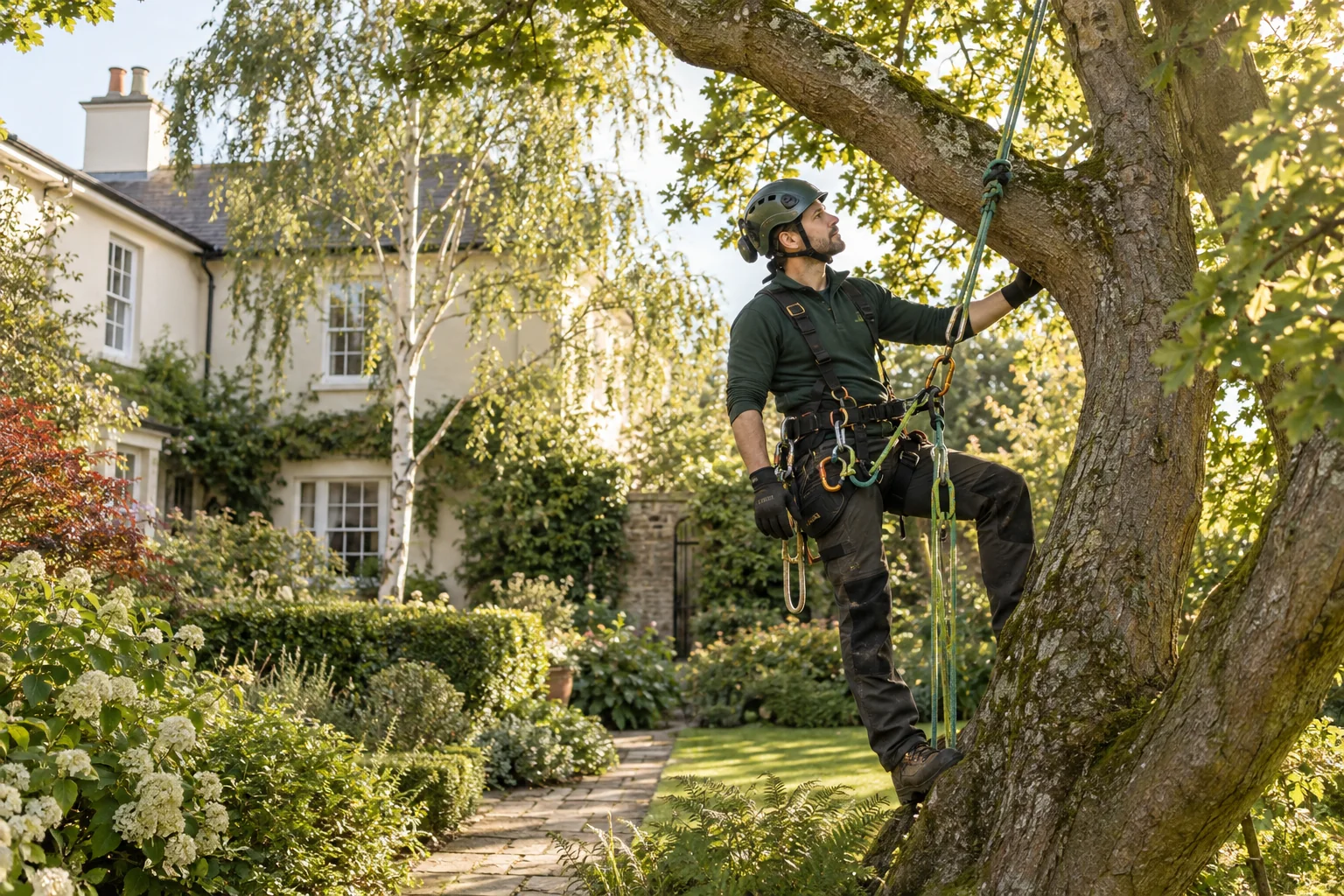
A tree-health enquiry should still establish the protection position for the address and specimen before practical work is instructed. Agree responsibility for the applicable authority process and keep relevant records with the recommendation. An unexplained symptom is not enough to assume an exemption or choose unrestricted cutting. If investigation changes the proposed operation, check the revised scope rather than relying on an earlier version. Wildlife observations should also reach the contractor so the work programme reflects the actual tree and site instead of a generic assumption about timing.
The cost discussion should separate assessment, any further investigation and the practical tree operation. Ask what each stage supplies and which decisions remain open, particularly if a written report is needed by another party. Clarify access, protection, material removal and any stump task where relevant. Retain the timeline of observed changes alongside the final findings and completed scope. If monitoring is recommended, assign responsibility for the observations and future contact; storing advice without knowing who will act on it leaves the maintenance plan incomplete even though the document itself has been saved.
Keep the future use and work scope realistic
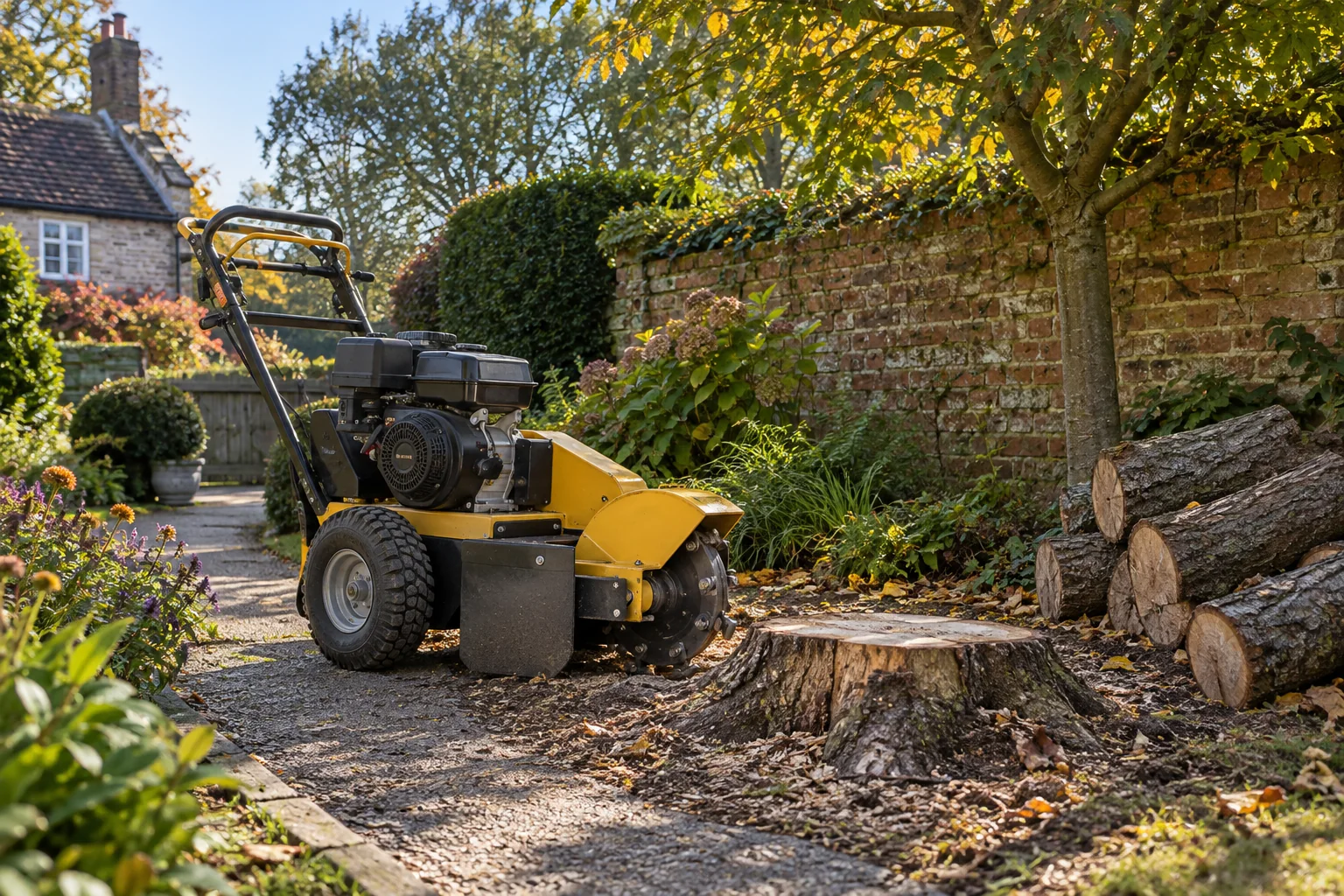
If the findings support removal, discuss the full operation and the condition of the ground afterwards. The stump decision, retained material and access route belong in the quotation. Do not assume a garden will be ready for replanting or construction simply because the visible stem has been removed.
Keep the original observations, relevant assessment and completed work description together. A later adviser can then see what changed and why the operation was chosen. If another contractor is working nearby, communicate any relevant protection advice so the retained trees and ground are not affected while the next phase of the garden project proceeds.
Discuss the next step for your Lewisham property
Start with the Lewisham enquiry information and explain the result you want, the tree concern and the access available. For a tree-care decision that starts with condition, the Tree Surgery London homepage gives the wider introduction to the service. For an address outside Lewisham, the guides for Greenwich and Dulwich provide related local enquiry routes; use the actual property address when arranging attendance.
Availability, the final operation and the quotation should be confirmed for the individual Lewisham property, with addressing a symptom before choosing cosmetic work explained before the work date is agreed.
Local permission checks for Lewisham
For a tree at a Lewisham property, the council's current planning-forms page includes applications for work to TPO trees. Its supporting tree-work guidance explains the distinction between a formal TPO application and notice for relevant trees in a conservation area. Identify the specimen carefully before applying: use matching references on a sketch, photographs and the work schedule, particularly where several trees share the same garden edge.
Tree protection should also be discussed when cutting is only one element of a larger garden project. Excavation, level changes and storage of heavy materials can affect a tree that is otherwise intended to remain. Show those proposals to the arborist alongside the desired crown work so the scope is assessed as a whole. If the concern is close contact with a building, describe the observed relationship rather than attributing structural damage without evidence. Confirm the tree's ownership, current protection and permission route, then agree the access and debris arrangements for the specific operation being proposed.
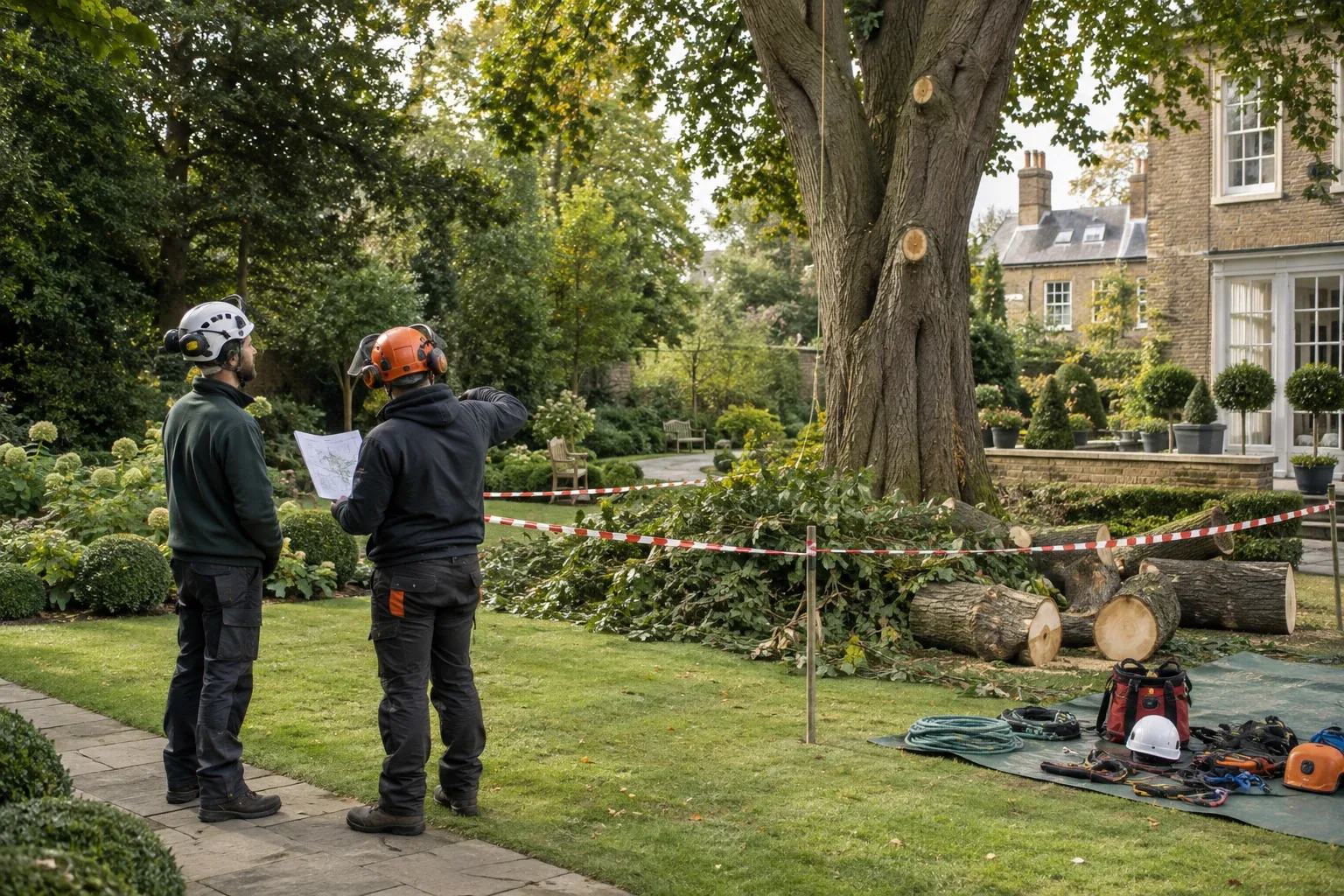
Questions about tree work in Lewisham
Should a tree be reshaped before its dieback is assessed?
Begin with the condition question and describe the symptom. The findings can influence the suitability and amount of live crown removal, rather than making cosmetic pruning the first response to an unexplained change.
What if only one part of the crown looks different?
Show its position in a whole-tree view as well as close detail from the ground. The extent and distribution of a symptom can matter, so avoid sending an isolated image that gives no sense of scale or location.
Are old garden works relevant to a new Lewisham concern?
Tell the adviser about known excavation, level changes and major pruning even if symptoms appeared later. A useful history looks beyond the immediately preceding days and keeps the timing of observed changes clear.
Does monitoring mean nothing needs to be recorded?
Ask what to observe and what change should prompt further advice. Dated photographs and a clear review purpose make monitoring more useful than simply waiting without knowing which development would matter.
Can I choose a treatment from an online leaf photograph?
An online resemblance is not a reliable diagnosis for commissioning treatment. Document the symptom, avoid unnecessary intervention and ask what assessment is needed to understand the tree’s condition and suitable next step.
How do I request a report for another party?
Explain who needs it and which decision it must inform before booking. A quotation visit and a documented assessment have different purposes, so agree the scope and expected output rather than assuming one includes the other.
How can a later enquiry use the original condition observations?
Retain dated images, the symptom timeline and any professional findings together. Explain what has changed since the earlier visit and whether surrounding works have occurred. This gives the next adviser a comparison and avoids presenting a familiar old feature as new merely because a different person is now reporting it.