LONDON TREE CARE / Beckenham
Tree Surgery Beckenham
A removal decision can also be the start of a better planting plan. In Beckenham, explain what you would like the space to provide after the existing tree has gone: shade, seasonal interest, screening or room for another use. Tree Surgery London accepts Beckenham enquiries for tree assessment, pruning, removal and stump work. Removal should follow a reasoned consideration of the tree and the site.
- Test retention before replacement
- Plan the future rooting space
- Agree what planting preparation includes
Home / London coverage / Beckenham
If it is appropriate, discussing the next use of the ground helps define stump treatment and avoids promising that a cleared surface is immediately ready for every kind of replacement. The wider Tree Surgery London service covers enquiries about appropriate tree management, while this guide explains how to plan a replacement as carefully as a removal.
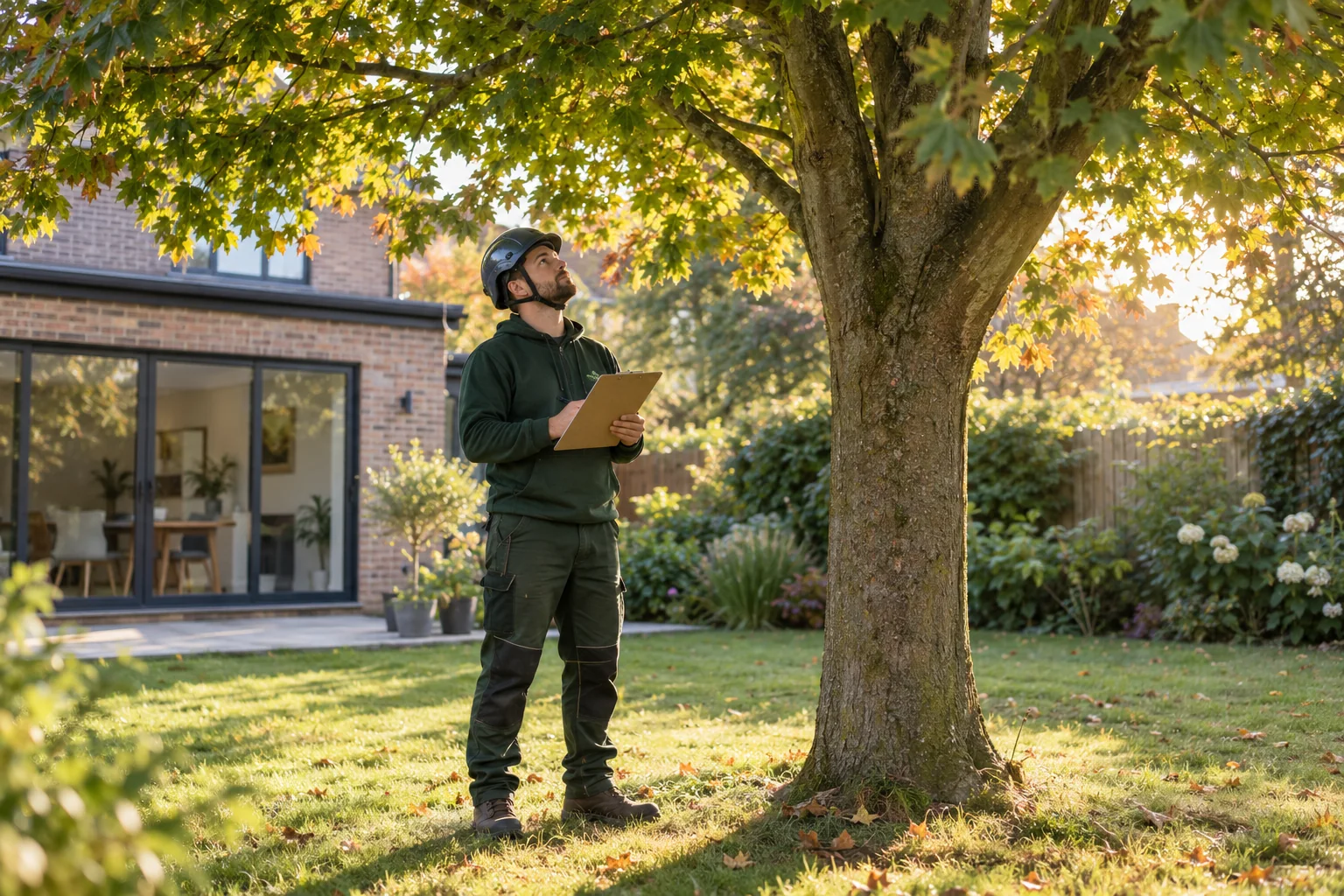
Assess the existing tree before choosing its replacement
Before choosing a treatment, give the provider a reliable account of the concern; explain how the property is used beneath the canopy, since the significance of a feature depends partly on what could be affected.
For this enquiry, useful starting evidence would include the original reason for removal and the available rooting and canopy space for any future planting.
A photograph can support the conversation but cannot establish every hidden condition; the eventual recommendation may involve investigation, monitoring or a limited intervention rather than immediate major pruning or felling. The assessment and tree care overview explains the wider service context; avoid treating a service description as a diagnosis of a particular tree.
Explain the removal decision independently of replanting
If removal is proposed, ask what evidence and site requirements support the decision; make sure the owner understands which alternatives were considered and why they may not meet the objective.
A garden tree cannot always be felled into one clear area; the provider may need to handle branches and timber in controlled sections rather than rely on a single open fall zone.
The ground-related part of this decision is the difference between grinding a visible stump and preparing a suitable rooting environment for a new tree. Use the guide to removing a tree as preparation for discussing the method; avoid assuming a method from a photograph of a different property.
| Planning decision | Information to provide | What to agree |
|---|---|---|
| The reported concern | The original reason for removal and the available rooting and canopy space for any future planting | An assessment and a defined management objective |
| The retained crown | Whether a reasonable retention option meets the owner’s objective before the choice of replacement becomes the deciding factor | An understandable pruning scope, if work is appropriate |
| The working route | A handling route that does not damage planting retained as part of the future garden layout | Method, protection and workable site separation |
| The finished space | The difference between grinding a visible stump and preparing a suitable rooting environment for a new tree | Stump, material and reinstatement responsibilities |
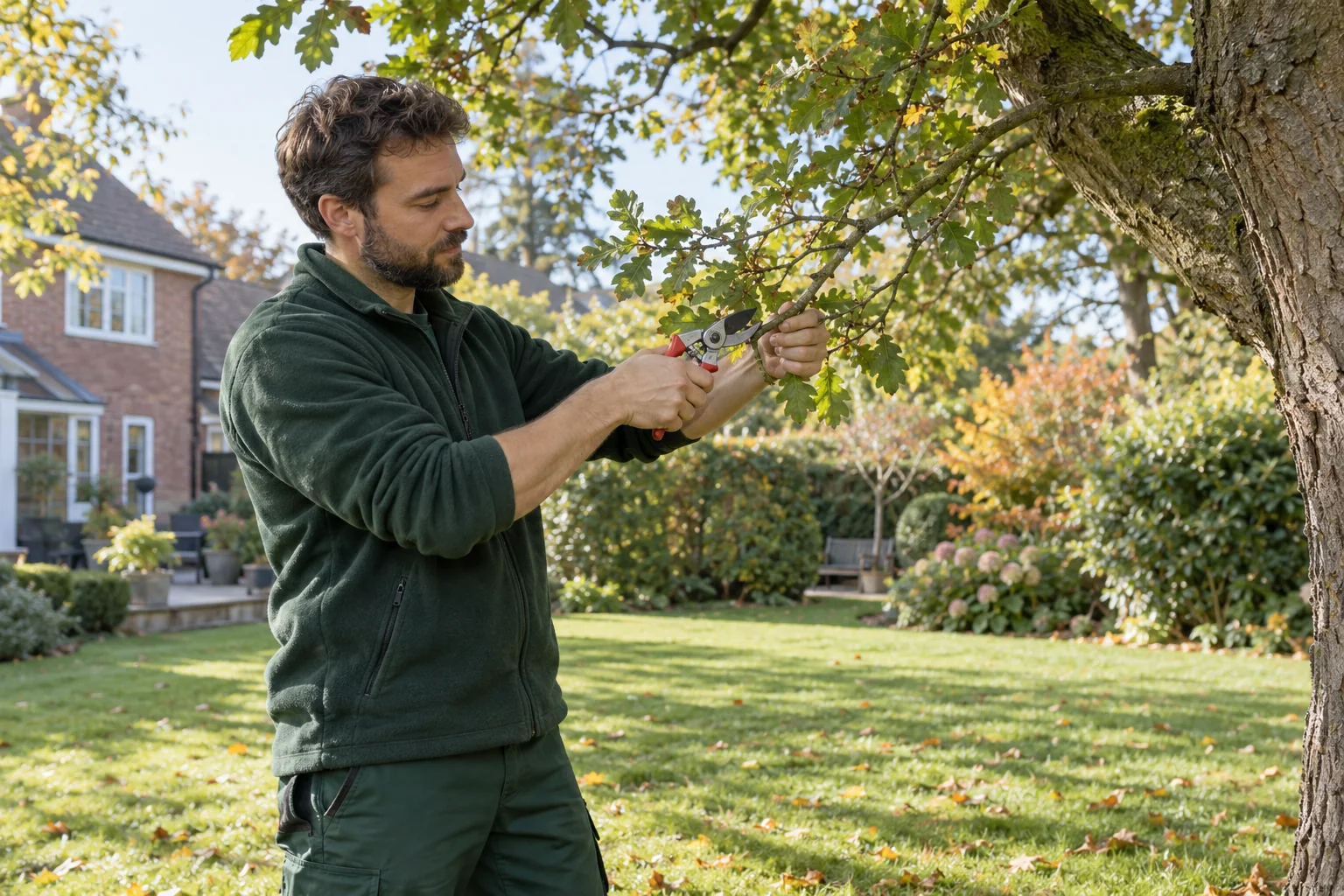
Consider retention against the future garden objective
A sensible pruning discussion here would focus on whether a reasonable retention option meets the owner’s objective before the choice of replacement becomes the deciding factor.
Clarify the relationship between the requested clearance and the remaining branch framework; any dimensions or limitations should be explained before the work date rather than negotiated beneath the tree.
The amount removed needs to be justified by the objective and the tree; the best specification may retain more crown than expected if that better suits the tree and the practical problem. The guide to tree pruning options provides useful background; the conversation stays focused on a recognisable retained crown rather than an undefined cutback.
Prepare a rooting space rather than just a clear surface
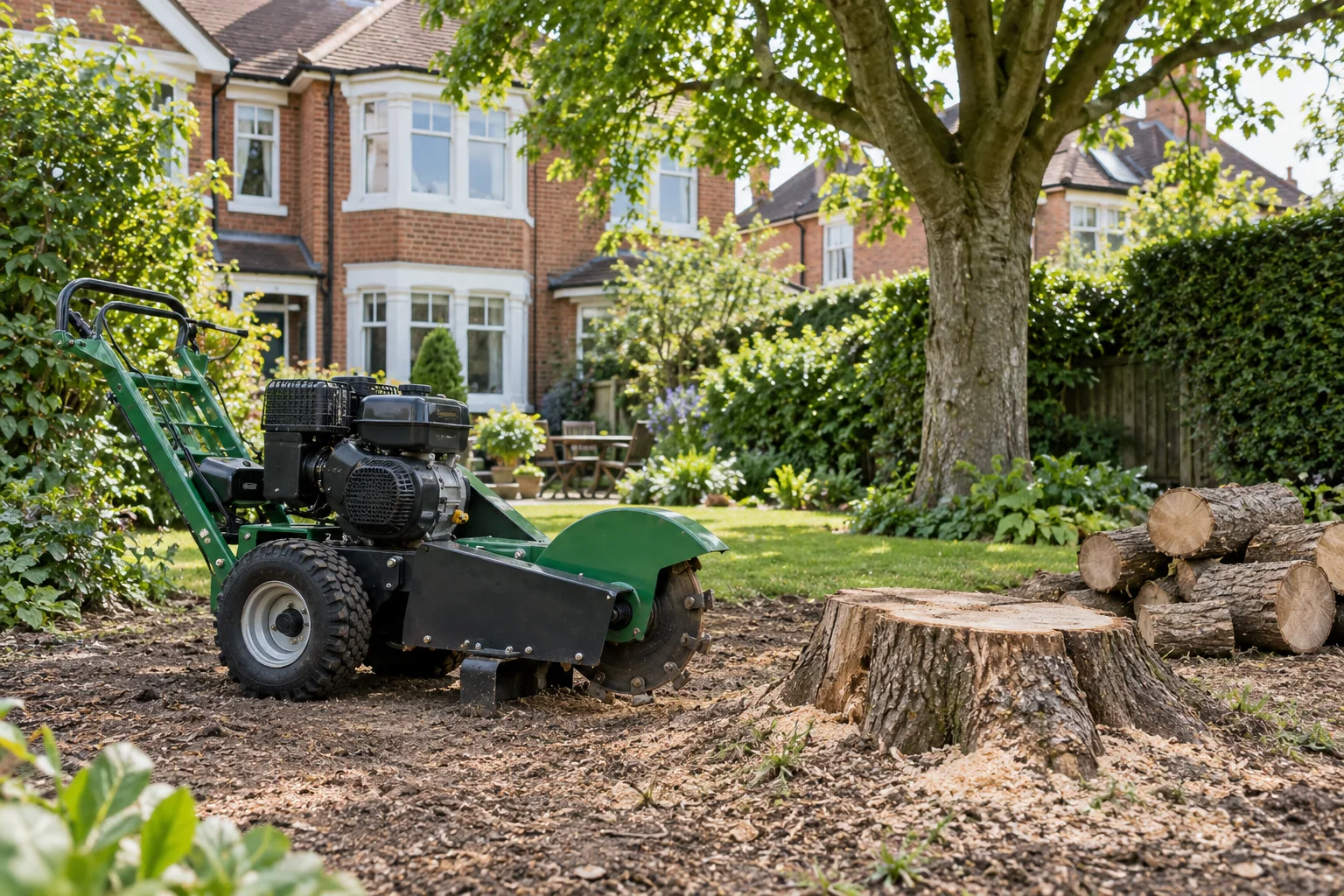
For the space left at ground level, consider the difference between grinding a visible stump and preparing a suitable rooting environment for a new tree.
Ask the quotation to distinguish stump reduction from the work that follows it; avoid assuming that every accessible root will be removed as part of a routine machine operation.
The surface can look clear while woody material remains below; this matters especially where turf, paving or a new planting hole has been promised as the next stage of the project. Compare the proposal with the stump grinding guidance; access, grindings and reinstatement are not left as unspoken assumptions.
Check replacement conditions before finalising the garden plan
Treat permission checks as a specific task for the tree and address concerned; any existing decision, application reference or written advice should be supplied so the current position can be checked accurately.
A general wish to tidy the tree is not a sufficiently clear basis for an authorisation check; include any limitations on the operation and any requirement that could affect replacement planting after removal.
The property-specific planning question is how the proposed work addresses a tree removal being considered alongside a smaller or differently positioned replacement without getting ahead of the checks required for that address.
Protect planting that belongs in the new layout
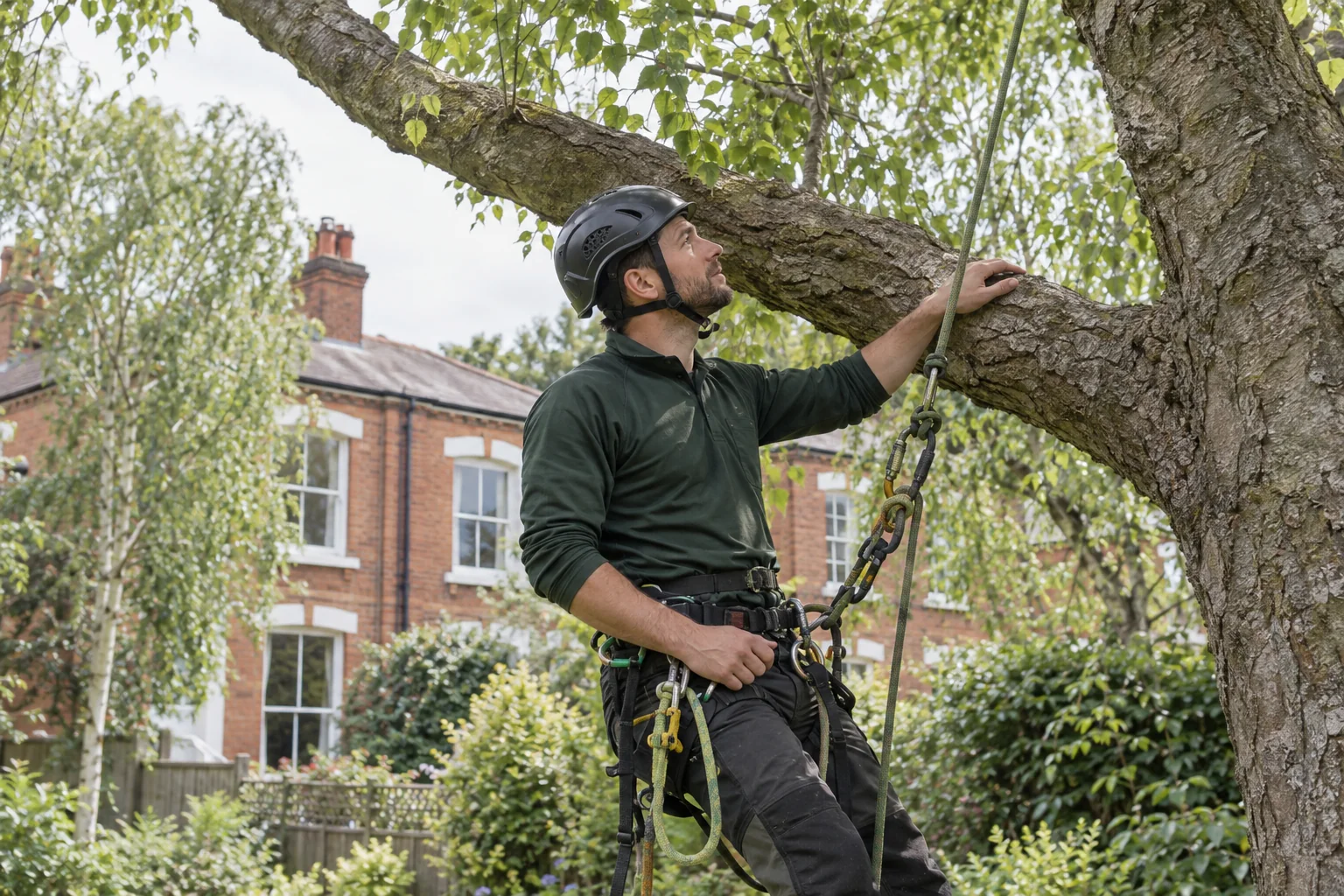
At the planning stage, pay particular attention to a handling route that does not damage planting retained as part of the future garden layout.
Explain restrictions along the handling route before a quotation relies on it; identify any door, gate or shared passage that must remain available to occupants during the day.
A safe plan must account for the movement of people as well as tree material; allow the provider to change the arrangement if the inspected conditions require a different method.
Separate felling, stump treatment and planting preparation
The quotation should let you recognise the result you are buying; the tree’s dimensions, condition and surrounding constraints should be considered alongside the amount of cutting required.
Two similarly sized trees can require different working arrangements; ask which assumptions would need reviewing if the actual conditions differ from those described at enquiry stage.
For this particular brief, the scope should explain its response to a tree removal being considered alongside a smaller or differently positioned replacement, rather than substitute an unrelated standard operation.
Agree material handling around retained beds
Waste removal is easier to understand when each type of material is named; the final clear-up should be described in relation to the surfaces and planted areas affected by the operation.
A request to keep logs should include the practical limits of the storage space; keep the site’s essential routes and any agreed protection around retained trees clear of stacked material.
The completion check should include the establishment needs of a replacement and responsibility for watering and maintenance after planting.
Plan responsibility for replacement establishment
A useful follow-up for this property would consider the establishment needs of a replacement and responsibility for watering and maintenance after planting.
Record the work undertaken and any advice given about the remaining tree; avoid assuming that removal of the current obstruction has settled every future tree-care decision.
The owner can keep a simple record of changes without attempting a specialist inspection; this matters especially if the use of the surrounding space changes or new building and garden work is proposed nearby.
Arrange an informed Beckenham enquiry
Use the details in this guide to describe a tree removal being considered alongside a smaller or differently positioned replacement. Give the person handling the enquiry enough detail to arrange the next step; do not assume the description of another garden explains the conditions at this address. Contact Tree Surgery London with the brief so the appropriate next step can be discussed; avoid treating this general guide as a confirmed specification for a tree that has not been assessed.
For another property nearby, the guides to tree work in Bromley and Crystal Palace tree surgery offer separate practical starting points. Another garden may need a different working method and specification; do not transfer a quotation or recommendation from a tree with different surroundings.
Local permission checks for Beckenham
For a Beckenham address in Bromley, use the borough's protection map to check the individual tree and any conservation-area designation. A mature garden tree is not automatically protected because of its age, and a small tree is not automatically exempt from a TPO. The appropriate enquiry is therefore about the specific specimen and location. Provide a sketch, photographs and any previous permission reference that might help identify it.
Planned maintenance starts with an assessment of what the tree needs and what the owner wants to achieve. Explain changes that have been noticed, such as a damaged branch, rather than choosing a large reduction in advance. The arborist can discuss the condition, past pruning and a realistic future management approach. Bromley's guidance asks for the extent of proposed work to be expressed clearly, which also helps when comparing quotations. Confirm who owns the tree, how equipment can reach it and what will happen to branches and logs before arranging the operation under the applicable permission.
Questions about tree work in Beckenham
Should I choose a replacement before removing the old tree?
It helps to define the desired size, role and location early, while keeping the removal decision separate. The existing tree’s condition, any protection and available alternatives still need consideration. Future planting also affects how the ground should be left.
Will a small replacement stay small without pruning?
Expected growth depends on the species, cultivar and growing conditions. Discuss mature dimensions and available space before choosing. Routine severe cutting is a poor substitute for selecting a tree suited to its eventual position.
What should I send with a Beckenham tree-work enquiry?
A marked photograph and a simple access description are useful starting information; making clear if there is a damaged branch or other concern that could affect the use of the surrounding area.
How should I check tree protection at my Beckenham address?
Locate the correct address and ask about the tree’s current protection position; the aim is that the work description, identified tree and any conditions can be checked together rather than separately.
What affects the quotation for tree surgery in Beckenham?
The working method and protection needs can matter as much as the apparent amount of growth; include clear responsibility for ground preparation or reinstatement that sits outside the tree-work operation.
What should be agreed about clear-up at the Beckenham property?
State which branches, timber and chip will be removed and identify anything you want to retain; make sure the retained pieces will be left where they can be managed after the contractor has departed.