
TREE SURGERY LONDON / CONSIDERED OUTDOOR CARE
Pressure Washing in London
Outdoor cleaning should suit the surface rather than begin with the highest available pressure. Material, age, joints, drainage and nearby planting can all affect the approach. Describe the patio, path or other area, the type of soiling and any damaged sections so the provider can assess a suitable method and a realistic finish.
- Surface material and condition considered
- Access, drainage and surrounding areas checked
- Cleaning separated from repairs and replacement
Identify the surface before choosing a method
Concrete, natural stone, paving blocks and other outdoor materials do not all respond in the same way. A surface may also have a coating or previous treatment that changes the appropriate approach. If you know the product or have care instructions, make that information available during the enquiry.
Cleaning should be considered alongside condition. Loose joints, damaged edges and unstable sections need attention before a powerful water jet is treated as the default answer. Ask what method is proposed and whether a test area is appropriate. A photograph of a clean patio elsewhere does not establish what can be achieved safely on your surface.
What are you trying to remove?
General dirt, organic growth, grease and staining are different problems. Describe the marks, their extent and how long they have been present. Some discolouration may not be removable through ordinary cleaning, and the underlying material may have weathered unevenly.
Set expectations before work begins. A useful quotation distinguishes an overall improvement in cleanliness from a promise to restore a surface to an as-new condition. Specialist treatments, where appropriate and actually offered, need separate discussion. They should not be assumed to accompany every pressure-washing visit.
Questions before cleaning an outdoor surface
| Check | Why it matters | Agree in the scope |
|---|---|---|
| Material and coating | Different surfaces tolerate different approaches | Suitable method and any test area |
| Joints and damage | Cleaning may affect loose or weakened areas | Exclusions and separate repairs |
| Drainage and surroundings | Water and released dirt need managing | Runoff and protection arrangements |
| Finishing tasks | Cleaning is not sealing or reinstatement | Exactly which later operations are included |
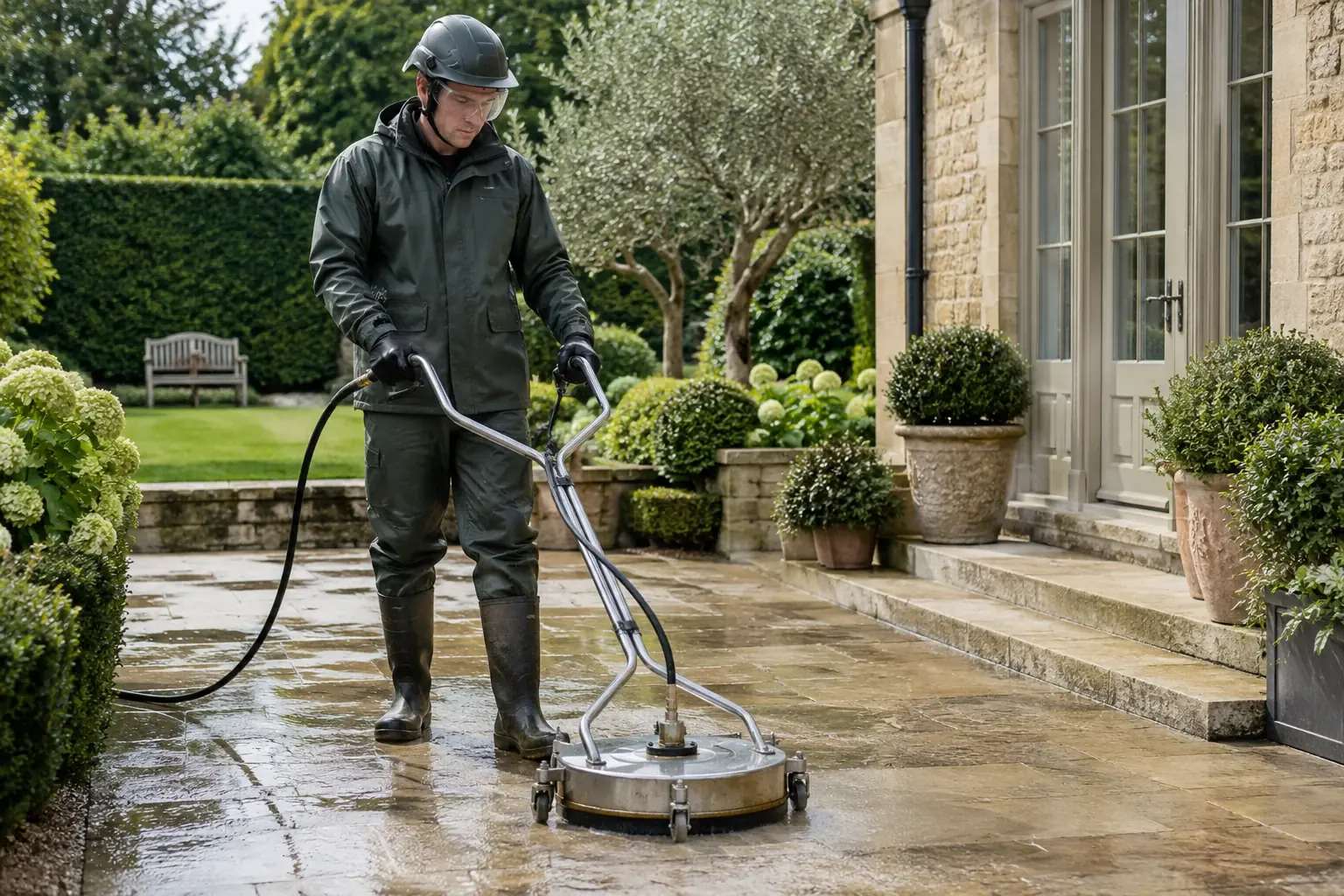
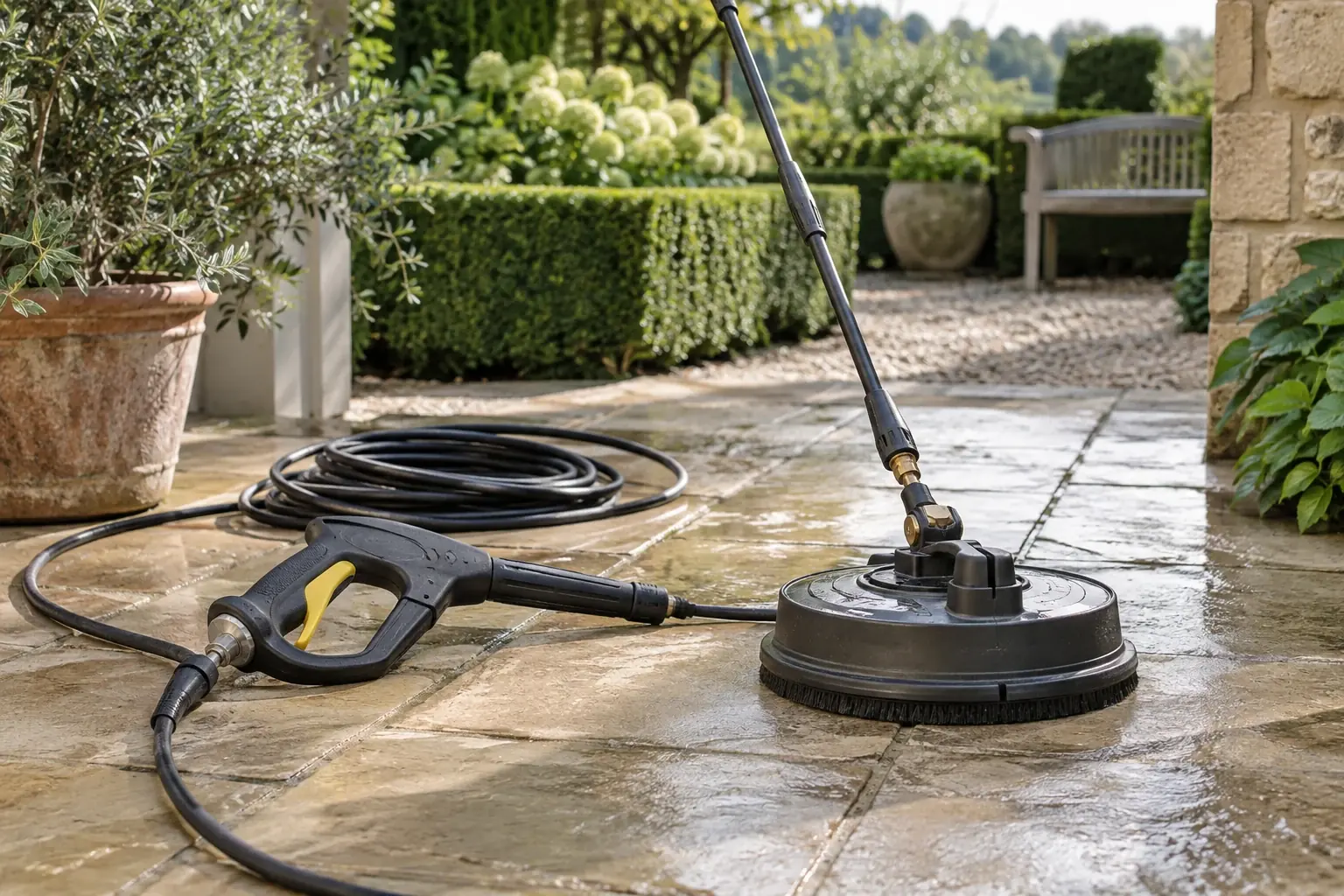
Joints, edges and existing damage
Water pressure and the cleaning method can affect joints and loose material. Point out areas where movement, erosion or repairs have already occurred. A provider needs to understand those limits rather than discover them while attempting to clean every section in the same way.
Repointing, replacing damaged units, re-sanding or sealing may be separate operations. Confirm which, if any, are included. If the surface has reached the point where cleaning is not the main problem, landscaping may be the more useful enquiry for discussing repair or replacement requirements.
Water, drainage and the route away
Cleaning introduces water and releases dirt from the surface. Explain where that water normally drains and identify nearby thresholds, air bricks, basements or other sensitive areas. Poor drainage can affect the practicality of the visit even when access to the surface is straightforward.
The provider should consider how runoff and released material will be managed. Do not assume that washing everything towards the nearest opening is appropriate. If a drainage issue is already suspected, make it known before work is quoted. Surface cleaning is not a substitute for investigating why an area regularly holds water.
Surrounding planting and property
Furniture, vehicles, pots and delicate planting can be affected by the working area and spray. Agree what needs moving, who will move it and where it can be placed. Mention external electrical fittings, damaged components and other features that require particular care.
Pets, residents and visitors should remain clear of the operation. A shared route may need a plan for maintaining access or temporarily controlling movement. The work should be arranged around the way the property is used, rather than assume the entire outdoor area can be occupied without notice.
Preparation can be a separate job
Heavy overgrowth, stored items or accumulated garden waste may prevent useful access to the surface. Garden clearance can be discussed where the area first needs to be recovered. That preparation should not be hidden inside a cleaning request supported by photographs that show only a small visible patch.
Routine gardening services may help with the surrounding maintenance, while the surface-cleaning operation retains its own method and scope. Keeping those tasks distinct makes it easier to agree the finish and prevents a cleaning appointment from being expected to resolve every outdoor maintenance issue at once.
Equipment and practical access
Tell the provider about the route for equipment, any steps and restrictions on parking or loading. Confirm the availability and suitability of a water supply if required. Long routes and inaccessible corners can influence the practical method as well as the time needed.
Equipment should be selected for the material and task. A powerful machine is not, by itself, a reason to expect better results. The relevant question is how the proposed approach protects the surface and its surroundings while addressing the particular soiling. This service description is not a set of instructions for operating pressure equipment yourself.
Buildings and gutters need separate consideration
A quotation for paving should not be read as permission to apply the same technique to roofing, timber, render or delicate building details. Those materials can require different expertise and methods. Make the boundaries of the area clear before the visit.
If the concern is water overflowing from above, gutter cleaning is a different enquiry. Washing a stained path does not correct the source of repeated runoff from a building. Considering the cause of recurring soiling can be more useful than booking the same surface treatment without addressing why the problem returns.

Pricing and the result to agree
Area, surface type, condition, soiling and access influence the price. Preparation, specialist treatment and reinstatement of joints may be separate. Ask whether the quotation includes applicable VAT and exactly which surfaces will be cleaned.
If some marks are unlikely to respond or a damaged area must be excluded, that should be explained. A test area can help establish expectations where appropriate, but it is not a universal guarantee for every part of a varied surface. Agree any change in scope or additional treatment before the work proceeds.
After the cleaning visit
Review the agreed area and any reported limitations. Surfaces may remain wet after the operation, and the provider should explain when normal access is appropriate. Follow any material-specific advice about subsequent treatments or maintenance rather than assume a cleaned area is ready for every use immediately.
Ongoing results depend on weather, shade, drainage and the surrounding garden. Cleaning does not permanently prevent new growth or dirt. A practical maintenance discussion focuses on those conditions and the care of the surface, without unsupported claims about a fixed period of protection or an identical result on every material.
USEFUL ANSWERS
Questions about this service
Can every patio be pressure washed?
No single method suits every material and condition. Describe the surface, joints, coatings and any existing damage. The provider should assess an appropriate approach and explain limitations instead of assuming the same pressure and technique are suitable throughout.
Will all stains disappear?
That cannot be promised without understanding the material and the stain. Some discolouration may remain or need a different treatment. Discuss realistic expectations and any proposed test area before treating general cleaning as a guarantee of an as-new finish.
Are re-sanding or sealing included?
Only when explicitly specified. Cleaning, restoring joints and applying a sealer are different operations with their own suitability and timing questions. Ask for each included task to be described so the final price and finish are understood.
Should I clear furniture before the visit?
Agree what needs moving and where it can safely go. Heavy or fragile items may need particular arrangements. Keep the equipment route available and identify sensitive features rather than leave the provider to infer which items can be handled.
Can the same visit clean the roof and walls?
Do not assume so. Building materials can require different methods and competence from ground-level paving. Describe any additional surface separately and confirm whether it is offered, appropriate and included in the quotation.
How long will the surface stay clean?
That varies with weather, shade, drainage, use and nearby vegetation. A cleaning visit does not permanently remove the conditions that allow dirt or growth to return. Ask for practical maintenance advice rather than rely on an unsupported fixed-duration promise.
A CLEAR NEXT STEP
Tell us about the work
Identify the surface material and describe its condition, joints and nearby planting. Agree a suitable test area, treatment method and drainage precautions before assuming that a particular pressure or cleaning product is appropriate.